Skip to content
Briefings are running a touch slower this week while we rebuild the foundations.See roadmap
Iran Conflict 2026
11APR

Iran FM warns all Hormuz tankers

2 min read
11:03UTC

Iran's Foreign Ministry warned all tankers to be 'very careful' — the first time the strait threat has escalated from military operations to sovereign diplomatic messaging.

ConflictDeveloping

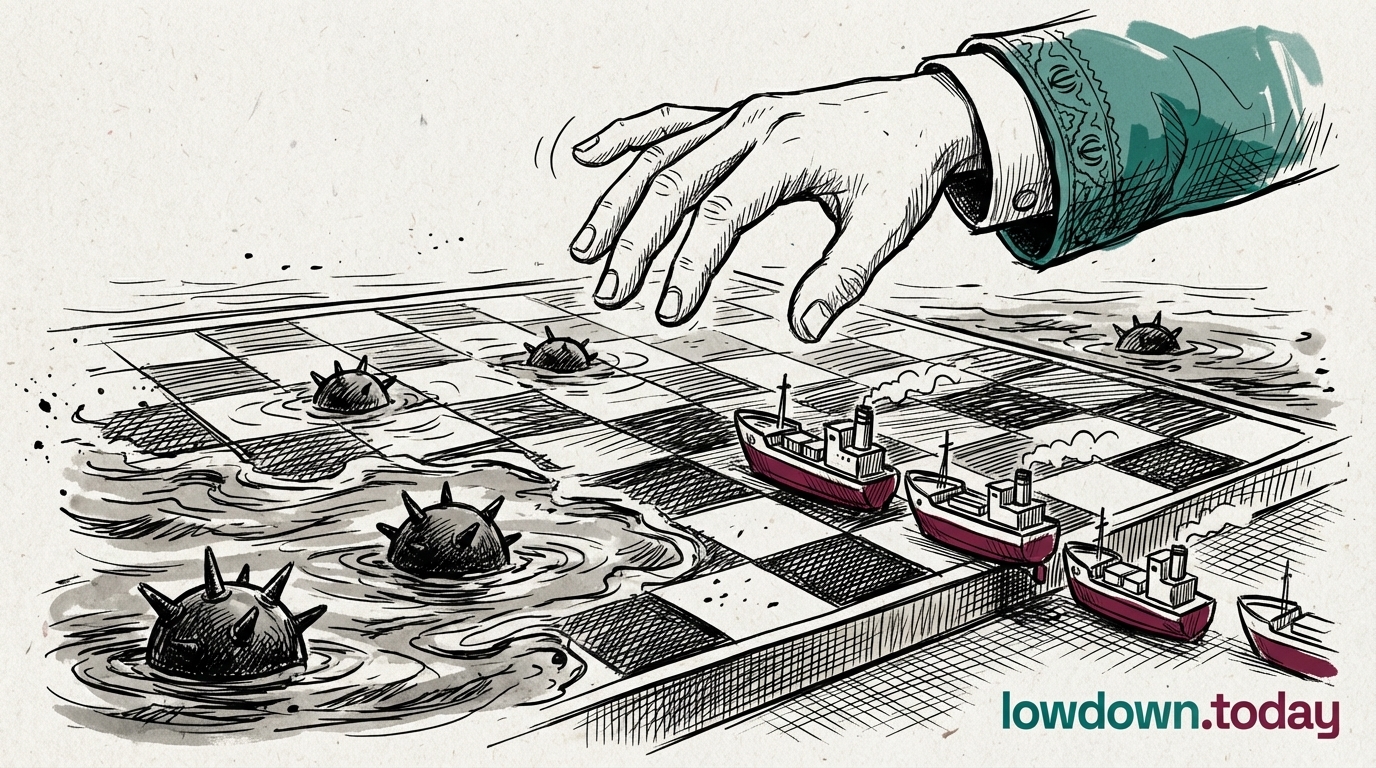
Iran's Foreign Ministry warned all tankers transiting the strait of Hormuz 'must be very careful' while the situation remains insecure — the first time the war's Hormuz threat has been elevated from IRGC operational messaging to formal diplomatic communication.

The distinction in register carries legal and commercial weight. The IRGC had already struck two named tankers — the Marshall Islands-flagged Louise P and the Prima — publicly claiming both attacks and naming each vessel. But IRGC statements bind a military organisation. A Foreign Ministry warning binds the state. It places every flag state on notice that Iran's sovereign authority, not merely its armed forces, considers the strait contested. Under the UN Convention on the Law of the Sea, Hormuz is an international strait through which all vessels hold the right of transit passage. Iran's warning stops short of claiming the right to block transit. The IRGC's drone strikes demonstrate that compliance with Iranian terms is the practical condition for safe passage — the legal form and the operational reality have diverged.

The warning lands on a strait already partitioned by negotiation. Reuters reported Beijing in direct talks with Tehran for guaranteed passage of Chinese-linked crude and Qatari LNG . Fortune reported Chinese-flagged and 'Muslim'-owned vessels receiving de facto IRGC protection from interdiction. China's 48th PLA Navy fleet deployed to The Gulf the same day. The FM statement codifies what was already operational: a two-tier waterway, open for approved commerce, hazardous for the rest. During the 1987–88 Tanker War, Iran and Iraq between them attacked 546 commercial vessels in The Gulf over eight years. The current conflict has produced a more discriminating system — not indiscriminate attacks on shipping, but selective enforcement that rewards alignment with Tehran and Beijing.

For the tanker and insurance markets, the FM escalation compounds an existing paralysis. Every major P&I club cancelled War risk coverage effective 5 March. Tanker traffic is down approximately 70%. Kuwait declared force majeure on all exports . VLCC freight rates hit an all-time high of $423,736 per day . A formal government warning adds a new dimension: flag states whose vessels are struck can now point to an explicit Iranian state-level caution as evidence of premeditated threat, strengthening both insurance claims and potential proceedings under international maritime law. The FM's choice of words — 'must be very careful' rather than 'will be stopped' — preserves deniability while achieving the same deterrent effect.

First Reported In

Update #31 · Iran moves to heavy warheads; China deploys

Fortune· 10 Mar 2026
Read original
Causes and effects
This Event
Iran FM warns all Hormuz tankers
Elevating Hormuz threats from IRGC operational warnings to Foreign Ministry communication implicates Iran's sovereign authority and transforms ad hoc interdiction into stated government policy, with consequences for international maritime law, insurance markets, and flag-state liability.
Different Perspectives
Iran human rights monitors (Amnesty International, Iran HRM, Hengaw)
Monitors documented 30 women held on capital moharebeh charges in a basement prison ward, Benyamin Naqdi's death sentence with a forced-confession broadcast, and 39 political executions since February. Iran's security courts have processed protest cases at uninterrupted wartime tempo regardless of the diplomatic track.
Lloyd's of London (war-risk underwriters)
Lloyd's held its Hormuz war-risk designation at $10-14 million per voyage while Brent fell 19%, maintaining a structural divergence from futures pricing. Underwriters require a UN Security Council resolution or government certification letter, not diplomatic optimism, before de-listing the strait.
Oman (Sultan Haitham's government)
Muscat issued a mine alert in its own territorial waters while denying any Hormuz toll plan after US Treasury threatened sanctions. A suspected mine in Omani waters on the same weekend as US financial pressure forces Muscat to demonstrate sovereignty without appearing to choose sides.
China (PRC)
China (PRC)
Beijing sent scholars rather than its defence minister to Shangri-La for the second year running and addressed Taiwan and multilateralism without mentioning Iran. China maintains its bilateral energy corridor protection with Tehran while refusing the diplomatic exposure of a public position at multilateral forums.
Iran Supreme National Security Council
The SNSC framed the unsigned MOU as a 10-point Iranian victory with enrichment already recognised, and the foreign ministry rejected Trump's nuclear conditions within hours. Tehran treats each unsigned day as validation that Iran has retained its stockpile without surrendering it.
Trump administration (CENTCOM/White House)
Trump posted three non-negotiable public conditions while CENTCOM disabled a commercial ship and Hegseth threatened resumed strikes from Singapore. The administration treats the unsigned MOU as leverage to extract maximum Iranian concessions before any ceasefire instrument is committed to paper.