Skip to content
Briefings are running a touch slower this week while we rebuild the foundations.See roadmap
Iran Conflict 2026
11APR

Half of Iran's missiles survive, WSJ reports

2 min read
11:03UTC

The Wall Street Journal, citing US intelligence officials, reported on 10 April that Iran has preserved roughly half its ballistic missile and attack-drone stockpile. Defence Secretary Pete Hegseth called the programme 'functionally destroyed' a fortnight earlier.

ConflictDeveloping
Key takeaway

Washington's spies believe Iran can still hurt things; Washington's ministers do not say so.

The Wall Street Journal, citing US intelligence officials, reported on 10 April that Tehran has preserved roughly half its ballistic missile and attack-drone stockpile and retains "thousands of ballistic missiles" 1. Defence Secretary Pete Hegseth had told reporters in late March that Iran's missile and drone programmes were "functionally destroyed", and Benjamin Netanyahu said last month that Iran had "no ability" to rebuild.

More than half of Iran's missile launchers have been destroyed, damaged, or buried by US and Israeli strikes, the same officials say, but Tehran can still repair them or dig the buried ones out. US intelligence believes Iran can reconstitute significant strike capability on a timeline measured in months, not years. This is single-provenance US-intelligence reporting relayed through one American paper.

The assessment arrives in the same week Washington has issued zero formal Iran presidential instruments across the full war and during the diplomatic window opened at Islamabad . Every declaration of completion in this war has been followed within days by an intelligence assessment that quietly contradicts it: Trump's "nuclear objective attained", Hegseth's "functionally destroyed", Netanyahu's "no ability". The public claim shrinks; the private estimate catches up.

Deep Analysis

In plain English

Defence Secretary Hegseth said Iran's missiles were 'functionally destroyed'. Israel's Netanyahu said Iran had 'no ability to rebuild'. The US intelligence community — the same officials whose analysis underlies both those claims — now says Iran has kept roughly half its missiles. This does not mean the strikes failed entirely: more than half of Iran's launch platforms (the vehicles and fixed sites from which missiles are fired) have been damaged or destroyed. But the missiles themselves, buried in dispersed underground sites, survived in much larger numbers than the public statements suggested.

Deep Analysis
Root Causes

Iran's missile survivability reflects two design choices made over 15 years of sanctions pressure. The IRGC Aerospace Force built geographically-dispersed underground storage — the buried launchers US officials acknowledge can be excavated — specifically anticipating an air campaign that could not sustain ground-level destruction of hardened sites.

The second factor is the Decentralised Mosaic Defence doctrine itself : by devolving launch authority to autonomous provincial units, Iran reduced the command-and-control concentration that would make a decapitation strike operationally effective. A 50% launcher loss with dispersed warhead survival is a designed outcome, not a failure.

First Reported In

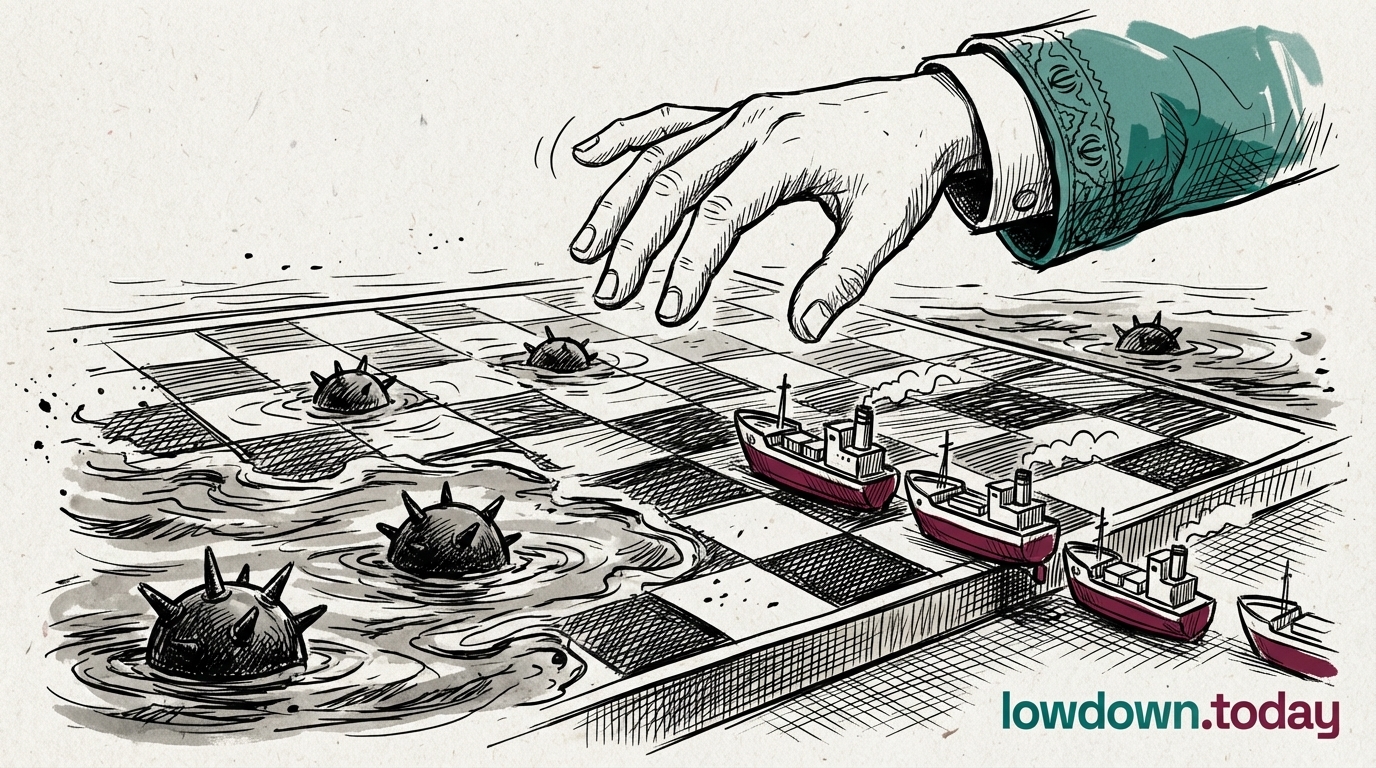
Update #65 · Iran lost its own minefield

Haaretz· 11 Apr 2026
Read original
Causes and effects
This Event
Half of Iran's missiles survive, WSJ reports
The rhetoric-versus-reality gap is becoming the war's most consistent pattern, and every future strike calculus must assume Iranian retaliation capability rather than a degraded one.
Different Perspectives
Qatar
Qatar
Qatar holds approximately $12 billion in frozen Iranian assets that Tehran named as the precondition for any Hormuz reopening sequence; with Oman sidelined and no agreed HEU custodian, the asset-routing architecture that any deal requires has no operational channel and no neutral financial intermediary to run it through.
Hengaw and Iranian civilian population
Iranians face an internet capped at 40 per cent by hardware their president cannot dismantle, field killings that leave no court record, and judicial executions running in parallel; Hengaw, based in Norway, is the primary remaining monitor of a repression system the IRGC is deliberately moving beyond auditable records. The real toll is higher than any single monitor's count.
China
China
China supplied deep-packet-inspection hardware that caps Iran's internet at 40 per cent and enables an instant on-demand blackout, and was barred by Trump as a potential HEU custodian on 27 May. Beijing gains from Iran's continued non-alignment with the West while the DPI sale extends Chinese surveillance-technology exports as a geopolitical instrument.
Pakistan
Pakistan
Foreign Minister Ishaq Dar met Rubio in Washington on 29 May, formally inheriting the role of sole active mediator after Oman's forced withdrawal. Pakistan lacks Oman's banking infrastructure for frozen-asset routing and carries its own regional stakes, making it a less structurally neutral broker for the Qatar-held $12 billion sequencing.
Kuwait
Kuwait
Kuwait invoked Article 51 of the UN Charter after absorbing an Iranian ballistic-missile strike on Ali Al Salem Air Base on 28 May, becoming the first Gulf state to make a formal individual self-defence claim in the war. The invocation creates a legal record enabling a future bilateral defence-pact activation without yet triggering it.
Oman
Oman
Oman denied any Hormuz toll plan within hours of Bessent's 28 May threat, absorbing a sanctions warning from the country it has brokered for since 1981. The rapid capitulation preserved the channel formally, but Tehran now knows Washington will threaten its own mediator, which changes Muscat's calculus on how far it can lean into any joint-management architecture.