Skip to content
You can now search across every topic, entity and event.What's new
Iran Conflict 2026
10APR

Blast hits Tehran al-Quds march

3 min read
08:05UTC

An explosion killed one person at Iran's annual al-Quds Day rally — the first attack on the 47-year-old march. The president was metres away; Iran has not attributed the blast.

ConflictDeveloping
Key takeaway

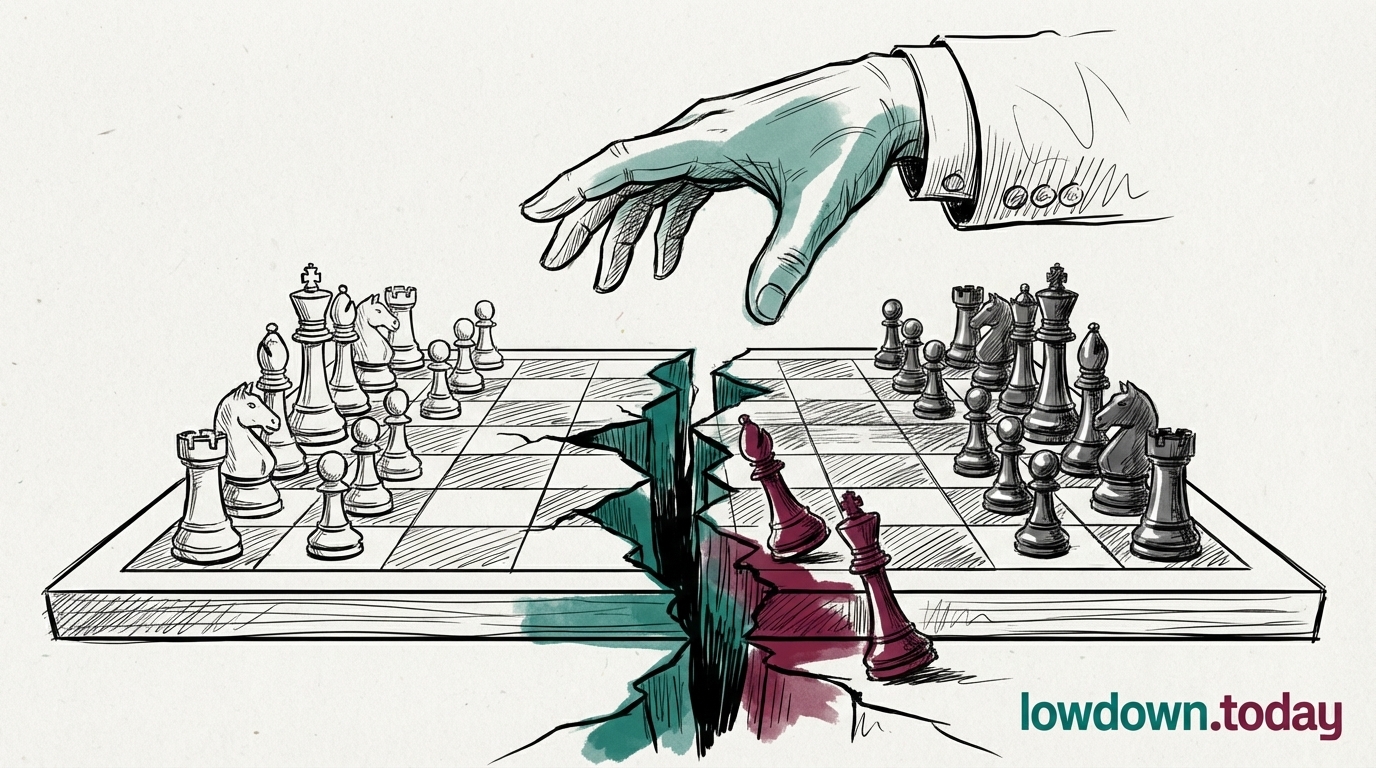
The regime's refusal to cancel al-Quds Day turned its most powerful symbolic event into its most exposed security vulnerability.

An explosion struck Ferdowsi Square in central Tehran on Friday midday, killing one person metres from thousands attending the annual al-Quds Day march. President Pezeshkian and security chief Ali Larijani were both at the rally when the blast occurred. Israel had warned people to clear the area shortly before. Whether this was an Israeli strike, Iranian ordnance, or an accident remains disputed. Iran has not publicly attributed it.

Al-Quds Day was instituted by Ayatollah Ruhollah Khomeini in 1979 as an annual solidarity rally with Palestine, held on the last Friday of Ramadan. In 47 years, it had never been targeted. The government chose to march its senior leadership into the open under active bombardment — a calculated projection of state continuity. Pezeshkian's presence carried particular weight: this is the same president WHO apologised to Gulf neighbours for Iranian strikes , was overruled by the IRGC within hours , then reversed himself with a vow to escalate. Standing in Ferdowsi Square was the most coherent message his presidency has delivered in a fortnight.

The explosion broke that message. If this was an Israeli strike, it is the first of the war to directly target a political gathering rather than military or Energy infrastructure — and the advance warning would be consistent with Israeli practice in Lebanon and Gaza. If it was Iranian ordnance — a defensive system misfiring, debris falling short — the government's inability to secure its own showcase event damages domestic morale more than an enemy attack. Iran's refusal to assign blame points toward a cause the government finds politically inconvenient. An Israeli strike would be straightforward to denounce; silence suggests the answer is not.

One person died. In a war that has killed hundreds and displaced millions, a single casualty at a domestic rally would ordinarily register as marginal. But al-Quds Day exists to project the state's command of public space — to show the population, and the world, that the government still summons and protects its people. The explosion, whatever caused it, demonstrated the opposite.


Deep Analysis

In plain English

Al-Quds Day is Iran's biggest annual political rally — held every year since 1979 to show solidarity with Palestinians and demonstrate that the Islamic Republic is unified and defiant. The government deliberately brings its top leaders into the streets as a display of strength. An explosion metres away — regardless of who caused it — punctures exactly the image the event exists to project. If Iran publicly acknowledges an Israeli strike, it admits vulnerability. If it was Iranian ordnance, it is an internal security failure. The regime's silence is itself a form of political management, but that silence simultaneously forecloses the retaliatory narrative the IRGC would normally use to demonstrate resolve.

Deep Analysis
Synthesis

The regime's deliberate choice to expose senior leadership at al-Quds Day as a political signal created the precise vulnerability that was exploited, revealing a structural contradiction. Iran's symbolic politics require open-air leadership presence; its wartime security requires the opposite. These imperatives are now irreconcilable. Each future high-profile public event will force the same impossible choice between political message and physical protection.

Root Causes

Al-Quds Day parade routes are publicly announced and logistically fixed weeks in advance, creating predictable targeting windows. Iran has never adapted its revolutionary-calendar ceremonies to wartime operational security requirements — the political cost of cancellation has always been judged higher than the security risk of exposure.

Escalation

Attribution ambiguity creates three divergent escalation pathways simultaneously. An Israeli finding triggers IRGC pressure for proxy retaliation against Israeli-linked targets. Iranian ordnance finding triggers a domestic accountability crisis. Sustained silence risks IRGC hardliners instrumentalising the ambiguity to expand security-sector authority over civilian decision-making.

What could happen next?
  • Precedent

    Al-Quds Day has been targeted for the first time in 46 years. Iran's most symbolically protected public ceremony is no longer off-limits, permanently altering the regime's public-event security calculus.

    Long term · Assessed
  • Risk

    If Iran internally attributes the explosion to Israel, IRGC pressure for proxy retaliation will intensify, raising attack tempo against Israeli-linked targets across the region.

    Immediate · Assessed
  • Consequence

    Sustained attribution ambiguity creates an internal accountability vacuum that hardline factions may exploit to expand IRGC authority over civilian security decisions.

    Short term · Suggested
  • Risk

    Each future high-profile public event involving senior Iranian leadership now faces the same irreconcilable tension between political symbolism and operational security.

    Medium term · Assessed
First Reported In

Update #34 · Tehran march bombed; first deaths in Oman

Al Jazeera· 13 Mar 2026
Read original
Causes and effects
This Event
Blast hits Tehran al-Quds march
Al-Quds Day has been held since 1979 and never targeted. The Iranian government staged its president and security chief at the rally under active bombardment to project state continuity. An explosion at this event demonstrated the government cannot guarantee security at its most choreographed public gathering. Iran's silence on attribution suggests the cause may be more politically damaging than an enemy strike.
Different Perspectives
Qatar (mediator)
Qatar (mediator)
Qatari negotiators flew to Tehran on Sunday morning to close remaining gaps between the parties, operating as the primary shuttle channel. Qatar's role is to bridge the civilian-track gap the IRGC veto has left.
IAEA / Rafael Grossi
Grossi replied to Araghchi's 13 June protection-of-materials letter the same day, citing Iran's NPT Safeguards Agreement obligation to declare any nuclear material transfer. With 97 days of lost inspector access and approximately 240 kg unaccounted, Grossi has treaty text and no inspectors on the ground to enforce it.
United Arab Emirates
The UAE state oil company assessed full Hormuz flows will not resume until 2027 even with a fast deal, citing demining, inspection, and insurance timelines. The UAE ambassador to Washington said a simple ceasefire is not enough.
Islamic Revolutionary Guard Corps (IRGC)
The IRGC ran naval exercises in Hormuz during Geneva talks and its political deputy declared Iran was negotiating from a position of strength. The corps has not endorsed the MoU; by amplifying Mashhad protests through Fars, it is framing any deal as conditions it imposed rather than a concession it accepted.
Iran Foreign Ministry / Araghchi
Araghchi's dilute-in-Iran red line was met by the US concession, but his foreign ministry spokesman said Tehran had not taken a final decision and a signing might come in days, not Sunday. Araghchi separately wrote to the IAEA pledging to protect nuclear materials as dilution negotiations advanced.
White House / US negotiating team
Washington accepted dilution inside Iran rather than ship-out, its first substantive material concession in 106 days, the New York Times reported. With the White House register blank and the ceremony slipped a third weekend, the administration has moved its negotiating position without yet producing a document.



