Skip to content
You can now search across every topic, entity and event.What's new
Iran Conflict 2026
9APR

Israel kills 254 in largest Lebanon operation

2 min read
11:02UTC
ConflictDeveloping
Key takeaway

Deadliest Lebanon day came under ceasefire cover with US permission

The Israel Defense Forces launched Operation Eternal Darkness on 8 April, sending 50 fighter jets to drop 160 bombs on more than 100 targets in 10 minutes 1. The Lebanon Health Ministry counted 254 killed and 1,165 wounded, the highest single-day toll of the Lebanon war 2. Central Beirut was struck without warning during rush hour. At Shmestar cemetery, a funeral became an airstrike target: ten mourners were killed. Ali Yusuf Harshi, described as a nephew and personal secretary of Hezbollah leader Naim Qassem, was among the dead.

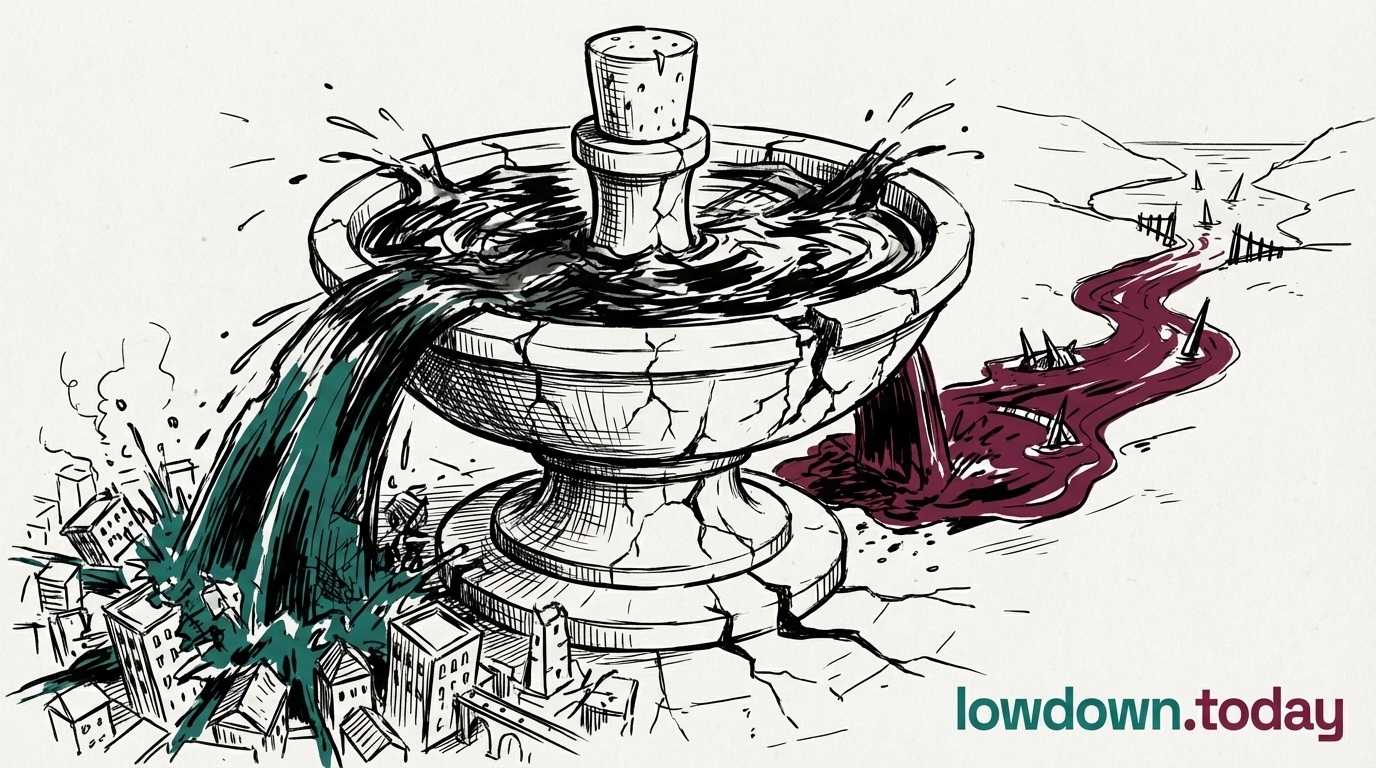
The operation came hours after the ceasefire took effect. The Lebanon contradiction that surfaced on Day 40 between Iran, Israel, and Pakistan resolved into bombing, not negotiation. Benjamin Netanyahu called it 'a station on the way to achieving all our goals' and confirmed Lebanon was excluded from the ceasefire 3. Vice President JD Vance described Lebanon's inclusion as a 'reasonable misunderstanding' 4. Abbas Araghchi rejected that framing: 'Washington must choose between maintaining the ceasefire or continuing conflict through Israeli operations. It cannot have both' 5.

On 9 April, Hezbollah fired rockets at Kiryat Shmona and Manara in northern Israel, citing the violations 6. The IDF deadline-day strikes on Tehran airports set the pattern; the Lebanon front has decoupled from the Iran ceasefire and is escalating independently.

Deep Analysis

In plain English

Israel launched its biggest Lebanon attack of the entire war on the same day a ceasefire was supposed to start. The US says Lebanon was never part of the deal; Iran says it was. Hezbollah has already fired back. The ceasefire may not stop fighting, just move it to a different country.

Deep Analysis
Root Causes

The structural cause is Pakistan's Islamabad Accord never produced a single unified text. Iran's SNSC, Netanyahu's office, and Trump's Truth Social post each described different deals. Without a unified document, each signatory interprets the framework to advance pre-existing objectives.

First Reported In

Update #63 · Ceasefire redistributes the war, not ends it

Lebanon Health Ministry· 9 Apr 2026
Read original
Different Perspectives
Oil market and P&I insurers
Brent cleared $87 intraday only once CENTCOM's blockade became physical rather than declared, even though P&I Clubs had already excluded Hormuz war risk a week earlier on 7 July: capital hedged ahead of enforcement, but prices moved only after it.
UAE reporting
UAE reporting
UAE reporting placed the Omani tanker deaths at one seafarer against the International Maritime Agency's count of two, the first time in this war that a Gulf state's casualty figures have diverged from an international monitor's.
Jordan
Jordan
Iranian strikes reached Jordan again on 14 July as part of the Gulf-wide retaliation for the Hormuz blockade, extending the conflict's geographic footprint to a state with no direct stake in the strait itself.
Bahrain
Bahrain
Bahrain sounded air-raid sirens on 14 July during Iran's Gulf-wide retaliation, the same day CENTCOM's blockade order and fourth night of strikes pushed the conflict's physical reach into the wider Gulf littoral.
Kuwait
Kuwait
Kuwait intercepted Iranian missiles and drones on 14 July as Tehran's blockade retaliation reached Gulf states beyond Iran's immediate shoreline, confirming Kuwaiti airspace now sits inside Iran's retaliatory envelope.
Oman
Oman
Oman absorbed the war's first tanker casualties in its own waters on 14 July, with two supertankers disabled and seafarers killed, putting the sultanate's shipping lanes directly in the path of the blockade fight for the first time.