Skip to content
Briefings are running a touch slower this week while we rebuild the foundations.See roadmap
Iran Conflict 2026
9APR

China splits on Hengli before Trump-Xi

4 min read
11:02UTC

Bloomberg confirmed on 7 May that China's NFRA quietly ordered the four largest state banks to halt new yuan loans to Hengli Petrochemical and four other sanctioned refineries, while MOFCOM publicly told the same firms to defy OFAC.

ConflictDeveloping
Key takeaway

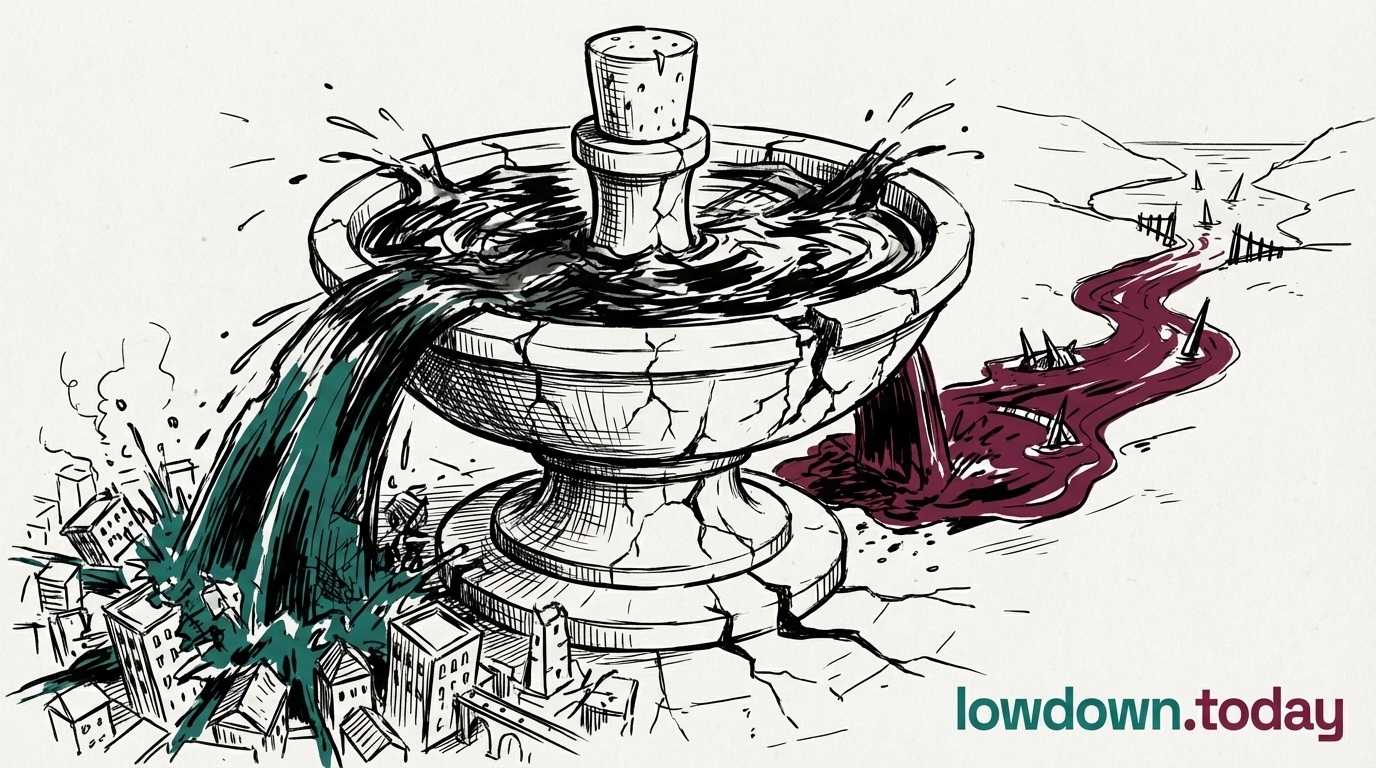
China is de-risking Hengli loans behind closed doors while publicly telling the same banks to defy Washington.

The National Financial Regulatory Administration (NFRA) privately instructed China's four largest state banks before 1 May to halt new yuan loans to Hengli Petrochemical and four other US-sanctioned refineries, Bloomberg confirmed on 7 May 1. The four banks are ICBC, Agricultural Bank of China, China Construction Bank and Bank of China. Existing credit was not called. On 2 May, the Ministry of Commerce (MOFCOM) publicly told the same five firms to defy OFAC under Announcement No. 21, activating Beijing's 2021 Blocking Rules .

Beijing wrote the contradiction on purpose. The four banks are observing the NFRA stop-loan order while ignoring MOFCOM's defiance instruction in practice: they treat their Hengli loan books as the binding constraint, not Beijing's public posture. China complies quietly where state-bank balance sheets would take the loss and defies publicly where the cost is rhetorical.

The calendar is what makes the dual signal load-bearing. The 24 May wind-down deadline for General Licence V (GL-V), OFAC's authorisation for orderly Hengli wind-down, falls 16 days out. The Trump-Xi summit in Beijing falls in 6 days, on 14-15 May. Treasury Secretary Scott Bessent confirmed Iran will be on the summit agenda, and CNBC reported the Iran focus may delay tariff and rare-earth progress 2. The summit is not expected to produce a written China-side sanctions instrument on Iran. Its function will be diplomatic pressure on Tehran to accept the MOU sequencing now sitting in Araghchi's ministry.

One reading casts NFRA's order as Beijing taking out balance-sheet insurance against an MOU collapse. If Iran's reply expires without a deal and Trump tightens enforcement, the four banks have already stopped extending credit they would have to write off. If the MOU is signed, GL-V is extended or moot, and the NFRA instruction was a low-cost piece of risk management that produced a domestic-defiance narrative as a side effect.

A second reading runs through audience design. NFRA's quiet bank instruction and MOFCOM's public order are addressed to the same five firms simultaneously. Beijing complies at the balance-sheet level (satisfying Western counterparty risk managers) while maintaining the rhetorical posture of sovereign defiance (satisfying domestic audience and Tehran). If MOFCOM Announcement No. 21 is later quietly withdrawn, the public posture becomes stranded without a formal mechanism. The summit outcome will determine which reading lands, with Donald Trump and Xi Jinping facing each other on 14 May.

Deep Analysis

In plain English

China sent two conflicting signals about Iran on 7 May. Quietly, China's banking regulator told the country's four biggest banks to stop making new loans to a large Chinese oil refinery that America has sanctioned. Publicly, China's trade ministry told the same refinery to ignore American sanctions entirely. Both instructions came from the Chinese government at the same time. The reason: the banking instruction protects Chinese banks from US financial penalties (the banks can be cut off from doing dollar business globally if they break US sanctions), while the public statement keeps China's political position aligned with Iran. Six days before the Trump-Xi summit, Beijing has already privately given ground while publicly holding firm.

Deep Analysis
Root Causes

China's four largest state banks hold US dollar correspondent relationships that generate fee income on billions of non-Iran transactions daily. OFAC can threaten to revoke those relationships under secondary-sanctions authority, making the banks' willingness to extend new Hengli credit a function of dollar-clearing exposure rather than domestic MOFCOM instructions.

The NFRA stop-loan order pre-empts that leverage by removing the new-credit exposure before Trump can threaten it at the summit. MOFCOM Announcement No. 21 preserves the public posture for domestic and Iran-facing audiences while the banks quietly de-risk the balance-sheet vulnerability that would otherwise become Washington's negotiating chip.

What could happen next?
  • Consequence

    Beijing arrives at the 14-15 May Trump-Xi summit already partially compliant at the balance-sheet level, giving Xi a concession to surface without making it publicly, while retaining the MOFCOM defiance posture as a withdrawable bargaining chip.

  • Risk

    If the summit produces no bilateral Iran framework, GL-V's 24 May deadline becomes the next chokepoint: OFAC must either extend the wind-down window or begin enforcement against Hengli, forcing a visible Chinese state-bank compliance decision.

First Reported In

Update #91 · MOU in Tehran, missiles in the strait

Bloomberg (via The Trending People)· 8 May 2026
Read original
Different Perspectives
Civilians and prisoners inside Iran
Mojtaba Kian was hanged in under 50 days from arrest, the fastest wartime espionage case in Hengaw's record, as Trump announced a peace deal. Amnesty places Iran's 2026 execution count above 200 at its fastest pace in 44 years; the diplomatic track has not altered the internal enforcement tempo.
China
China
Beijing accepted a Pakistani civilian briefing mission on the same day OFAC's GL V expired, keeping itself inside the deal architecture without being a named signatory. How Chinese banks respond to Monday's Hengli dollar-clearing decision is the first real-world test of whether the verbal MOU carries any institutional weight.
Pakistan
Pakistan
Islamabad split its highest-level delegation: army chief Munir to Tehran on the security track, Prime Minister Sharif and Foreign Minister Dar to Beijing before Monday's GL V-driven bank compliance decision. The architecture routes the deal's hardest problem, IRGC buy-in, through the general-officer channel that has extracted every wartime concession.
Israeli government
Israeli government
An unnamed Israeli official told the Times of Israel that Trump privately told Netanyahu the deal will dismantle Iran's nuclear programme and remove all its uranium, terms incompatible with what Tehran and a Reuters source describe. If Netanyahu believes he was promised full dismantlement and the deal delivers less, Israel holds a sabotage veto before any signature.
Iranian Foreign Ministry
Spokesman Esmail Baghaei told state agency IRNA that nuclear issues are 'not in the current negotiations text' and the sequencing is: end the war first, then negotiate nuclear over two months. Baghaei's formulation preserves Khamenei's 21 May uranium-stay directive while letting the civilian diplomacy track continue.
Donald Trump / White House
Trump declared the Iran deal 'largely negotiated' on 23 May via Truth Social and signed nothing; the White House's only paper was a Memorial Day proclamation. The verbal-track method converts maximum political signalling into minimum legal exposure: no congressional notification, no Senate treaty ratification, no instrument for Iran to formally reject.