Skip to content
You can now search across every topic, entity and event.What's new
Iran Conflict 2026
8APR

Forty-two war days, zero Iran orders

3 min read
09:27UTC

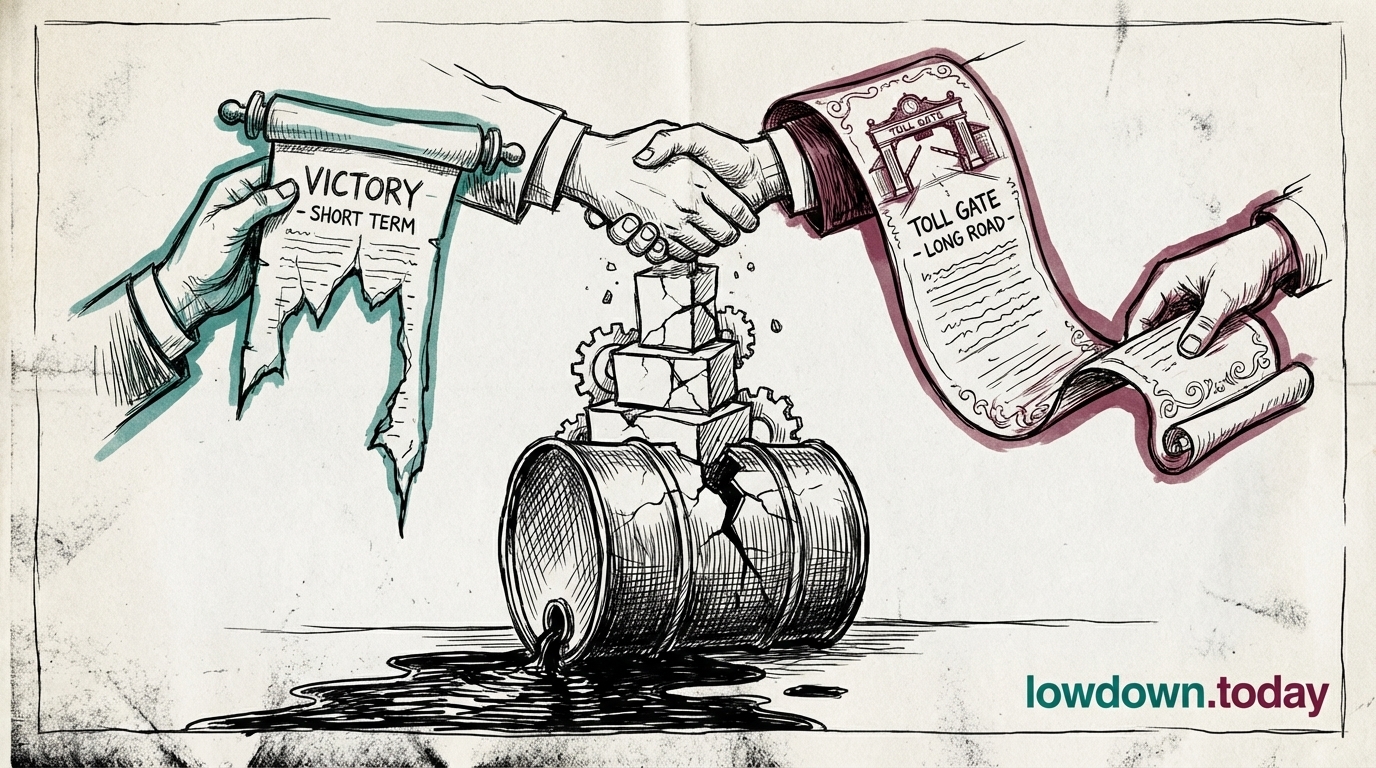
Across 42 days of war and four of ceasefire, the Trump administration has issued zero formal Iran presidential instruments. A Lowdown audit of the Federal Register and the White House actions index found exactly one Iran-mentioning document, a statutory annual renewal.

ConflictDeveloping
Key takeaway

A six-week war with no executive orders, proclamations, memoranda, or OFAC actions on Iran.

A Lowdown audit of the Federal Register and the White House presidential-actions index found exactly one Iran-mentioning presidential document since 1 March 2026: the statutory annual "Continuation of the National Emergency With Respect to Iran", dated 5 March, a once-a-year renewal under the National Emergencies Act that would have issued regardless of events 12. That extends the zero-instruments finding logged at 40 days .

The presidential instruments Trump has issued between 1 and 10 April, in order, are: "Ensuring Citizenship Verification and Integrity in Federal Elections" on 3 April; "Adjusting Imports of Pharmaceuticals", "Strengthening Actions on Aluminum, Steel, and Copper", "Urgent National Action To Save College Sports", "Sequestration Order for Fiscal Year 2027", and "Continuing the Suspension of Duty-Free De Minimis Treatment", all on 9 April; and "Continuation of the National Emergency With Respect to Somalia" on 10 April 3. Seven instruments in ten days, none Iran-related. Previous US presidents conducting active Middle East conflicts issued Iran-related executive instruments at roughly one per week during escalation phases, from Obama's JCPOA (Joint Comprehensive Plan of Action) era, through Trump's own post-JCPOA-withdrawal period, to Biden's maritime-interdiction window.

The pattern extends to sanctions policy. OFAC (Office of Foreign Assets Control) has not published a single Iran-related action since 20 March, when it issued General License U . That is 22 days of silence during an active war. In the same window OFAC amended Russia General Licenses twice, on 30 March and 8 April, and issued new Venezuela licenses on 27 March 4. The inaction on Iran is not administrative neglect; OFAC is actively maintaining three other sanctions programmes.

GL-U expires on 19 April, eight days from Saturday, and no renewal signal has been issued. When GL-U lapses, every Iranian-origin crude cargo currently in transit becomes sanctioned again at the moment of expiry: marine insurers withdraw war-risk and sanctions-risk cover, port states refuse access, and the oil cannot be legally offloaded anywhere regardless of whether it can physically move.

Deep Analysis

In plain English

When a US president goes to war or into a major international crisis, they normally issue formal legal documents — executive orders, proclamations, memoranda — that set out the rules of engagement, authorise spending, and create the legal basis for any eventual peace deal. Over 42 days of war with Iran, Trump has issued exactly none on the Iran file. The nearest thing is a routine annual renewal of a pre-existing Iran emergency declaration, which would have been signed regardless of the war. Meanwhile, the one Iran-related sanctions waiver that does exist expires in eight days — and without it, the oil tankers currently stuck in the Gulf face American sanctions on top of their physical inability to move.

Deep Analysis
Root Causes

The instrument gap has two plausible causes, and the available evidence cannot distinguish between them. The first is administrative: the administration entered the conflict without a prepared legal framework and has not since commissioned one, relying on pre-existing IEEPA and IRGC designation authorities as sufficient.

The second is strategic: by issuing no Iran-specific instruments, the administration preserves the ability to claim any settlement is an executive act rather than a treaty requiring Senate ratification — sidestepping the Graham-led resolution requiring congressional approval of any Iran deal. The GL-U expiry on 19 April forces the first explicit choice.

What could happen next?
  • Risk

    GL-U expiry on 19 April without renewal converts the maritime blockage into a simultaneous maritime and legal crisis, removing the option of emergency cargo transfer even if Hormuz becomes physically navigable.

    Immediate · 0.9
  • Meaning

    A war without executive instruments has no legal scaffolding for a peace deal: any agreement reached in Islamabad would need to be built on an entirely new legal architecture, which takes weeks of OFAC and Federal Register process to construct.

    Short term · 0.82
  • Precedent

    If the GL-U lapses without renewal or resolution, it will be the first time the US has simultaneously fought and sanctioned the same country through the same military-diplomatic window, with no legal mechanism connecting the two.

    Medium term · 0.65
First Reported In

Update #65 · Iran lost its own minefield

whitehouse.gov· 11 Apr 2026
Read original
Different Perspectives
Oil market and P&I insurers
Brent cleared $87 intraday only once CENTCOM's blockade became physical rather than declared, even though P&I Clubs had already excluded Hormuz war risk a week earlier on 7 July: capital hedged ahead of enforcement, but prices moved only after it.
UAE reporting
UAE reporting
UAE reporting placed the Omani tanker deaths at one seafarer against the International Maritime Agency's count of two, the first time in this war that a Gulf state's casualty figures have diverged from an international monitor's.
Jordan
Jordan
Iranian strikes reached Jordan again on 14 July as part of the Gulf-wide retaliation for the Hormuz blockade, extending the conflict's geographic footprint to a state with no direct stake in the strait itself.
Bahrain
Bahrain
Bahrain sounded air-raid sirens on 14 July during Iran's Gulf-wide retaliation, the same day CENTCOM's blockade order and fourth night of strikes pushed the conflict's physical reach into the wider Gulf littoral.
Kuwait
Kuwait
Kuwait intercepted Iranian missiles and drones on 14 July as Tehran's blockade retaliation reached Gulf states beyond Iran's immediate shoreline, confirming Kuwaiti airspace now sits inside Iran's retaliatory envelope.
Oman
Oman
Oman absorbed the war's first tanker casualties in its own waters on 14 July, with two supertankers disabled and seafarers killed, putting the sultanate's shipping lanes directly in the path of the blockade fight for the first time.