Skip to content
Iran Conflict 2026
7APR

Tehran demands ratification, not a deal

4 min read
10:19UTC

Iran's overnight counter-proposal asks Washington to legally recognise the Hormuz toll system Tehran has already built, not negotiate it away.

ConflictDeveloping
Key takeaway

Iran's counter-proposal asks Washington to ratify, not negotiate, the Hormuz status quo Tehran has built.

Iran transmitted a 10-point counter-proposal to Washington overnight via Pakistan's Foreign Office, in which President Masoud Pezeshkian's spokesman set the price of any reopening: "The Strait of Hormuz will open when all the damage caused by the imposed war is compensated through a new legal regime, using a portion of the revenue from transit fees" 1.

Read what Tehran is asking for. The proposal demands Washington recognise a "new legal regime" for Hormuz, full sanctions relief, war reconstruction funds, and the cessation of Western military operations across the region. Every one of those provisions, on the strait itself, describes the situation Iran has already built. Iran's parliament legislated a permanent customs authority over the strait in late March . French and Japanese vessels have already paid Tehran's toll in yuan to transit . The IRGC toll system runs five tariff tiers and roughly 53 weekly transits, 94% below the pre-war baseline of 966 weekly crossings, yet the toll architecture itself runs at full revenue capacity.

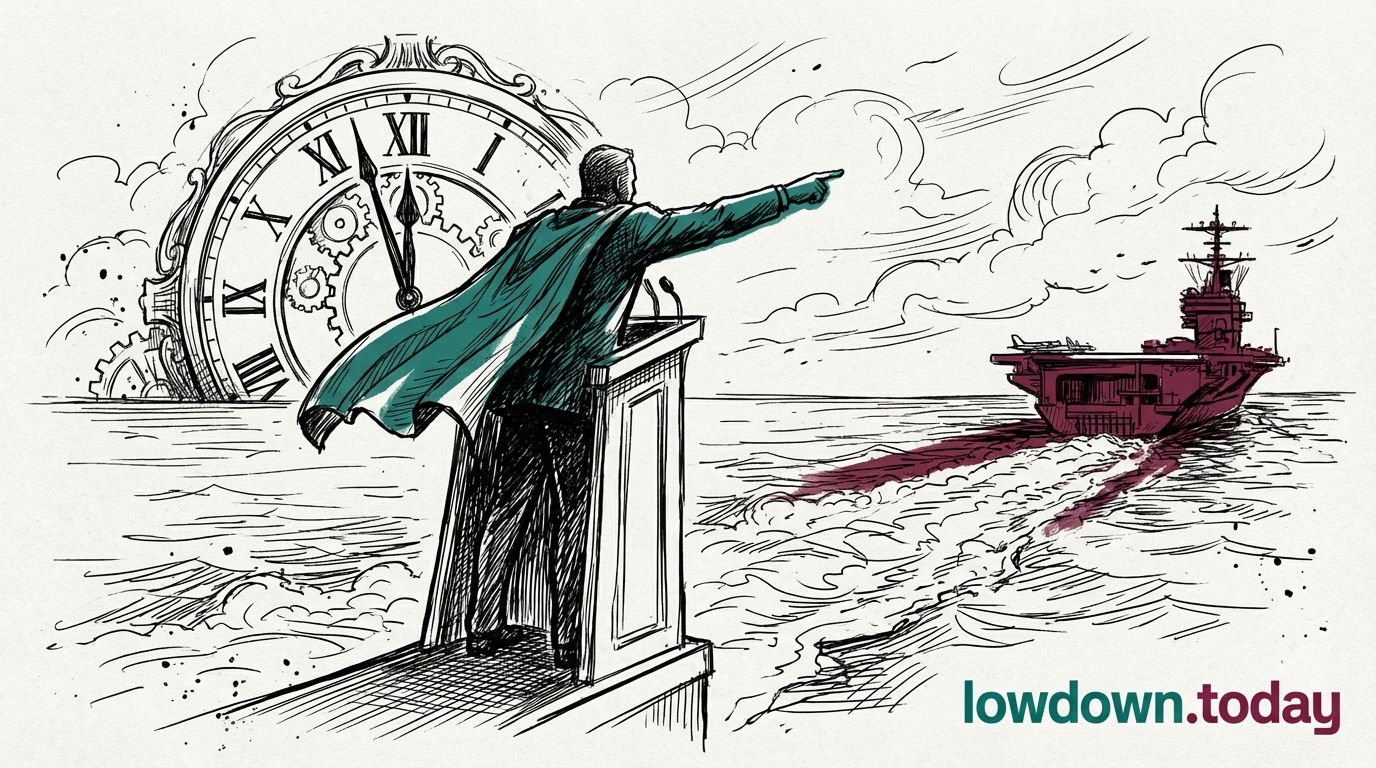
What Iran has put on Pakistan's table is not a counter-offer; it is an invoice for international ratification of the status quo. Tehran wants Washington to sign the customs system into legal existence, not negotiate it away. The conventional sequence has been reversed: instead of trading the toll for sanctions relief, Iran is asking for sanctions relief, reconstruction, and the legal codification of the toll in a single document.


Deep Analysis

In plain English

Iran has sent a formal list of ten conditions to the US, via Pakistan as a go-between. The headline condition: the Strait of Hormuz , the narrow passage through which about a fifth of the world's oil normally flows , will only reopen once the US legally recognises Iran's right to charge ships a toll to pass through it. Here is what makes this unusual. Iran is already charging that toll. Ships from France and Japan have already paid it. The toll system already exists and is running. Iran is not offering to create something new , it is asking the US to sign a legal document recognising what is already there. It is a bit like a squatter asking the homeowner to change the deeds rather than agree to move out. The homeowner has to decide whether to accept the squatter's terms, keep fighting, or find a third path , and so far, Trump's answer is 'not good enough', without specifying what would be.

Deep Analysis
Synthesis

The proposal's significance is architectural, not transactional. Iran is not offering a deal; it is publishing the terms on which it would allow an existing arrangement to acquire legal permanence. The gap between what Tehran has put in writing and what any US administration can sign is the gap this war has not closed , and today's answer from Trump did not close it.

Root Causes

Iran's maximalist counter-proposal reflects three structural factors that predate the war. First, the IRGC has for decades sought a legal basis for its role in Persian Gulf security that international maritime law under UNCLOS does not provide; the war has created the first realistic opportunity to demand that basis as a peace condition.

Second, Iran's civilian government under Pezeshkian has almost no leverage over the IRGC military council (ID:1988), meaning any counter-proposal that the government transmits must be one the IRGC has approved , and the IRGC's minimum price for the toll system is codification, not mere continuation.

Third, the precedent of the 2015 JCPOA, which was undone by the US within three years of signing, has made Iran deeply resistant to informal or executive-agreement-only arrangements. The demand for a "new legal regime" , the specific language the spokesman used , is in part a demand for the kind of multilateral treaty architecture that a future US president cannot unilaterally exit.

What could happen next?
  • Meaning

    The 10-point proposal confirms Iran is treating the toll system as a permanent institution, not a wartime expedient , there is no version of the counter-proposal in which Iran dismantles the toll in exchange for sanctions relief alone.

    Immediate · 0.88
  • Consequence

    If Trump extends the deadline again without engaging Iran's specific legal ratification demand, the gap between the two positions hardens from tactical to structural, making any settlement before the War Powers 60-day clock (approaching 29 April) arithmetically unlikely.

    Short term · 0.74
  • Risk

    China's backing of the Islamabad Accord (ID:2055) as currency-of-transit provider and UNSC gatekeeper gives the toll architecture external legitimacy that compounds the difficulty of a US legal challenge even if a US administration refuses to sign.

    Medium term · 0.7
  • Precedent

    If any version of the Hormuz toll system is ratified in a peace settlement, it sets the first precedent in the post-UNCLOS era of a state extracting sovereignty concessions over an international strait through wartime fait accompli.

    Long term · 0.65
First Reported In

Update #61 · Carriers retreat; Iran codifies Hormuz

Forces News· 7 Apr 2026
Read original
Different Perspectives
South Korean financial markets
South Korea, which imports virtually all its crude oil, is absorbing the war's economic transmission most acutely among non-belligerents. The second KOSPI circuit breaker in four sessions — with Samsung down over 10% and SK Hynix down 12.3% — reflects an industrial economy unable to reprice energy costs that have risen 72% in ten days. The market response indicates Korean industry cannot sustain oil above $100 per barrel without margin compression across manufacturing, semiconductors, and shipping.
Migrant worker communities in the Gulf
The first confirmed civilian deaths in Saudi Arabia — one Indian and one Bangladeshi killed, twelve Bangladeshis wounded — fell on communities with no voice in the military decisions that placed them in harm's way. Migrant workers live near military installations because that housing is affordable, not by choice. Bangladesh and India face the dilemma of needing to protect nationals who cannot easily leave a war zone while depending on Gulf remittances that fund a substantial share of their domestic economies.
Azerbaijan — President Ilham Aliyev
Aliyev treats the Nakhchivan strikes as a direct act of war against Azerbaijani sovereignty, placing armed forces on full combat readiness and demanding an Iranian explanation. The response is calibrated to maximise international sympathy while stopping short of military retaliation — Baku cannot fight Iran alone and needs either Turkish or NATO backing to credibly deter further strikes.
Oil-importing nations (Japan, South Korea, India)
The Hormuz closure is an existential threat. Japan, South Korea, and India receive the majority of their crude through the strait — they will bear the heaviest economic cost of a war they had no part in.
Global South governments (Indonesia, Brazil, South Africa)
Neutrality was possible when the targets were military. 148 dead schoolgirls made it impossible — no government can explain that away to its own citizens.
Turkey
Turkey
Has absorbed three Iranian ballistic missile interceptions since 4 March without invoking NATO Article 5 consultation. Each incident narrows Ankara's political room to continue absorbing without Alliance-level response.