Skip to content
Briefings are running a touch slower this week while we rebuild the foundations.See roadmap
Iran Conflict 2026
6APR

Lebanon displacement passes 800,000

4 min read
09:43UTC

In under a fortnight, Lebanon's displacement has reached 80% of the 2006 war's 34-day total — and the child death rate already exceeds it.

ConflictDeveloping
Key takeaway

Lebanon's 800,000 displaced are entering a state whose humanitarian absorption capacity collapsed before this war began.

Lebanon's internal displacement passed 800,000 on Thursday — up from 759,300 the previous day and from approximately 700,000 two days before that . 40,700 people were displaced in a single day. The child death rate continues to exceed what UNICEF documented during the 2006 war: Lebanon's health ministry reported 86 children killed as of Wednesday, a rate of roughly 14 per day against the 2006 benchmark of approximately 12 per day over a conflict more than twice as long .

The 2006 war displaced approximately one million Lebanese over 34 days. This conflict has reached 80% of that total in under two weeks — a rate more than three times faster. The acceleration on Thursday has a direct cause: the IDF's new evacuation order south of the Zahrani River pushed the displacement boundary north of the Litani for the first time, generating a fresh wave of movement from areas that had not previously been ordered to evacuate.

The question is where 800,000 people go. Southern Lebanon is an active combat zone. Dahiyeh is under sustained bombardment. Central Beirut has been struck three times in five days. The Bekaa Valley shares a porous border with Syria — itself still recovering from over a decade of civil war — and already hosts an estimated 1.5 million Syrian refugees who never returned home. Lebanon's infrastructure was not built for this. The country's economy contracted by more than 60% between 2019 and 2023 in what the World Bank called one of the worst economic collapses in modern history. The 2020 Beirut port explosion destroyed the capital's primary grain storage and trade facility. Electricity supply averages a few hours per day outside central Beirut. Hospitals that would absorb the wounded operate on generators and imported fuel.

Lebanon absorbed roughly one million displaced in 2006 and reconstituted within months after the ceasefire, aided by Gulf reconstruction funds — primarily from Saudi Arabia and Qatar. That financial backstop is unlikely to repeat. Saudi Arabia, the UAE, Kuwait, and Qatar are themselves under Iranian missile and drone fire. The Gulf states that rebuilt Lebanon after 2006 are now managing their own wartime emergencies.


Deep Analysis

In plain English

Lebanon was already in severe economic crisis before this war. Its banking system froze depositors' funds in 2019 and never recovered. The Lebanese pound lost over 95% of its value. Electricity runs for only a few hours daily. The country hosts more refugees per capita than almost any other nation on earth — mostly Syrians — and its public hospitals and schools were already overwhelmed before the first strike. Now 800,000 of Lebanon's own people are displaced, with more coming as Israel advances north of the Litani. The child death rate exceeding the 2006 war means more children are dying proportionally even though 2006 is remembered as catastrophic for Lebanese civilians. The country cannot adequately feed, shelter, or provide medical care for its existing population, let alone hundreds of thousands of additional displaced people who have lost their homes and livelihoods simultaneously.

Deep Analysis
Synthesis

Post-war reconstruction in Lebanon will require rebuilding the state and the economy simultaneously — a task that proved impossible after the 2019 financial crisis and the 2020 Beirut explosion even without war damage. Unlike 2006, there is no functioning central bank, no government reconstruction authority, and no credible political coalition capable of managing international aid flows. International donors have historically conditioned Lebanese reconstruction funding on governance reforms that Lebanese political actors resist. The combination of war damage, pre-existing collapse, and political paralysis creates a recovery problem with no precedent in Lebanese history.

Root Causes

Lebanon's pre-war state collapse — triggered by the 2019 financial crisis, the 2020 Beirut port explosion, and sustained political deadlock — destroyed the institutional infrastructure required to manage mass displacement. Lebanese civil defence, the public health system, and emergency shelter networks were all operating at fractional capacity before the first strike. UNHCR's Lebanon operation had already been redirected to managing Syrian refugee populations, leaving it structurally unprepared for a simultaneous domestic displacement crisis of this scale.

Escalation

The IDF's new evacuation order covering all territory south of the Zahrani River will generate a second displacement wave from communities between the Litani and the Zahrani that have not previously evacuated. The Iqlim al-Tuffah district and towns on the approaches to Sidon contain populations not yet included in the 800,000 figure. The total will rise sharply as that advance proceeds, likely exceeding the 2006 peak of one million within days.

What could happen next?
2 risk1 meaning2 consequence
  • Risk

    The Zahrani advance will generate a second displacement wave from the Litani-Zahrani corridor, pushing total displacement past the 2006 peak of one million within days.

    Immediate · Assessed
  • Meaning

    Lebanon's child death rate exceeding 2006 levels signals that the healthcare system — already collapsed before the war — can no longer provide basic trauma and paediatric care to displaced populations.

    Immediate · Reported
  • Consequence

    Loss of south Lebanon's 2026 agricultural harvest destroys subsistence income for approximately 200,000 rural households, increasing food import dependency in a state with no foreign exchange reserves.

    Short term · Assessed
  • Risk

    Accelerating displacement of Lebanon's professional and business community could trigger permanent emigration, permanently reducing the human capital required for any post-war economic recovery.

    Medium term · Suggested
  • Consequence

    Without a functioning state or banking system to channel reconstruction funding, post-war recovery will depend on international NGOs operating in a governance vacuum, potentially extending the humanitarian crisis for years.

    Long term · Assessed
First Reported In

Update #33 · Oil breaks $100; war reaches Iraqi waters

Washington Post· 13 Mar 2026
Read original
Causes and effects
This Event
Lebanon displacement passes 800,000
The rate of displacement — 800,000 in under two weeks against approximately one million over 34 days in 2006 — reflects both the intensity of Israeli operations and the progressive expansion of evacuation zones into previously unaffected areas. Lebanon's infrastructure, degraded by five years of economic crisis and the 2020 port explosion, cannot absorb displacement at this speed.
Different Perspectives
Oil markets / Lloyd's underwriters
Futures markets priced CENTCOM's strikes-complete statement as a de-escalation signal and pushed Brent down 1.7 per cent to $94.71, even as the IRGC declared Hormuz closed. Lloyd's war-risk premiums held elevated because institutional de-listing requires a UN Security Council resolution that Russia and China have just shown they will block.
Pakistan (mediator)
Pakistan (mediator)
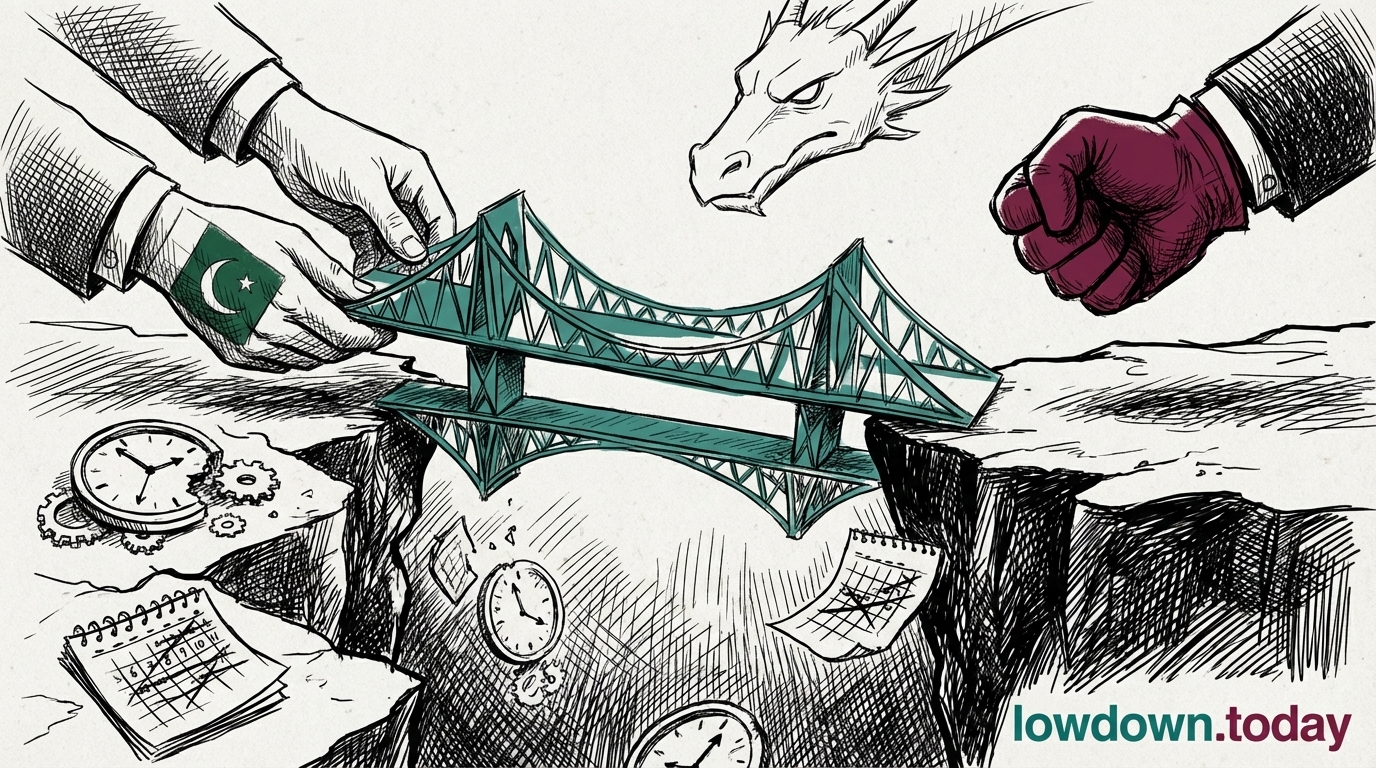
Interior minister Mohsin Naqvi carried dual civilian and military letters to Mojtaba Khamenei in Tehran on 6-7 June with no public response. The IRGC's Hormuz closure on 11 June shows the corps is acting independently of the channel Pakistan is using, making the mediation structurally unable to produce a binding commitment without direct IRGC access.
Russia and China
Russia and China
Russia and China voted against GOV/2026/40 at the IAEA Board, following through on the blocking position coordinated with Grossi in Geneva on 5 June; both states continue to oppose Western institutional pressure on Iran at every multilateral venue.
E3 and IAEA (UK, France, Germany)
The E3 co-sponsored IAEA resolution GOV/2026/40, adopted 21-3-10 on 10 June, demanding Iran disclose 440.9 kg of unaccounted HEU and admit inspectors to four denied facilities. The 10 abstentions and Russia-China noes leave any Security Council referral without a viable enforcement path.
IRGC / Iran military command
The corps declared Hormuz closed to all traffic on 11 June and claimed two vessels struck, overriding the MoU its own civilian negotiators were pursuing through Pakistan. The closure order used the Persian Gulf Strait Authority apparatus to convert a toll mechanism into a military prohibition.
Trump administration / CENTCOM
CENTCOM completed a second day of strikes on Tehran, Sirik and Minab, rejected the IRGC Hormuz closure as inconsistent with observed transit, and said strikes were complete. Hegseth framed the bombing explicitly as the negotiation: the method is coercive deal-making with no stated pause threshold.



