Skip to content
Welcome, thoughtbot's Giant Robots listeners!Start here
Iran Conflict 2026
30MAR

Iran: six more months; trust level zero

2 min read
08:00UTC

Tehran's foreign minister told Al Jazeera Iran is ready for at least six months of conflict and that no negotiations exist in any form, as the IRGC declared Iran alone would decide when the war ends. The gap between Washington's two-to-three-week withdrawal timeline and Iran's six-month posture is the single most important number in this conflict.

ConflictAssessed
Key takeaway

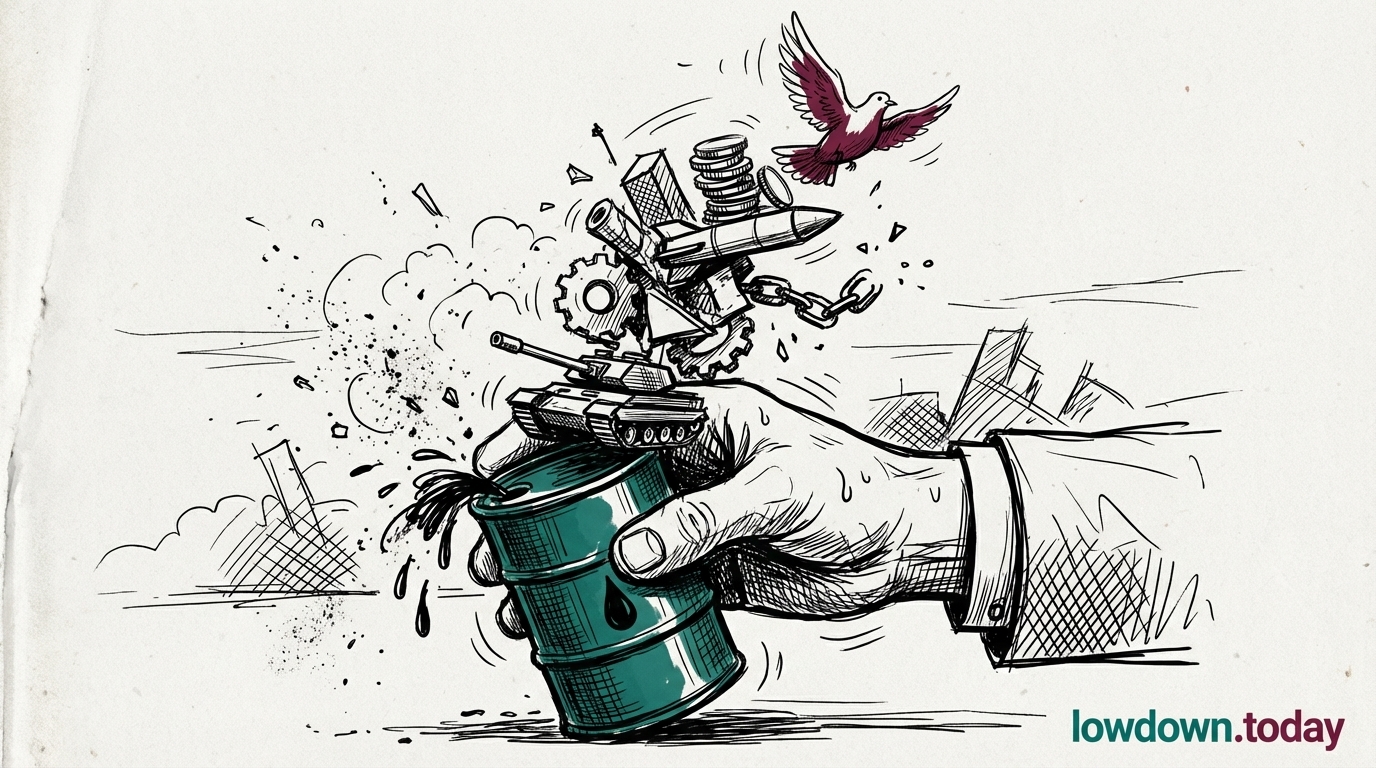
Iran's six-month war posture makes the $14-18 oil risk premium dramatically understated if Tehran holds.

Iranian Foreign Minister Abbas Araghchi told Al Jazeera on 1 April that Iran is prepared for at least six months of war and stated the trust level is zero, with no negotiations existing in any form. Pakistan had confirmed indirect US-Iran talks were underway just days earlier; Araghchi's statement effectively closed that channel publicly.

Araghchi's six-month declaration is not bluster. It is a formal statement of strategic intent, broadcast internationally, with institutional backing from both the IRGC and the Armed Forces. The IRGC spokesman said Iran will determine when the war ends. The Armed Forces spokesman called Trump delusional. These are not hedged diplomatic formulations; they mirror the language Ghalibaf used when he simultaneously rejected indirect talks while Pakistan was announcing them.

The oil market is pricing Trump's version of events. Brent at $107.72 reflects partial belief in near-term resolution. Goldman Sachs estimates the geopolitical risk premium at $14-18 per barrel. Brent had crashed from $126 to $97 on Trump's first deadline extension, then recovered sharply when Iran rejected the terms. The same pattern now repeats: markets price the American announcement; Iran's response prices reality.

If Tehran holds for six months, the $14-18 premium is not structural floor but structural ceiling. Iran has already demonstrated it can sustain this pace: the Islamabad Four talks broke without a statement, the Hormuz toll legislation is advancing to full Parliament vote, and the NPT withdrawal bill moves on the same track. Iran is building the legal and military architecture for a prolonged conflict, not preparing an exit.

Deep Analysis

In plain English

Iran's foreign minister said publicly that Iran is ready to fight for at least six months and has zero trust in negotiations with the US. He said no talks are happening, not even informal ones. This matters because the US says the war will be over in two to three weeks. Both sides cannot be right. The oil market currently believes the Americans. If Iran is right, the disruption to global oil supply ; about one in five barrels in the world ; continues for months, not weeks. That means higher petrol prices and higher costs for almost everything transported by lorry or ship.

Deep Analysis
Root Causes

Iran's zero-trust posture stems from the US withdrawal from the JCPOA in 2018 under Trump's first term. Araghchi's reference to yielding no results is a direct callback to the experience of negotiating the deal and watching it abandoned unilaterally.

The IRGC's institutional interest in the war also differs from the foreign ministry's: the Guards have consolidated power over state functions during Khamenei's absence and have no political incentive to end a conflict that has elevated their authority.

Escalation

Iran's institutional declarations ; the Hormuz toll law, the NPT withdrawal bill, the six-month war posture ; are each individually reversible but collectively suggest a government that has made a strategic decision to contest rather than accommodate the US campaign.

What could happen next?
  • Risk

    Oil markets are mispricing the conflict duration; a six-month war implies structural rather than temporary supply disruption.

    Short term · Assessed
  • Consequence

    Iran's institutional war-making apparatus ; Hormuz toll law, NPT withdrawal bill ; becomes entrenched and harder to reverse with each week of conflict.

    Medium term · Assessed
  • Risk

    Zero-trust posture means no back-channel exists to de-escalate if either side reaches a threshold requiring emergency communication.

    Immediate · Reported
First Reported In

Update #54 · Trump declares victory and withdrawal

CNBC / Financial Times· 1 Apr 2026
Read original →
Different Perspectives
Wang Yi
Wang Yi
China's foreign minister and Djibouti's issued a joint communique on 21 October saying the war should not reach the Horn of Africa and stressing free navigation through Bab al-Mandeb. The text names neither Iran nor the Houthis, and Djibouti hosts China's only overseas military base, opposite the Yemeni coast.
Ministry of External Affairs
India's foreign ministry called the attacks on Saudi civilian and energy sites "unacceptable" on 22 October and said they must stop at once. An Indian died at Dammam, Indians were injured there and at Shaybah, and about 4,000 Umrah pilgrims remain stranded by one MP's count.
Iraq
Iraq
Iraq closed the al-Sheeb crossing with Iran to travellers and trucks from 21 October and said other crossings would close gradually. Unlike September's closure, which ended on a staged timetable, this one has none, and Iran's interior ministry said it received no notice.
Abdel Fattah el-Sisi
Egypt's president said on 21 October that Cairo's support would "defend Saudi territory, and does not include an attack on Yemen". Araghchi warned that Egyptian involvement would further complicate the situation, and Cairo's limit matches the one Ankara set on 8 October against attacking another state's soil.
UK Ministry of Defence
The MoD said on 20 October that RAF Typhoons over Saudi Arabia will not strike the Houthis, but extended tanker support to Saudi operations including against Houthi targets in Yemen. The tanker line sets no limit on strikes, so British aircraft may now refuel Saudi jets on bombing runs.
Turkey
Turkey
Ankara sent the Mecca Joint Defence Agreement to parliament around 20 October, and its published text treats an attack on one party as an attack on all. Article 16 brings it into force only on the last ratification, so the 5 October invocation in Riyadh could not yet bind Turkey.

Written with AI from Lowdown's published reporting. Not individually reviewed by an editor. Editorial standards.
