Skip to content
Briefings are running a touch slower this week while we rebuild the foundations.See roadmap
Iran Conflict 2026
28MAR

IRGC and Hezbollah declare joint op

3 min read
17:06UTC

Five hours of coordinated fire on fifty-plus Israeli targets formalises the shift from parallel strikes by separate actors to a declared combined Iranian-Hezbollah campaign with unified timing and targeting.

ConflictDeveloping
Key takeaway

Iran's joint operation declaration ends its proxy deniability doctrine, formally establishing it as a direct co-belligerent.

The IRGC and Hezbollah launched what they described as a joint operation on Wednesday night: five hours of sustained fire on more than 50 targets across Israel. Hezbollah fired over 100 rockets at Northern Israel in a single barrage, triggering sirens across Haifa and the Galilee. Two people were lightly injured. The IDF warned Hezbollah would "likely attempt to increase its rate of rocket and drone attacks."

Israel had acknowledged by Day 10 that Lebanon was launching more daily attacks than Iran itself . Wednesday formalised that shift. Iran's "axis of resistance" — Hezbollah, the Houthis, Iraqi militias, Hamas — has historically operated through deniable parallel action, each group maintaining enough operational autonomy for Tehran to claim coordination without command. A publicly declared joint operation removes that ambiguity. Fire from Lebanon is now, by Iran's own statement, Iranian fire — planned and timed as a single campaign.

The IRGC's capacity to coordinate across borders after losing its Aerospace Force headquarters and drone command centre in Tehran reflects its command architecture: 31 autonomous provincial units that distribute operational planning below any single headquarters. Central command is gone; cross-border coordination persists. The Houthis offer the counter-example — Israeli strikes in August–September 2025 destroyed Ansar Allah's command structure , and the group has not entered this war despite possessing launch platforms. Decentralised capacity and decentralised coordination are different capabilities, and the IRGC has retained both.

For Israel, the combined campaign compounds a finite resource problem. A hundred-plus rockets in a single barrage from the north, layered onto Iranian missile fire from the east, tests whether Israel's multi-layered defence architecture can sustain simultaneous attrition from coordinated sources on different azimuths. The five-hour duration — far longer than Hezbollah's typical barrages — suggests the intent is to stress Israeli air defences over time rather than overwhelm them in a single volley. Each interceptor expended against a cheap rocket is one fewer available for the next Iranian Ballistic missile.

Deep Analysis

In plain English

Iran has spent decades supporting groups like Hezbollah with weapons, training, and money while publicly denying direct involvement in their attacks. This gave Iran a legal shield — it could say 'that's not us, that's an independent group making its own decisions.' Wednesday's announcement tore that shield up. By declaring a joint operation with Hezbollah, Iran publicly acknowledged shared command and shared intent. This changes the legal picture significantly. Israel and the US can now point to an explicit Iranian admission of co-belligerency to justify targeting Iranian command elements inside Lebanon, or even inside Iran itself. The declaration is not just a military statement — it is a deliberate political choice to escalate Iran's formal role and exposure in the conflict.

Deep Analysis
Synthesis

The 31-unit provincial command structure surviving the destruction of central aerospace headquarters is an IRGC doctrine validation. The decentralised architecture, specifically designed after the Soleimani assassination to survive decapitation strikes, has now demonstrated operational resilience under direct attack. This outcome will shape IRGC and proxy force-structure doctrine globally regardless of this conflict's final outcome.

Root Causes

The IRGC's shift from deniable support to declared co-belligerency likely reflects the destruction of its aerospace and drone headquarters. With degraded independent strike capacity, formalising Hezbollah coordination becomes more operationally valuable than preserving deniability. The cost-benefit calculation of the deniability doctrine inverted once Iran's own infrastructure became a direct target.

Escalation

The formal joint declaration shifts Israeli targeting calculus immediately. Israel can now argue any Hezbollah command structure is simultaneously an IRGC node, broadening the range of legally defensible targets in Lebanon. The IDF striking ten Dahiyeh facilities on the same night the declaration was made suggests this calculus was applied within hours of the announcement.

What could happen next?
  • Meaning

    Iran's explicit co-belligerency removes the legal ambiguity that previously constrained direct Israeli strikes on Iranian command elements embedded within Lebanese territory.

    Immediate · Assessed
  • Risk

    Formal IRGC-Hezbollah joint command provides legal basis for Israel to classify all Hezbollah facilities as Iranian military targets, potentially escalating strike tempo and civilian casualties in Lebanon.

    Short term · Assessed
  • Precedent

    A state and non-state actor formally declaring combined operations under joint command is a novel precedent in contemporary armed conflict with significant international humanitarian law implications.

    Long term · Suggested
  • Consequence

    The IRGC's demonstrated resilience across 31 decentralised provincial units will accelerate adversary investment in similar architectures designed to survive leadership-decapitation strikes.

    Long term · Suggested
First Reported In

Update #32 · UN condemns Iran 13-0; ceasefire blocked

Jerusalem Post· 12 Mar 2026
Read original
Different Perspectives
Gulf shipping and insurance markets
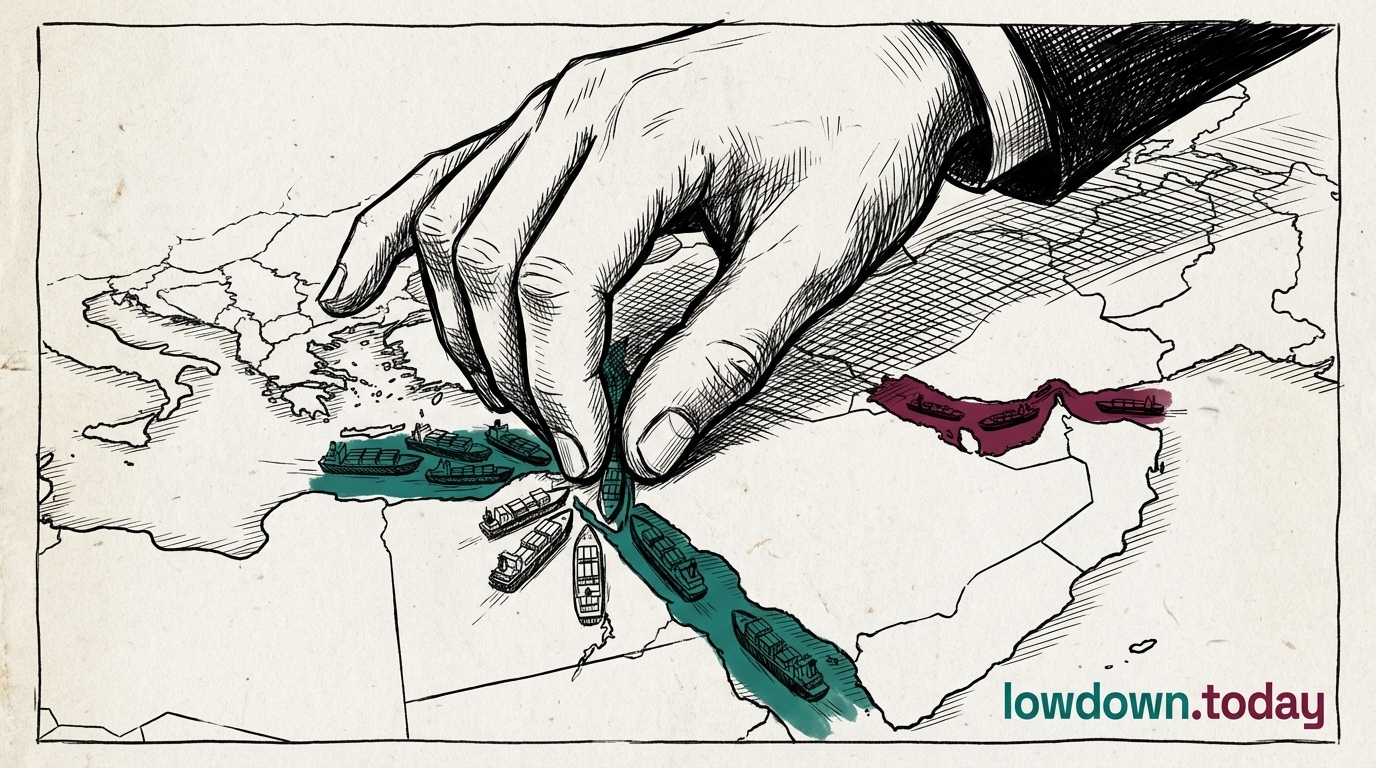
With Hormuz and Bab el-Mandeb both hostile at once, war-risk underwriters face their first dual-chokepoint pricing problem; the rerouting hedge that absorbed one closure is gone for Israeli-linked hulls. Any deal that reopens Hormuz without a Houthi stand-down clause delivers only partial shipping relief.
Russia and China
Russia and China
Russia and China met IAEA chief Grossi jointly in Geneva on 5 June to coordinate an advance blocking position against Washington's censure resolution, the first documented instance of proactive pre-session obstruction rather than reactive post-vote dissent. Beijing's move came four days after OFAC designated Shanghai Qianye Energy under Iran energy sanctions.
Saudi Arabia
Saudi Arabia
Saudi Arabia was left out of the emergency $4.01 billion Patriot waiver Qatar received on 2 May as its own PAC-3 stocks ran near-empty from intercepting Iranian salvoes over Aramco facilities. Riyadh is on a standard 18-month FMS queue behind a production line booked through 2030, with no equivalent priority to Qatar's Al Udeid basing role.
Houthis (Ansar Allah)
The Houthis declared a complete ban on Israeli Red Sea navigation on 8 June and struck Jaffa, their first attack on Israeli territory since April, seven days after the Tasnim authorisation to activate other fronts including Bab el-Mandeb. The declaration put both chokepoints under hostile authority simultaneously.
Iran
Iran
Iran agreed the 9 June mutual halt after the Mahshahr exchange and coordinated with Russia and China to block Washington's IAEA censure resolution, using the Board as a second front while the bilateral pause held on the military one. Tehran's acceptance of the Lebanon carve-out contradicts the linkage position it stated on 1 June.
Benjamin Netanyahu and the IDF
Israel struck the Karun Petrochemical plant at Mahshahr on 8 June over Trump's explicit objection, then agreed a halt with Iran the following day scoped on Israeli terms with Lebanon carved out. Netanyahu's posture is that the IDF will not accept Iranian missile factories as off-limits regardless of US diplomatic timelines.