Skip to content
Briefings are running a touch slower this week while we rebuild the foundations.See roadmap
Iran Conflict 2026
28MAR

HMS Dragon sails for Hormuz without rules of engagement

5 min read
17:06UTC

HMS Dragon was reportedly redeployed from the Eastern Mediterranean to the Middle East on 9 May; the MoD confirmed deployment as 'prudent planning' but published no vessel name, sail date, or tasking order.

ConflictDeveloping
Key takeaway

Britain's most capable warship has reportedly sailed for the Gulf with no published tasking order behind it.

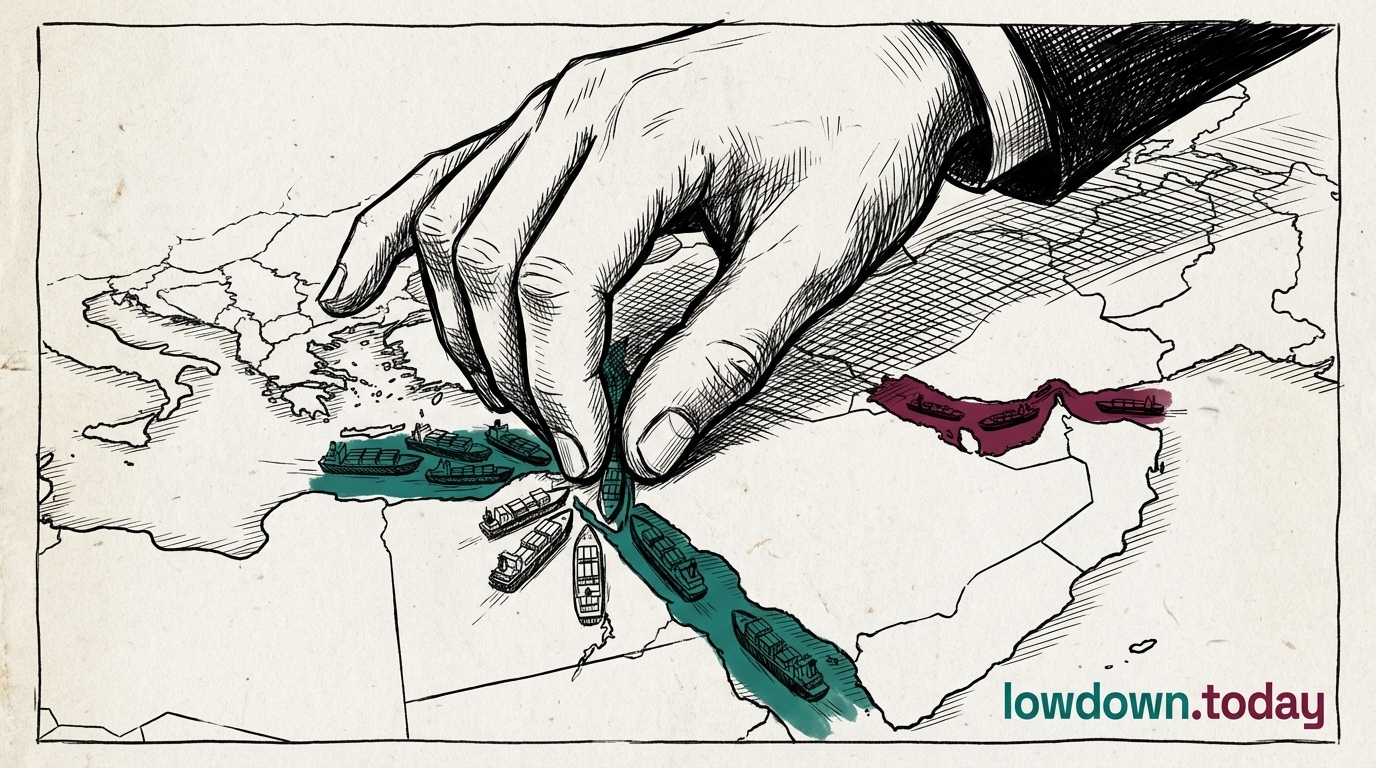
HMS Dragon, a Royal Navy Type 45 air-defence destroyer, was reportedly redeployed from the Eastern Mediterranean to the Middle East on Saturday 9 May 2026 for a potential Strait of Hormuz mission. The National in Abu Dhabi named the ship first 1; Naval News, Stars and Stripes and Middle East Monitor carried the name within hours. No UK primary source has confirmed. The UK Ministry of Defence (MoD) framed deployment as "prudent planning" for a coalition "jointly led by UK and France", yet published no vessel name, no sail date, no rules of engagement, and no tasking order. The MoD press grid still shows April material.

MoD's absent press grid release tells its own story alongside the deployment. The 40-nation Northwood plan, named for the UK Permanent Joint Headquarters (PJHQ) in Hertfordshire that runs it, was held in non-deployment posture twenty days after the Paris conference . The Northwood text named a "when conditions are met" trigger that has not fired. The platform has moved anyway, under a third-party flag-state press report, which is the reversal of the political-then-operational sequence the plan was built around. Either the MoD is running the deployment ahead of the political instrument and will publish later, or the deployment is an operational hedge without the legal cover the Northwood text required.

A Type 45 is the Royal Navy's premier air-defence platform: six Sea Viper cells, Sampson radar, designed for layered drone-and-cruise-missile saturation defence. HMS Dragon's Eastern Mediterranean rotation since late March ran Wildcat helicopters (AgustaWestland AW159, shipborne for maritime patrol) for counter-drone work, which is the precise capability the Northwood text named as the European mission's operational requirement. HMS Dragon's capability matches the Northwood mission requirement precisely; the paperwork that should accompany the platform has not been published.

For a P&I underwriter pricing Gulf-anchorage cover, the gap matters in pounds and pence. Reading "jointly led by UK and France" as a deployable posture drops cover quotes; reading it as a third-party press rumour raises them by 50%. Without published rules of engagement, the destroyer's posture in Gulf waters depends on a tasking order no one in Whitehall has yet confirmed in writing, and a Royal Navy commanding officer with a Sea Viper magazine and no political cover is in a position the Northwood plan was explicitly designed to avoid.

Deep Analysis

In plain English

HMS Dragon is a Royal Navy warship of a class specifically built to shoot down missiles and drones. The UK moved it from the Eastern Mediterranean, where it had been doing counter-drone patrol work, to the Middle East on 9 May, positioning it close to the Strait of Hormuz. This makes it the first actual European ship moved into the region as part of the 40-nation coalition that agreed in Paris in April to protect shipping through Hormuz. Here is what matters: the coalition agreed to deploy only 'when conditions are met', meaning after a ceasefire. HMS Dragon moved before any ceasefire exists. The UK Ministry of Defence called it 'prudent planning' and published no rules of engagement, which means the ship is there, but nobody publicly knows what it is allowed to shoot at or protect. Whitehall has not published a tasking order, so HMS Dragon's posture in Gulf waters depends on instructions no one in London has confirmed in writing.

Deep Analysis
Root Causes

HMS Dragon's deployment has two institutional drivers that operate independently of the immediate operational requirement.

First, the Northwood 40-nation mission has been in 'non-deployment posture' for 20 days since the 17 April Paris conference . The mission's deployment trigger, 'a sustainable ceasefire', has not fired. HMS Dragon's physical redeployment before the political trigger moves the sequence from posture to platform: the UK has committed a named asset before the legal instrument that would authorise its deployment is in place.

This is not operationally unusual, RUSI notes that assets are routinely pre-positioned to reduce response times, but it creates a political fact that constrains UK policy options. Once Dragon is in-theatre, withdrawing it without deploying it requires a positive political decision to stand down, which carries domestic political costs.

Second, Type 45 procurement has been a long-running Royal Navy capability concern. Of the six Type 45 destroyers built, the class has suffered persistent WR-21 intercooler-recuperator power plant reliability problems, limiting the number of hulls available for extended deployment at any given time.

Dragon's redeployment signals that the Royal Navy has judged the platform sufficiently reliable for a sustained Gulf mission, a significant institutional statement given the class's mechanical history.

Escalation

HMS Dragon's physical redeployment moves the Northwood coalition from a planning document to a physical asset commitment, but the absence of published rules of engagement means the escalation is political rather than operational. Iran's targeting calculus will not change based on a ship whose permitted engagements are unpublished.

The critical next escalation indicator is whether France deploys a second European platform, which would satisfy Lloyd's 'two-ship credible commitment' threshold, or whether Dragon operates alone in a posture-without-ROE mode that Iran can safely ignore.

What could happen next?
  • Consequence

    The UK's pre-trigger deployment creates a physical commitment that makes withdrawing without deploying politically costly; the Northwood coalition's ceasefire-trigger condition has been effectively pre-empted by HMS Dragon's presence.

    Short term · 0.82
  • Risk

    Without published rules of engagement, HMS Dragon cannot legally engage Iranian drones under UK law without a ministerial authorisation for each engagement, a procedural constraint that could make the ship operationally irrelevant in a fast-moving drone attack scenario.

    Immediate · 0.77
  • Opportunity

    Dragon's presence provides France and Germany a low-cost political option: endorsing the UK deployment as the coalition's forward element without committing their own hulls, effectively free-riding on UK asset commitment while satisfying domestic audiences that Europe is engaged.

    Short term · 0.71
  • Consequence

    The Type 45 Sea Viper capability against medium-high altitude threats is largely irrelevant to the primary Iranian drone threat profile; the Wildcat helicopters are more relevant but require sustained crew rotation logistics that single-ship deployment cannot support.

    Immediate · 0.79
First Reported In

Update #94 · Tehran writes, Trump tweets, Brent breaks

The National· 11 May 2026
Read original
Different Perspectives
IAEA
IAEA
Director General Rafael Grossi appeared in person at the UNSC on 19 May and warned that a direct hit on an operating reactor 'could result in very high release of radioactivity'. The session produced a condemnation record but no resolution, and the Barakah perimeter was already struck on 17 May.
Hengaw (Kurdish rights monitor)
Hengaw documented three judicial executions and the detention of Kurdish writer Majid Karimi in Tehran on 19 May, establishing Khorasan Razavi province as the newest geography in Iran's wartime judicial record. The organisation's Norway-based operation continues to surface a domestic repression track running in parallel with every diplomatic and military development.
India
India
Six India-flagged vessels conducted a coordinated cluster transit under PGSA bilateral assurances during the 17 May window, paying no yuan tolls. New Delhi's inclusion in Iran's state-to-state passage track insulates Indian energy supply without requiring endorsement of the PGSA's yuan-toll architecture or alignment with the US coalition.
Pakistan
Pakistan
Pakistan is the only functioning diplomatic bridge between Tehran and Washington. Its role is relay, not mediation in the settlement sense: it conveyed Iran's 10-point counter-MOU in early May, relayed the US rejection, and is now passing 'corrective points' in the third documented exchange of this sub-cycle without either side working from a shared text.
UK and France (Northwood coalition)
Twenty-six coalition members have published no rules of engagement eight days after the Bahrain joint statement; Lloyd's underwriters have conditioned war-risk reopening on written ROE from either Iran or the coalition. Italian and French mine-countermeasures deployments are operating on the in-water clearance task CENTCOM Admiral Brad Cooper's 90% mine-stockpile claim does not address.
Saudi Arabia
Saudi Arabia
Riyadh has not publicly commented on the Barakah strike or the 50-47 discharge vote. Saudi output feeds the IEA's $106 base case; the $5 Brent premium above that model reflects institutional uncertainty no Gulf producer can compress through supply adjustment alone.