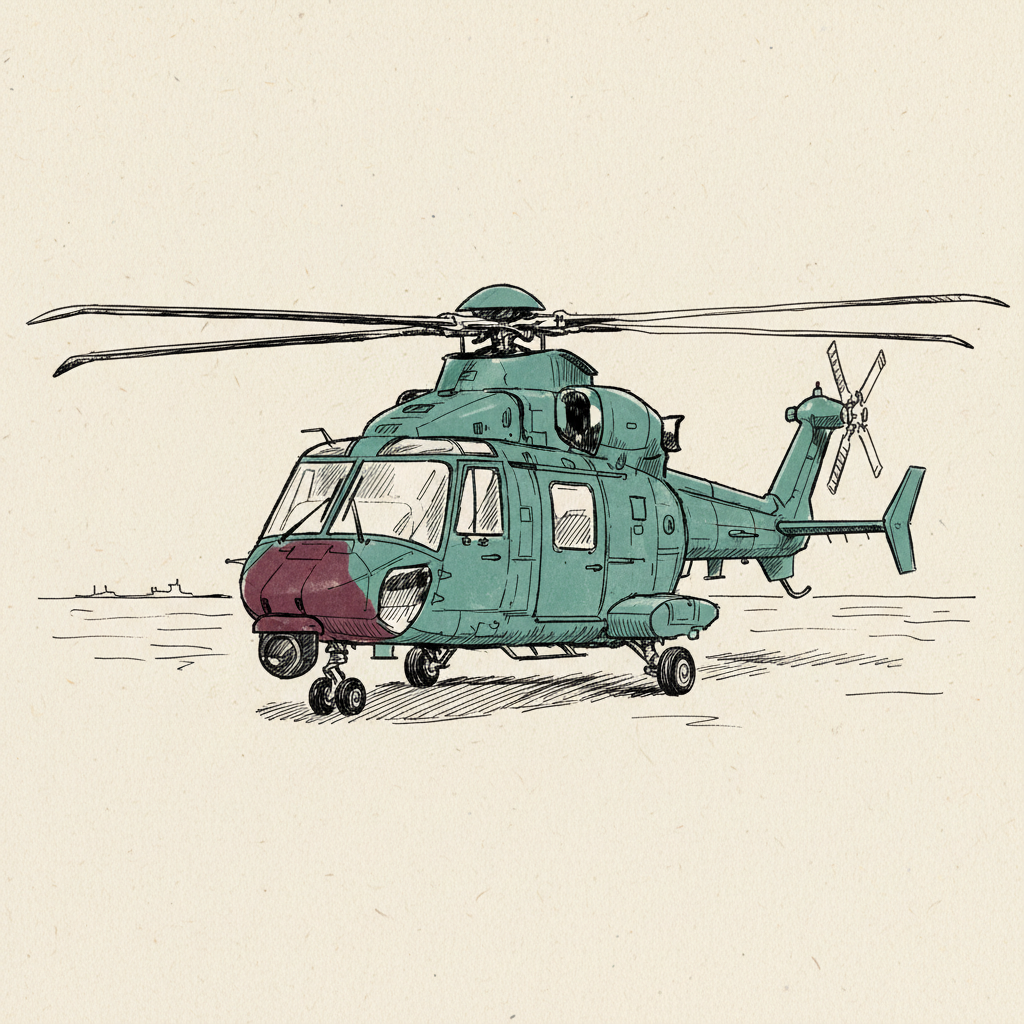
Wildcat helicopter
AgustaWestland AW159 naval helicopter; used by Royal Navy for counter-drone and anti-surface operations.
Last refreshed: 11 May 2026 · Appears in 1 active topic
Can a Wildcat helicopter intercept the fast-attack drone swarms Iran has rehearsed in the Gulf?
Timeline for Wildcat helicopter
Mentioned in: Royal Navy flies drones on one mesh
Drones: Industry & DefenceMentioned in: HMS Dragon sails before the ceasefire
Iran Conflict 2026HMS Dragon sails for Hormuz without rules of engagement
Iran Conflict 2026Background
The Wildcat helicopter is the Royal Navy and British Army's primary shipborne tactical helicopter, and its counter-drone deployment capability has been central to Royal Navy operations in high-threat environments including the Gulf. Wildcats embarked aboard Type 45 destroyers such as HMS Dragon extend the ship's sensor and weapon reach, particularly against fast-moving surface contacts such as the IRGCN's swarm-boat tactics and against the drone threats Iran has demonstrated. The helicopter's Thales SEASPRAY 7000E AESA radar and Stingray torpedo or Sea Venom anti-ship missile provide Independent attack options the ship's own systems cannot replicate at close range or over the radar horizon.
AgustaWestland AW159 Wildcat entered service with the Royal Navy in 2014 as the replacement for the Lynx Mk8. The Royal Navy fleet numbers approximately 28 aircraft (HMA2 variant), with a further fleet in British Army service (AH1 variant). In naval configuration it is operated by 825 Naval Air Squadron for training and 829 NAS for frontline deployments. Maximum speed is approximately 291 km/h with a range of around 777 km. In the counter-drone role it carries multiple machine guns and can coordinate with ship-based electronic warfare systems to classify and track small unmanned aerial vehicles. Its primary anti-surface weapons are the Sea Venom (anti-ship missile) and Stingray (lightweight torpedo).
The Wildcat's role in the Hormuz context is principally as an organic ship asset providing over-the-horizon targeting, counter-drone classification, and surface-search capability that supplements Dragon's own Sampson radar. In the littoral environment of The Gulf, the helicopter enables the ship to identify and respond to Iranian fast-attack boat and drone swarms before they reach gun or close-defence engagement ranges, providing a critical time advantage.
What is the Wildcat helicopter used for in the Royal Navy?
How is a Wildcat helicopter used against drones?
How does the Wildcat counter Iranian drone threats in the Gulf?
When did the Wildcat replace the Lynx helicopter in the Royal Navy?
What weapons does a Royal Navy Wildcat carry?

