Skip to content
Briefings are running a touch slower this week while we rebuild the foundations.See roadmap
Iran Conflict 2026
28MAR

Baqaei rejects uranium handover on sacred ground

3 min read
17:06UTC

Iran's foreign ministry spokesperson called the country's enriched uranium 'as sacred as Iranian soil' and rejected Donald Trump's claim that a handover had been agreed.

ConflictDeveloping
Key takeaway

Iran has framed its enriched uranium as national soil, which is the negotiating floor a handover cannot cross.

On 19 April Iran foreign ministry spokesperson Ismail Baqaei called the country's enriched uranium "as sacred as Iranian soil" and rejected Donald Trump's uranium-handover claim . The gap between the US position and Iran's offer is now being negotiated against a stockpile Iran frames in territorial register rather than technical.

The soil metaphor carries specific domestic weight. Iranian political rhetoric reserves "as sacred as Iranian soil" for claims to disputed territory in the Shatt al-Arab and Abu Musa, not for commodity stockpiles. Applying the same language to enriched material pulls uranium into the constitutional category Tehran does not trade. Supreme Leader Mojtaba Khamenei's position that nuclear weapons are non-negotiable (recorded in writing the previous week) is what makes Baqaei's framing consistent rather than a freelance.

For the diplomatic track Baqaei's framing closes a procedural door on handover. Trump had claimed on 17 April that Iran had agreed to a uranium transfer; that claim cannot now survive without the foreign ministry walking back the soil language, which binds the 221-0 Majlis vote against IAEA cooperation . A foreign minister who signs a handover on a stockpile described this way in public is signing his own dismissal.

A counter-view from non-proliferation analysts at the Washington Institute is that Iranian rhetoric routinely rejects transfers before negotiating them, and the soil language is a bargaining floor rather than a bright line. That reading is defensible; it also underestimates how tightly Khamenei's written position constrains Iran's negotiating team once it is deployed in public.


Deep Analysis

In plain English

Iran's foreign ministry spokesman said on 19 April that Iran's enriched uranium was 'as sacred as Iranian soil' and rejected President Trump's claim that Iran had agreed to hand over its uranium stockpile. Iran's position in talks is to pause uranium enrichment for 3-5 years. The US wants a 20-year pause. The gap is made harder to bridge by two facts: nobody can currently verify how much enriched uranium Iran actually has or whether it is still being produced, because UN inspectors were expelled from Iran in an overwhelming parliamentary vote on 11 April. And Iran's Supreme Leader has separately said nuclear weapons are non-negotiable, though Iran also claims it is not trying to build them. These statements coexist because the physical capability that would resolve the question is hidden from view.

Deep Analysis
Root Causes

The uranium-as-sacred-soil framing Baqaei deployed on 19 April taps a domestic political narrative built over 20 years of US and Israeli pressure: enrichment as national sovereignty, not weapons ambition. That narrative is structurally load-bearing inside Iranian domestic politics; any foreign minister who concedes enrichment rights faces a Majlis that has already voted 221-0 to expel inspectors as a sovereignty assertion.

Trump's uranium-handover claim, denied by Baqaei within hours, collapsed because it assumed Iran's civilian foreign ministry could deliver a concession on fissile material that the Guard Corps-aligned hardliner bloc in the Majlis would not ratify. The gap between what Araghchi's ministry can offer and what the Majlis will accept is structurally wider after 52 days of war than it was before.

What could happen next?
  • Consequence

    The 20-year versus 3-5 year gap remains structurally unbridgeable until inspectors re-enter Fordow and establish a verified baseline for any pause.

First Reported In

Update #74 · Two unsigned rulebooks collide at Hormuz

American Nuclear Society (relay of IAEA Director General report)· 20 Apr 2026
Read original
Causes and effects
This Event
Baqaei rejects uranium handover on sacred ground
Tehran's negotiating floor has moved from technical to territorial. An enrichment stockpile framed as equivalent to national soil cannot be bargained as feedstock without collapsing the domestic politics that bind it.
Different Perspectives
Gulf shipping and insurance markets
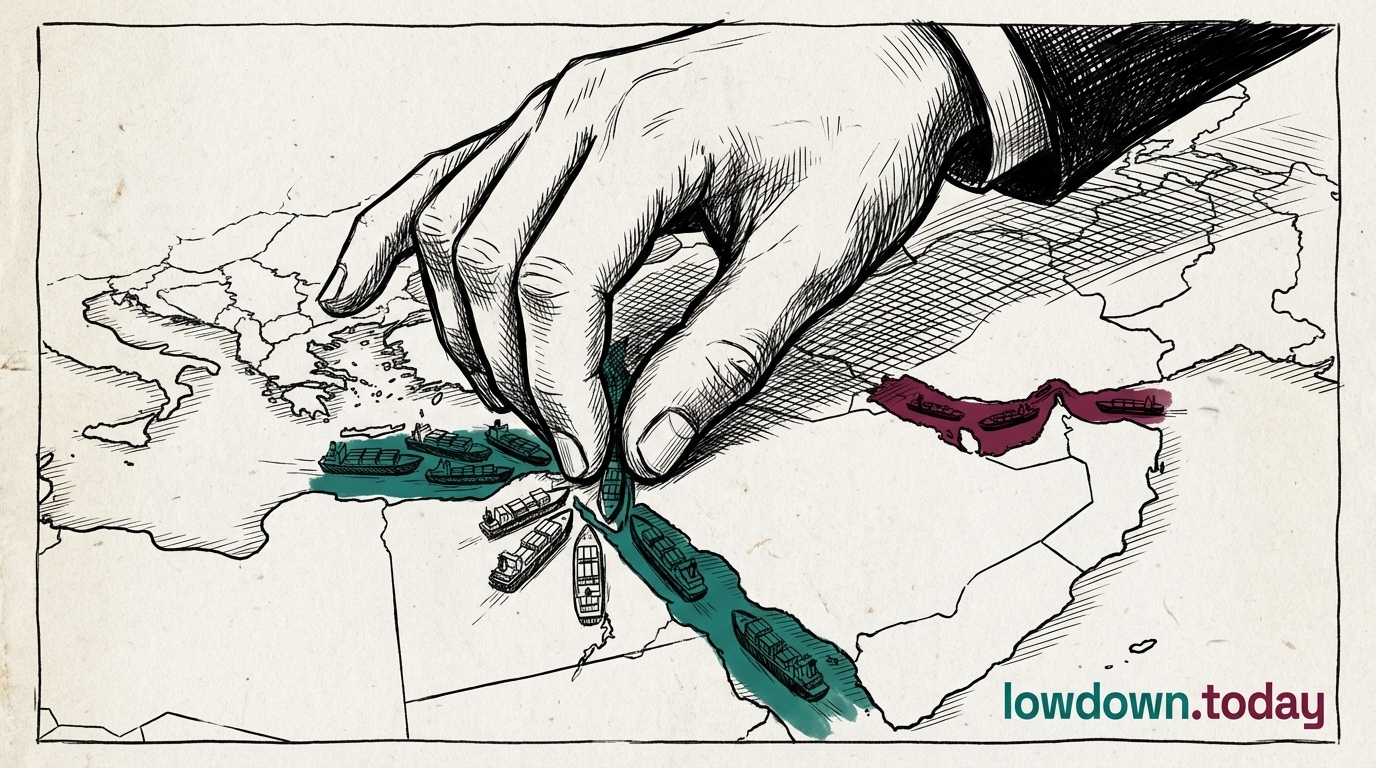
With Hormuz and Bab el-Mandeb both hostile at once, war-risk underwriters face their first dual-chokepoint pricing problem; the rerouting hedge that absorbed one closure is gone for Israeli-linked hulls. Any deal that reopens Hormuz without a Houthi stand-down clause delivers only partial shipping relief.
Russia and China
Russia and China
Russia and China met IAEA chief Grossi jointly in Geneva on 5 June to coordinate an advance blocking position against Washington's censure resolution, the first documented instance of proactive pre-session obstruction rather than reactive post-vote dissent. Beijing's move came four days after OFAC designated Shanghai Qianye Energy under Iran energy sanctions.
Saudi Arabia
Saudi Arabia
Saudi Arabia was left out of the emergency $4.01 billion Patriot waiver Qatar received on 2 May as its own PAC-3 stocks ran near-empty from intercepting Iranian salvoes over Aramco facilities. Riyadh is on a standard 18-month FMS queue behind a production line booked through 2030, with no equivalent priority to Qatar's Al Udeid basing role.
Houthis (Ansar Allah)
The Houthis declared a complete ban on Israeli Red Sea navigation on 8 June and struck Jaffa, their first attack on Israeli territory since April, seven days after the Tasnim authorisation to activate other fronts including Bab el-Mandeb. The declaration put both chokepoints under hostile authority simultaneously.
Iran
Iran
Iran agreed the 9 June mutual halt after the Mahshahr exchange and coordinated with Russia and China to block Washington's IAEA censure resolution, using the Board as a second front while the bilateral pause held on the military one. Tehran's acceptance of the Lebanon carve-out contradicts the linkage position it stated on 1 June.
Benjamin Netanyahu and the IDF
Israel struck the Karun Petrochemical plant at Mahshahr on 8 June over Trump's explicit objection, then agreed a halt with Iran the following day scoped on Israeli terms with Lebanon carved out. Netanyahu's posture is that the IDF will not accept Iranian missile factories as off-limits regardless of US diplomatic timelines.



