Skip to content
You can now search across every topic, entity and event.What's new
Iran Conflict 2026
27MAR

Senate 50-47 discharges Kaine Iran resolution to floor

3 min read
14:13UTC

Four Republicans crossed on 19 May to discharge Tim Kaine's Iran war-powers resolution from committee, the first procedural advance in 82 days of undeclared war.

ConflictDeveloping
Key takeaway

Cassidy's first Iran cross broke the Senate lock and queues a binding floor vote by 1 June.

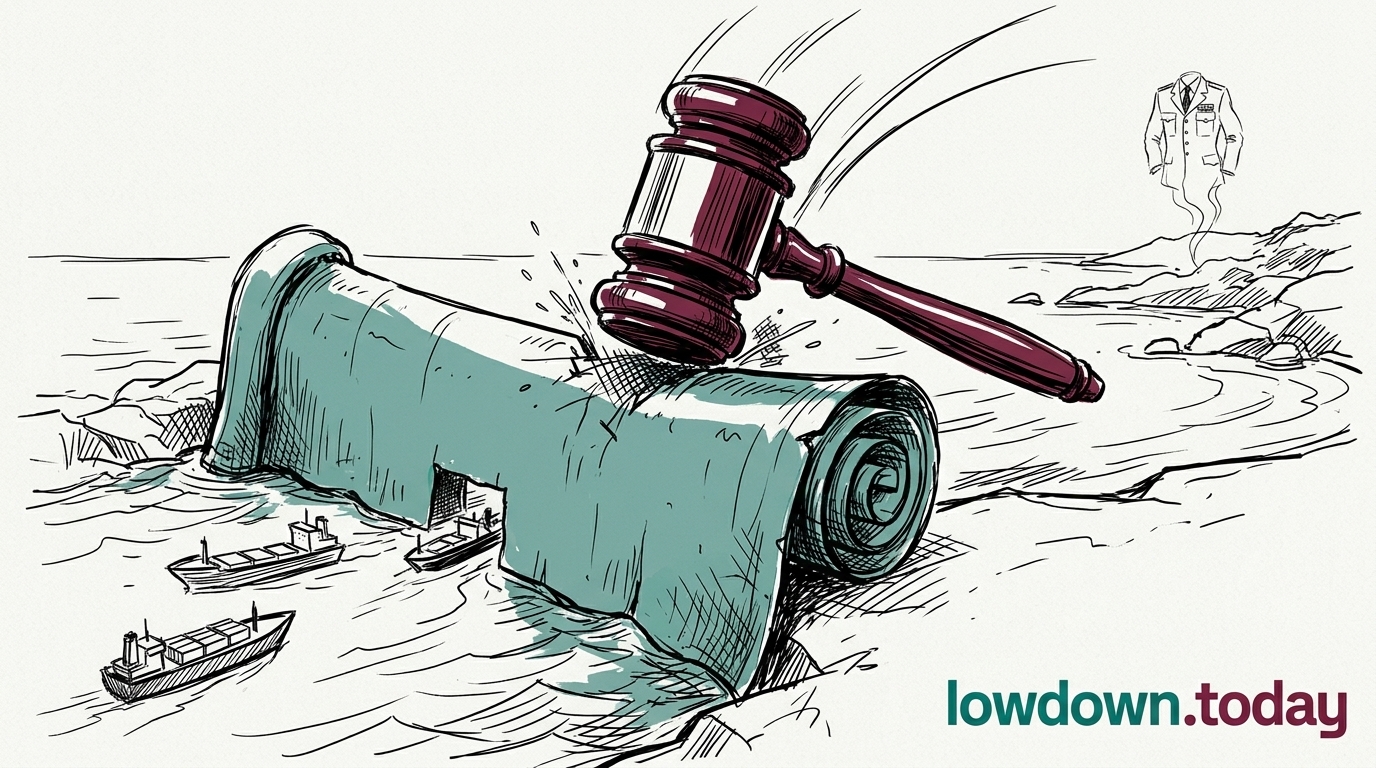
The US Senate voted 50-47 on Tuesday 19 May 2026 to discharge Senator Tim Kaine's Iran war-powers resolution from the Senate Foreign Relations Committee 1. Susan Collins (Maine), Lisa Murkowski (Alaska), Rand Paul (Kentucky) and Bill Cassidy (Louisiana) cast the crossing votes; the House had tied 212-212 on its parallel resolution a week earlier .

The previous seven House and Senate attempts needed a 51-vote majority to pass the resolution on the floor; Tuesday's motion needed only a simple majority to remove the bill from committee control, bypassing the chair who had bottled it. The WPR (War Powers Resolution, the 1973 statute capping undeclared hostilities) wind-down provision expires on 1 June , which means a floor vote on the underlying resolution must now follow.

Murkowski's separate AUMF (Authorisation for Use of Military Force) draft remains unfiled. Pete Hegseth's 12 May testimony that Article 2 of the Constitution makes any congressional authorisation unnecessary removed the rationale Republicans had used to wait on an executive solution, freeing them to vote procedurally without endorsing war termination on the merits.

Deep Analysis

In plain English

When the US goes to war, there are rules about how long the president can act without Congress agreeing. The relevant law from 1973 gives Congress the power to demand US forces be withdrawn after a certain period. Senators have tried seven times since the Iran war began to pass a vote on this. All seven failed. On 19 May, they tried something different: instead of a full vote, they used a procedure to force the question onto the calendar so it has to be voted on before 1 June. Four Republicans crossed party lines to make it happen. The next step is the actual vote, and whether those same senators will vote the same way again.

Deep Analysis
Root Causes

The Hegseth Article 2 doctrine, stated under oath on 12 May before the Senate Appropriations Committee, closed the AUMF pathway Republican senators had used to justify inaction. Once the administration publicly declared congressional authorisation unnecessary, senators could no longer claim they were waiting for the executive to provide a framework. Hegseth's 12 May testimony removed the only rationale the Republican caucus had for holding back on procedural action.

The WPR 30-day wind-down provision at 1 June creates a hard calendar constraint. Discharge motions succeed when floor time is otherwise unavailable; the Senate leadership had bottled the Kaine resolution in committee precisely to avoid a floor vote. The convergence of the Article 2 testimony and the approaching wind-down deadline removed both the political and procedural cover that had held seven prior attempts.

What could happen next?
  • Consequence

    The Trump administration faces a trilemma before 1 June: produce signed Iran paper, mount a public defence of the verbal track at a floor vote, or absorb a political defeat. The verbal strategy has no precedent for surviving a discharged floor vote in US Senate history.

    Immediate · 0.82
  • Risk

    Collins and Cassidy may revert on the substantive vote after crossing on the procedural discharge; two defections would collapse the four-senator bloc back to the 49-50 margin that failed on 13 May.

    Short term · 0.65
  • Precedent

    The 50-47 discharge is the first successful congressional procedural advance of the 82-day war. It establishes that a cross-party majority exists for procedural action even when the substantive floor majority is uncertain.

    Medium term · 0.88
First Reported In

Update #103 · Senate 50-47; UNSC at Barakah; no US paper

CBS News· 20 May 2026
Read original
Causes and effects
This Event
Senate 50-47 discharges Kaine Iran resolution to floor
Eighth war-powers attempt cleared after seven defeats, sending a binding floor vote before the 1 June WPR wind-down expiry; Cassidy's first Iran cross supplied the margin missing on 13 May.
Different Perspectives
Oil traders
Oil traders
Sent Brent down 2.29 per cent to $98.38 a barrel on reports that mediation was reviving, moving the price on CENTCOM's quiet night rather than on Trump's same-day promise of a bigger operation with no deadline attached.
Iran
Iran
An Iranian official called the same mediation account completely misleading, denying it received any US proposal via Baghdad on the same day Iraq denied delivering one, leaving neither denial able to settle what actually passed between the two capitals.
Iraq
Iraq
Called groundless the New York Times account that its prime minister carried a US ceasefire proposal to Tehran, a denial that also protects Baghdad's effort to avoid becoming a party to a war fought by aircraft it does not control.
OHCHR
OHCHR
Recorded 17 civilian seafarer deaths since the war began, a population neither the Pentagon nor Iran's Health Ministry counts in its own tally, and called for urgent action on 6,000 crew stranded across roughly 400 vessels in the Strait of Hormuz.
Houthis
Houthis
Enforced the blockade on Saudi-linked shipping it declared on 20 July by hitting the NCC Masa and then an Aramco facility at Jazan, moving from radio warnings to strikes on land after four days without a confirmed hit.
Saudi Arabia
Saudi Arabia
Struck Houthi military sites near Hodeidah the same day the NCC Masa was hit, while its coalition spokesman insisted Hodeidah, Ras Issa and Salif all remain open to navigation. The distinction protects the ports Yemen's population depends on for food and fuel even while punishing the group behind the tanker strike.