Skip to content
Welcome, thoughtbot's Giant Robots listeners!Start here
Iran Conflict 2026
27MAR

Iran rejects US plan, sets five terms

2 min read
14:13UTC

Tehran's five conditions amount to a demand for unconditional victory; the gap with Washington's 15-point plan is structural, not tactical.

ConflictAssessed
Key takeaway

Neither side's peace terms overlap, making diplomatic resolution impossible without one side fundamentally changing its war aims.

Abbas Araghchi, Iran's Foreign Minister, dismissed Washington's 15-point ceasefire plan as "extremely maximalist and unreasonable" on Tuesday⁠1. Hours later, Tehran published five counter-conditions through Press TV: a complete halt to US and Israeli attacks, war reparations, international recognition of Iran's sovereignty over the Strait of Hormuz, protection of Hezbollah and allied militias in Iraq, and fulfilment of pre-war Geneva demands. Araghchi told state media: "At present, our policy is the continuation of resistance"⁠2.

The 15-point plan reached Tehran via Pakistan. Israel's Channel 12 reported its contents: dismantling Iran's nuclear programme, limiting its ballistic missile arsenal, abandoning regional proxy networks, and conditionally reopening Hormuz⁠3. Donald Trump said Washington is "very close to meeting the core objectives of the operation."

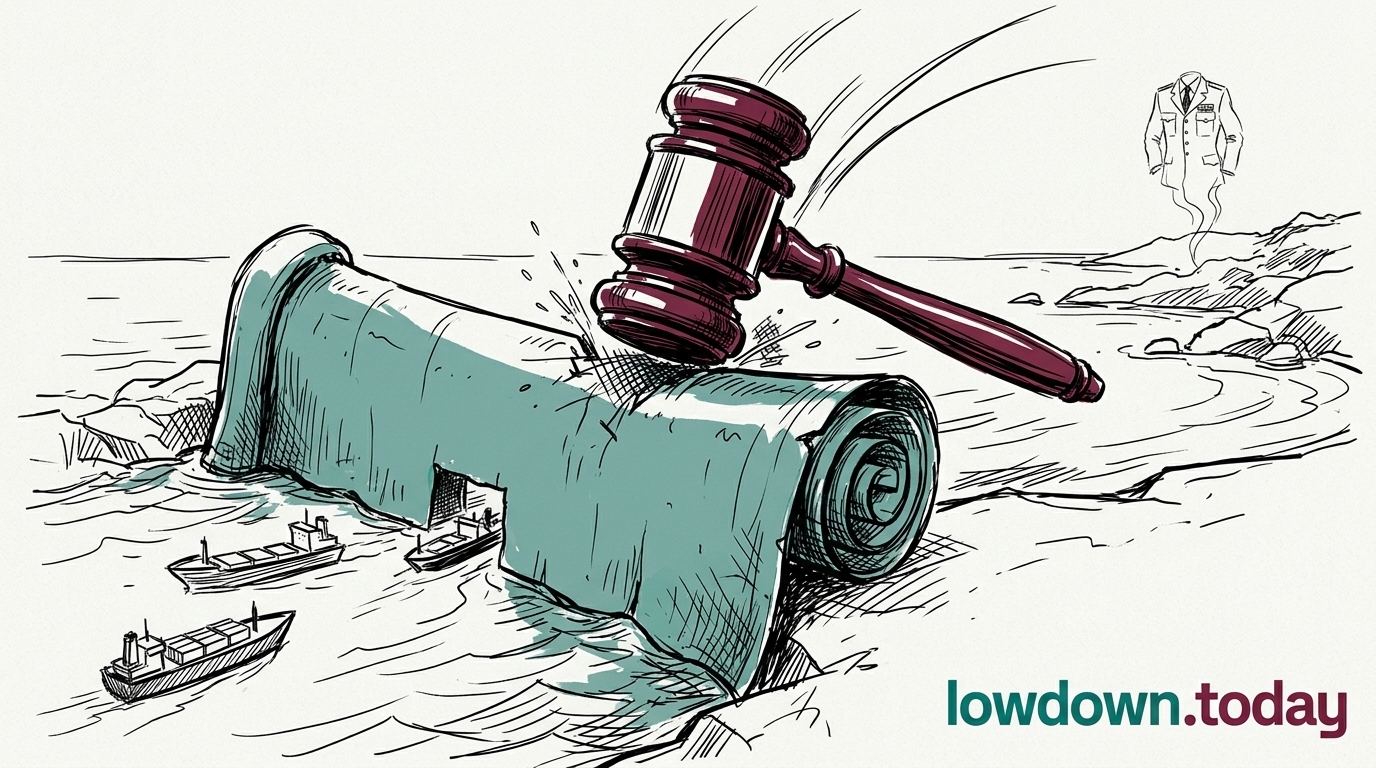
Iran's counter demands formal sovereignty over the strait where the Islamic Revolutionary Guard Corps (IRGC) already runs a $2 million per-vessel toll system. Washington asks Tehran to surrender its nuclear capacity. Tehran asks Washington to recognise its authority over the waterway that carries one-fifth of the world's oil.

Iran insists on Vice President Vance as sole interlocutor, rejecting both Steve Witkoff and Jared Kushner⁠4. The Trump administration says all four officials are authorised. Neither side has agreed on who sits at the table.

Deep Analysis

In plain English

Iran and the US have each published their wish list for ending the war. Iran wants the US to recognise its right to control the shipping lane that carries a fifth of the world's oil. The US wants Iran to give up its nuclear programme and its militias. If you listed both sides' demands, not a single item would appear on both lists.

Deep Analysis
Root Causes

Neither side entered the war with a theory of acceptable peace.

Escalation

Escalating. Both sides' published positions are maximalist. Military preparations advance faster than diplomacy.

What could happen next?
  • Consequence

    Islamabad talks may collapse before starting if neither side concedes on format

  • Risk

    Oil markets pricing non-existent diplomacy; correction upward likely

First Reported In

Update #48 · Iran rejects ceasefire; Kharg fortified

Middle East Eye· 26 Mar 2026
Read original →
Different Perspectives
Wang Yi
Wang Yi
China's foreign minister and Djibouti's issued a joint communique on 21 October saying the war should not reach the Horn of Africa and stressing free navigation through Bab al-Mandeb. The text names neither Iran nor the Houthis, and Djibouti hosts China's only overseas military base, opposite the Yemeni coast.
Ministry of External Affairs
India's foreign ministry called the attacks on Saudi civilian and energy sites "unacceptable" on 22 October and said they must stop at once. An Indian died at Dammam, Indians were injured there and at Shaybah, and about 4,000 Umrah pilgrims remain stranded by one MP's count.
Iraq
Iraq
Iraq closed the al-Sheeb crossing with Iran to travellers and trucks from 21 October and said other crossings would close gradually. Unlike September's closure, which ended on a staged timetable, this one has none, and Iran's interior ministry said it received no notice.
Abdel Fattah el-Sisi
Egypt's president said on 21 October that Cairo's support would "defend Saudi territory, and does not include an attack on Yemen". Araghchi warned that Egyptian involvement would further complicate the situation, and Cairo's limit matches the one Ankara set on 8 October against attacking another state's soil.
UK Ministry of Defence
The MoD said on 20 October that RAF Typhoons over Saudi Arabia will not strike the Houthis, but extended tanker support to Saudi operations including against Houthi targets in Yemen. The tanker line sets no limit on strikes, so British aircraft may now refuel Saudi jets on bombing runs.
Turkey
Turkey
Ankara sent the Mecca Joint Defence Agreement to parliament around 20 October, and its published text treats an attack on one party as an attack on all. Article 16 brings it into force only on the last ratification, so the 5 October invocation in Riyadh could not yet bind Turkey.

Written with AI from Lowdown's published reporting. Not individually reviewed by an editor. Editorial standards.
