Skip to content
Briefings are running a touch slower this week while we rebuild the foundations.See roadmap
Iran Conflict 2026
6MAR

Houthis signal readiness to join the war

3 min read
04:48UTC

Yemen's Houthi leader warned his forces are ready to strike 'at any moment' while no new attacks materialised — a calibrated signal that preserves Tehran's most potent remaining escalation option.

ConflictDeveloping
Key takeaway

Houthi restraint is a political calculation, not a capability constraint — their military capacity is intact and re-entry is contingent on a political trigger, most likely Iranian regime collapse or a specific threshold event rather than gradual escalation.

Yemen's Houthi leader delivered a televised address on Thursday: "Our fingers are on the trigger, ready to respond at any moment should developments warrant it." No confirmed Houthi strike on Israel has occurred since the Iran conflict began on 28 February. The Houthis paused attacks following the October 2025 Gaza ceasefire but have not declared neutrality.

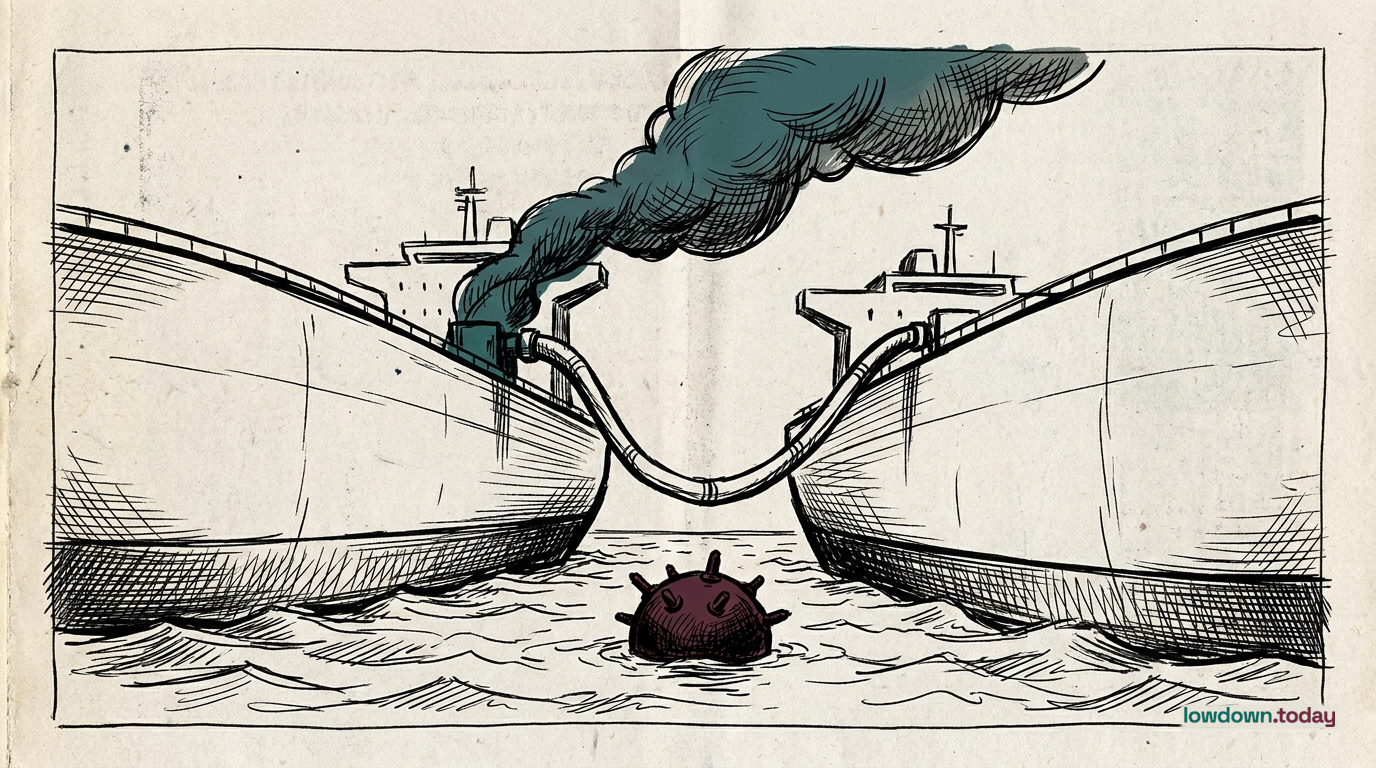
The statement is deliberate ambiguity from a group with demonstrated reach. The Houthis' 2023–2024 Red Sea campaign cut container traffic through the Suez–Red Sea route by roughly 70% at its peak and pushed marine war-risk insurance premiums to levels not seen since the 1980s Tanker War. Reactivation would threaten the Bab el-Mandeb strait — through which approximately 12% of global seaborne trade passes — opening a second maritime chokepoint disruption on top of the Hormuz closure already strangling Gulf exports.

For Israeli air defences, Houthi entry would add a southern vector to an already demonstrated multi-axis threat. Iran and Hezbollah launched coordinated simultaneous fire — ballistic missiles and rockets at Tel Aviv and Haifa — on 4 March . Houthi missiles from the south would force Israeli interceptor allocation across four directions. Allied interceptor stockpiles are already under severe strain: the UAE alone has intercepted 165 ballistic missiles and 541 drones since 28 February , and the Pentagon is considering moving Patriot and THAAD batteries from South Korea because the US has, in the words of a former official, "shot several years' worth of production in the last few days" .

The Houthis' restraint likely reflects a deliberate calculation — either Tehran's preference for controlled escalation or the Houthis' own assessment that premature entry invites US strikes on their positions before the war's trajectory is clear. The phrasing "should developments warrant it" preserves maximum flexibility: an off-ramp if the conflict ends quickly, and a credible threat if it does not. Iran's conventional military is being destroyed; the Houthis are its one unused card.

Deep Analysis

In plain English

The Houthis control much of Yemen and have substantial stockpiles of drones and anti-ship missiles. They stopped attacking Red Sea shipping after a Gaza peace deal in late 2025. Now they're warning they could restart at any moment if the Iran war crosses a threshold they care about. If they do re-enter, ships would again have to reroute around Africa, adding weeks to shipping times and sharply raising costs — which eventually shows up as higher prices on imported goods for consumers worldwide. Critically, the Gulf and the Red Sea would be disrupted simultaneously, which has never happened on this scale before.

Deep Analysis
Synthesis

Simultaneous Hormuz closure and Houthi Red Sea activation would create an unprecedented dual maritime choke-point crisis: roughly 30% of global seaborne oil and approximately 15% of global container trade passes through one or both routes. No equivalent scenario — both choke points closed simultaneously by hostile actors — exists in the modern shipping era, meaning insurance markets, naval planners, and commodity traders have no actuarial or historical basis for pricing the combined risk.

Root Causes

The October 2025 Gaza ceasefire provided the Houthis a politically coherent justification for pausing operations without conceding defeat. Re-entry now would require new political cover — the 'defending Iran' framing is available but carries higher domestic costs in Yemen, where prolonged conflict has produced severe humanitarian conditions. Their restraint also reflects capacity-management calculation: the 2024 US/UK strike campaign depleted some stockpiles, and re-entry commits those reserves to a conflict whose duration is unknown.

Escalation

The 'fingers on the trigger' formulation is calibrated to maximise deterrence value while preserving operational flexibility — it is a coercive signal designed to constrain US and Israeli decision-making, not an operational order. The most plausible activation trigger is a signal of Iranian regime collapse rather than continued military degradation: the Houthis' political legitimacy is built on the 'Axis of Resistance' narrative, which requires Iran's survival as symbolic anchor. Gradual Iranian military degradation, already well advanced, has not triggered Houthi re-entry; a qualitative threshold — regime change, Iranian capitulation, or a specific atrocity — is more likely to do so.

What could happen next?
  • Risk

    Houthi re-entry combined with active Hormuz closure would simultaneously disrupt both primary Indian Ocean-to-European shipping routes, creating a dual choke-point crisis for which insurance markets and naval planners have no historical pricing basis.

    Short term · Suggested
  • Risk

    Israeli air defence systems tracking simultaneous threats from four directions — Iran, Lebanon, Gaza, and Yemen — could face saturation of interception capacity, increasing the probability of a strike penetrating Israeli territory.

    Immediate · Assessed
  • Meaning

    Continued Houthi restraint despite Iranian military collapse signals that Iran's proxy network is exercising independent operational judgement around shared interests rather than acting on central Iranian command — the network's cohesion is self-organising and will not simply dissolve if Iran's military command structure is destroyed.

    Immediate · Suggested
First Reported In

Update #23 · Iran loses half its navy; China eyes Hormuz

Al Jazeera· 6 Mar 2026
Read original
Causes and effects
This Event
Houthis signal readiness to join the war
The Houthis' continued restraint preserves Iran's most consequential remaining escalation option: a second maritime chokepoint disruption at the Bab el-Mandeb strait and a fourth attack vector against Israeli air defences already under strain from multi-axis threats and depleting interceptor stocks.
Different Perspectives
Gulf shipping and insurance markets
With Hormuz and Bab el-Mandeb both hostile at once, war-risk underwriters face their first dual-chokepoint pricing problem; the rerouting hedge that absorbed one closure is gone for Israeli-linked hulls. Any deal that reopens Hormuz without a Houthi stand-down clause delivers only partial shipping relief.
Russia and China
Russia and China
Russia and China met IAEA chief Grossi jointly in Geneva on 5 June to coordinate an advance blocking position against Washington's censure resolution, the first documented instance of proactive pre-session obstruction rather than reactive post-vote dissent. Beijing's move came four days after OFAC designated Shanghai Qianye Energy under Iran energy sanctions.
Saudi Arabia
Saudi Arabia
Saudi Arabia was left out of the emergency $4.01 billion Patriot waiver Qatar received on 2 May as its own PAC-3 stocks ran near-empty from intercepting Iranian salvoes over Aramco facilities. Riyadh is on a standard 18-month FMS queue behind a production line booked through 2030, with no equivalent priority to Qatar's Al Udeid basing role.
Houthis (Ansar Allah)
The Houthis declared a complete ban on Israeli Red Sea navigation on 8 June and struck Jaffa, their first attack on Israeli territory since April, seven days after the Tasnim authorisation to activate other fronts including Bab el-Mandeb. The declaration put both chokepoints under hostile authority simultaneously.
Iran
Iran
Iran agreed the 9 June mutual halt after the Mahshahr exchange and coordinated with Russia and China to block Washington's IAEA censure resolution, using the Board as a second front while the bilateral pause held on the military one. Tehran's acceptance of the Lebanon carve-out contradicts the linkage position it stated on 1 June.
Benjamin Netanyahu and the IDF
Israel struck the Karun Petrochemical plant at Mahshahr on 8 June over Trump's explicit objection, then agreed a halt with Iran the following day scoped on Israeli terms with Lebanon carved out. Netanyahu's posture is that the IDF will not accept Iranian missile factories as off-limits regardless of US diplomatic timelines.