Skip to content
Briefings are running a touch slower this week while we rebuild the foundations.See roadmap
Iran Conflict 2026
28FEB

Brent hits $109.30 as summit dip fades

4 min read
19:00UTC

Brent crude closed Saturday 16 May at $109.30, $3.30 above the post-summit settle of $106.00 and $36.30 above Day 1 of the war; meanwhile the physical premium on Iranian crude collapsed to near-parity as the dark fleet absorbed the blockade.

ConflictAssessed
Key takeaway

Brent at $109.30 reversed the summit dip while the physical premium on Iranian crude collapsed to near-parity.

Brent Crude reached $109.30 on Saturday 16 May, up $3.30 from the post-summit close of $106.00 on Thursday 14 May and above the $107.77 ceiling registered on Tuesday 12 May 1. The benchmark has reversed every Trump-Xi summit-optimism correction since the verbal outputs of last week. UK forecourts now translate the wholesale move into roughly £1.75 to £1.85 per litre at the pump.

The White House presidential-actions index recorded zero Iran instruments through Day 78 , and the War Powers Act timer Murkowski has cited stood at Day 78 of 60 in arrears . Aramco CEO Amin Nasser warned on Tuesday 12 May that global oil normalisation slips to 2027 if the blockade extends past mid-June . The IEA May report showed a 246-million-barrel inventory draw in eight weeks, the largest sustained drawdown since the 1979 oil crisis.

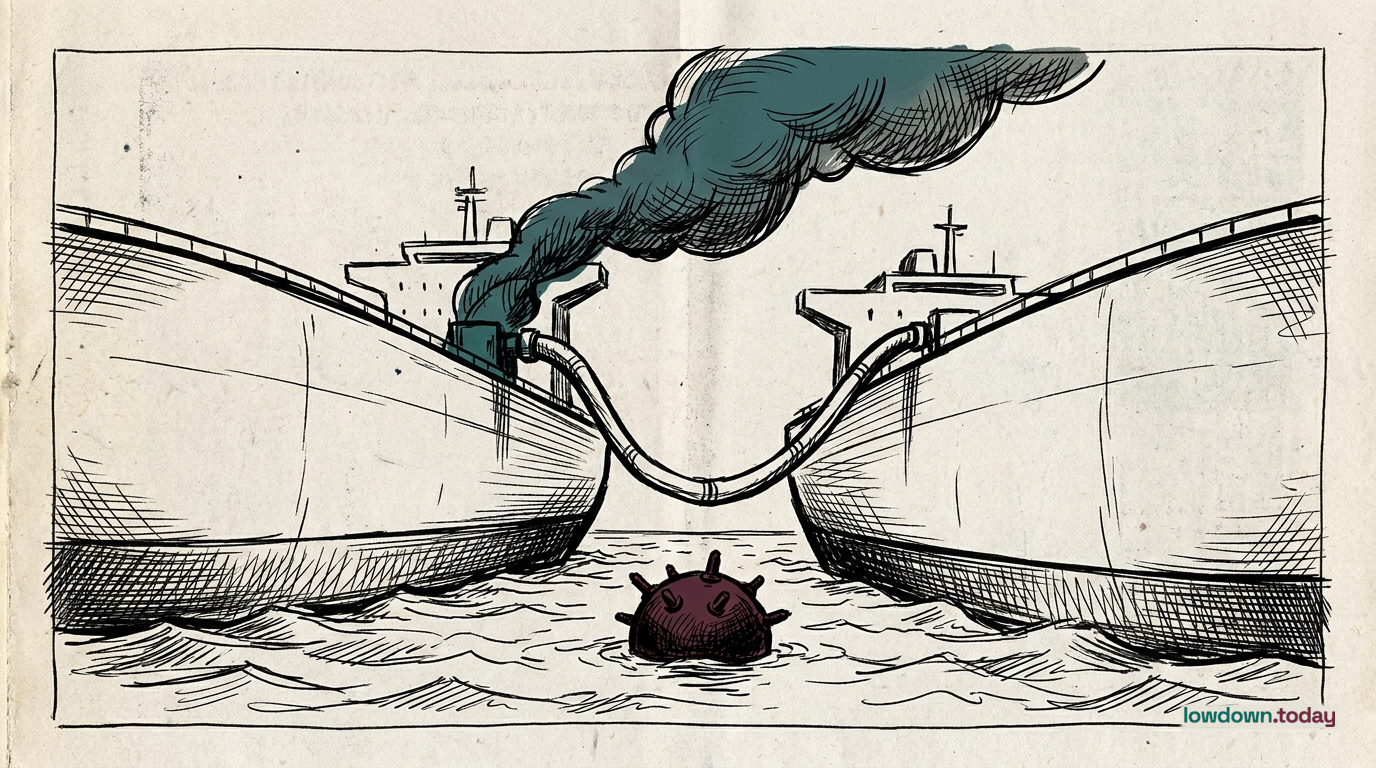
The physical Iranian crude premium collapsed from over $30 per barrel above Brent in early April to near-parity by mid-May 2, an effective $30 unwind in six weeks. Dark-fleet logistics absorbed Iranian supply faster than Western analysts modelled. Brent is now pricing residual escalation risk, not actual supply loss; the underlying barrels still reach refineries through the bilateral channel codified by Tehran.

Counter-perspective: a sustained Brent rally without a corresponding physical-market squeeze is the classic profile of a paper-market dislocation that mean-reverts when the next round of summit diplomacy delivers verbal de-escalation. The 1973 and 2008 precedents both show benchmark spreads above $20 sustained for under 90 days before retracing. The blockade itself reaches Day 78 on Saturday 16 May , making the next four weeks the empirical test of whether this episode breaks that pattern.

Deep Analysis

In plain English

Oil prices jumped back up to $109.30 on Saturday 16 May, undoing a brief dip that followed a US-China summit earlier in the week. The summit produced no concrete agreement on Iran, and markets concluded the war is no closer to ending. The odd part is that the price of actually buying Iranian oil has fallen dramatically. That is because a shadow fleet of tankers, mostly operating outside Western insurance and sanctions rules, has quietly been absorbing Iranian crude and getting it to buyers in Asia. Brent at $109.30 is pricing geopolitical risk. Iranian crude landing in Chinese and Indian refineries is pricing at near-parity to Brent because the dark fleet has normalised that supply chain. Each price reflects a different bet on how and when the conflict closes.

Deep Analysis
Root Causes

Brent at $109.30 reflects two disconnected pricing signals running in parallel. The benchmark prices the ongoing absence of any US executive instrument closing the war (the White House presidential-actions index records zero Iran instruments across 78 days) and the IEA's confirmed 246-million-barrel inventory draw. Neither of these resolves without a signed presidential instrument or a ceasefire architecture.

The physical premium collapse from $30 above Brent to near-parity reflects the dark fleet's absorption capacity. Iranian crude is reaching Chinese, Indian, and other Asian refiners via non-Western shipping and insurance, entirely outside the Lloyd's and Scandinavian P&I market. The consequence is that Iranian export revenues are closer to pre-war levels than the $109.30 benchmark implies, which reduces Tehran's economic incentive to accept ceasefire terms.

What could happen next?
  • Consequence

    Iran's near-parity physical crude premium reduces Tehran's economic pressure to accept ceasefire terms, since dark-fleet revenues are closer to pre-war levels than the Brent benchmark implies.

    Short term · 0.79
  • Risk

    Aramco's 2027 normalisation forecast means the Hormuz premium may persist in UK energy prices through at least 12-18 months of ceasefire and insurance-market recovery, even if fighting stops in June 2026.

    Medium term · 0.74
  • Meaning

    The benchmark-physical decoupling means standard Brent price signals are providing a misleading read of Iran's economic leverage and ceasefire incentive structure.

    Immediate · 0.83
First Reported In

Update #99 · Two Hormuz papers; Washington on neither

OilPrice.com· 16 May 2026
Read original
Different Perspectives
Markets
Markets
Brent crude rose 2.2 per cent to $96.34 on 10 June, reversing a 7 per cent weekly decline built on deal optimism, as the overnight exchange repriced the Strait of Hormuz risk premium in a single session. The move reflects transit-risk repricing rather than supply shock: Iran's exports had already collapsed to below 300,000 barrels per day.
Pakistan
Pakistan
Pakistan's Naqvi channel, the only mediation track carrying both civilian and military buy-in, was stress-tested by live ordnance within 48 hours of the 6-7 June Tehran visit. Whether Washington informed Islamabad of the imminent strike plan while Naqvi was in Tehran remains undisclosed, putting the channel's neutrality under scrutiny.
Kuwait
Kuwait
Kuwait hosted the third Iranian strike on its soil since the 3 June airport drone attack, with Ali Al Salem airbase targeted in the three-country salvo. Its recent $1.98 billion Anduril Anvil counter-drone purchase signals it is rearming rather than reconsidering its hosting posture.
Bahrain
Bahrain
Bahrain absorbed the IRGC barrage via PAC-3 intercepts with its magazine already at 87 per cent depletion and no resupply before 2027. Sounding air-raid sirens over Manama, it faced the intercept burden with the thinnest defensive stack in the Gulf coalition.
Jordan
Jordan
Jordan reported all five incoming missiles intercepted with no injuries and no damage, a clean defensive performance that strengthens Amman's case for staying in the Western coalition without escalating its own posture. It now sits on Iran's target list for the first time despite not being a party to the Abraham Accords confrontation.
Iran / IRGC
Iran / IRGC
Foreign Minister Araghchi posted on X that US forces should 'leave our region if you want to be safe' and framed the exchange as a US defeat, while the IRGC claimed 21 targets hit and an F-35 hangar destroyed. The claims serve a domestic and Arab-audience framing rather than a verified battle-damage assessment.