Skip to content
You can now search across every topic, entity and event.What's new
Iran Conflict 2026
19AUG

Iran publishes mine charts converting Hormuz reopening into IRGC corridor

2 min read
18:42UTC
ConflictDeveloping
Key takeaway

Hormuz reopening produced 4 ships and mine charts, not free passage

Donald Trump promised a 'COMPLETE, IMMEDIATE, and SAFE OPENING' of the Strait of Hormuz. On ceasefire Day 1, Kpler counted four bulk carriers transiting the strait. Zero crude tankers. Zero LNG carriers. More than 800 vessels remain stuck in the Persian Gulf 1.

The pre-war baseline was 135 transits per day. Iran's toll system, legislated in late March , had lifted traffic to 20 per day across 11 flag states by 5 April . The ceasefire cut that to four. Fewer ships crossed on Day 1 than on any day of the blockade.

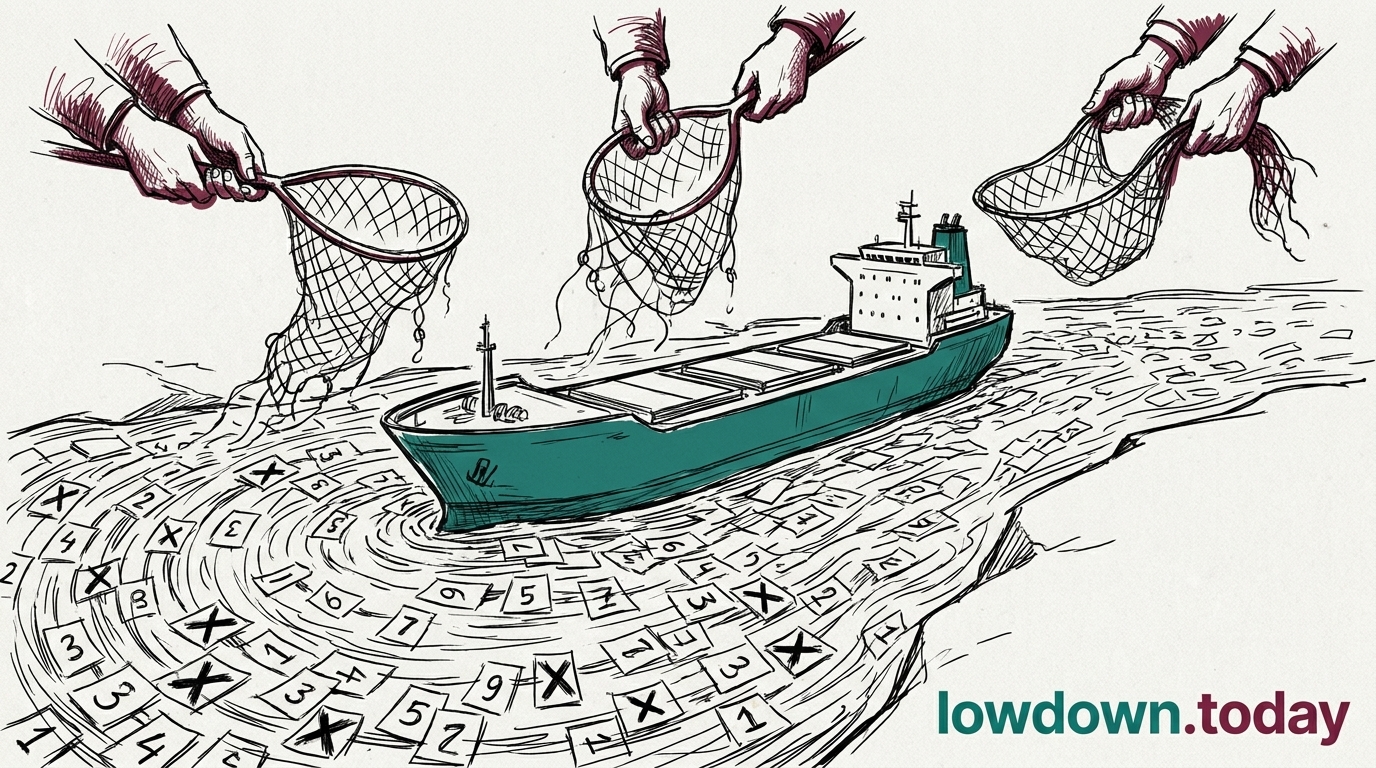
ISNA and Tasnim, both linked to the IRGC, published maritime charts on 9 April showing a 'danger zone' over the main Traffic Separation Scheme lanes, dated from 28 February to 9 April 2. The charts direct all vessels to corridors near Larak Island under IRGC naval control 3. The implication: the main shipping lanes are mined. The mines, real or implied, force all traffic through Iran-controlled corridors.

Trump's two-week pause promised SAFE passage. The IRGC's charts promise the opposite: passage is SAFE only where Iran says it is.

Deep Analysis

In plain English

Trump said the strait was reopening. On Day 1, four cargo ships got through, zero oil tankers. Iran published charts showing the main shipping lanes are too dangerous and ships must use routes Iran controls. Eight hundred ships are stuck waiting. The reopening gives Iran more control, not less.

Deep Analysis
Root Causes

Iran's toll legislation in late March codified the blockade before any ceasefire. The mine charts are the physical enforcement layer of a legal framework already in place.

First Reported In

Update #63 · Ceasefire redistributes the war, not ends it

ISNA / Tasnim· 9 Apr 2026
Read original
Different Perspectives
UK Maritime Trade Operations
UKMTO logged six armed men boarding a tanker 136 nautical miles east of Al Mukalla on 20 August and redirecting it toward Somalia. A vessel steered toward the Somali coast reads as an attempted seizure, a distinct hazard from the stand-off strikes the same lane has seen before.
Mohammad Bagher Ghalibaf
Iran's Majlis speaker received Iraq's Hormuz carve-out request in Baghdad on 19 August, a request that treats passage as Tehran's to grant. Ghalibaf's authority over that grant sits alongside the Revolutionary Guard's separate transit rules, which have moved independently of Iran's foreign ministry before.
Haibat al-Halbousi
Haibat al-Halbousi
Iraq's parliament speaker asked Iran for special consideration on Iraqi Hormuz oil exports during Ghalibaf's 19 August Baghdad visit. Iraq presses the request from a weak position: Iran's central bank is simultaneously demanding Baghdad release Iranian reserves parked in Iraqi accounts.
Federal Department of Economic Affairs, Education and Research
Switzerland's economics ministry updated the Article 21 forms governing lawful Iran money transfers on 19 August, with only the revised forms accepted from 26 August. Bern operates one of the few remaining legal Iran payment channels and has just set a hard cutover on its control point.
Motegi Toshimitsu
Motegi Toshimitsu
Japan's foreign minister said in Muscat on 20 August that Tokyo wants closer coordination with Oman on safe Hormuz and Bab el-Mandeb passage. Japan has no naval presence of its own in the strait, so it is routing the ask through the state negotiating with Iran instead.
Badr bin Hamad Al Busaidi
Oman's foreign minister joined Japan's in Muscat on 20 August to call for intensified coordination on Hormuz and Bab el-Mandeb navigation. Oman also runs the mediation track with Tehran, so the appeal travels through the same channel as the negotiation.