Skip to content
You can now search across every topic, entity and event.What's new
Iran Conflict 2026
12AUG

Trump orders Navy to shoot mine-layers

3 min read
14:52UTC

Donald Trump instructed the US Navy to shoot any Iranian vessel laying mines in the Strait of Hormuz, with minesweepers tripled up. CENTCOM intercepts climbed to 31 vessels. No military order was published.

ConflictDeveloping
Key takeaway

Verbal shoot-kill order leaves CENTCOM commanders executing rules of engagement no court can read.

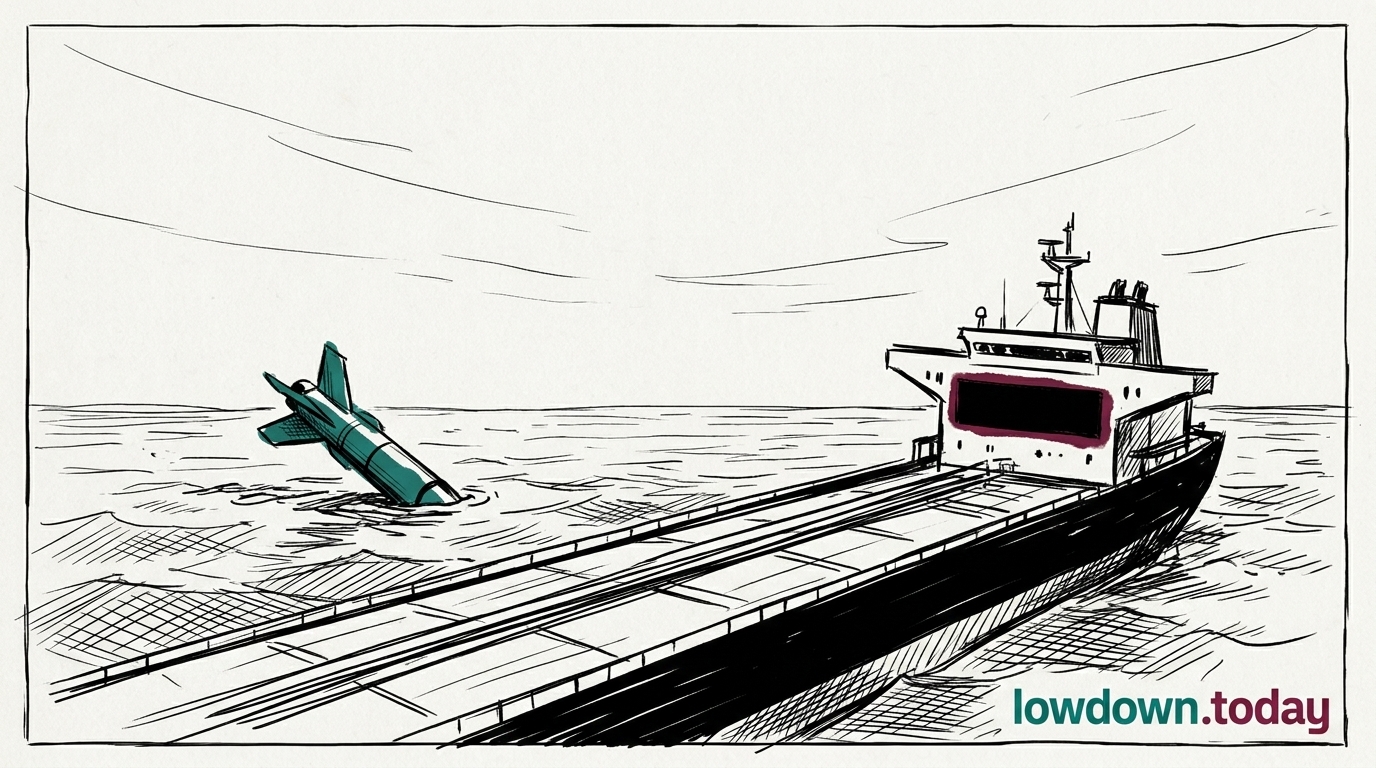
Donald Trump on Thursday 23 April ordered the US Navy to "shoot and kill any Iranian vessel laying mines in the strait", with minesweepers to clear it "at a tripled up level" 1. US Central Command (CENTCOM), which runs Middle East operations, saw its cumulative intercept count climb from 28 on Day 54 to 31 vessels directed to turn around or return to port by Friday. No published military order accompanied the instruction.

The instruction tightens rules of engagement in one of the world's most congested maritime chokepoints without anything a Navy lawyer can point to in writing. CENTCOM officers are operating on the 28 February strike authorisation that Congress never ratified, layered with verbal presidential force authority. No published military order and no Iran executive instrument accompany the command, the same paper gap that has run across 55 days of war.

The mine-clearance assumption sits awkwardly against prior Pentagon internal estimates that Hormuz mine clearance requires six months of sustained operations . "Tripled up" minesweeper cadence compresses that timeline only if deployment assets match the talking point, and at the moment those assets remain on escort duty rather than clearance. The ratio of talk to hull matters because every additional mine-layer attempt the Navy engages under verbal authority expands the legal exposure of the officers executing it.

Kingsley Wilson's refusal to comment on internal deliberations on the same day kept the Pentagon's written record deliberately thin. Three separate lines now converge on unsigned coercion: verbal force authority in the strait, unsigned sanctions via OFAC NSPM-2, and an internal Pentagon memo threatening allies. Each runs on paper that does not yet exist.

Deep Analysis

In plain English

On 23 April, President Trump told reporters the US Navy should 'shoot and kill' any Iranian vessel it catches laying mines in the Strait of Hormuz, the narrow channel that most of the world's oil passes through. He also ordered minesweepers to work at triple their normal pace. No written military order accompanied either instruction. The Navy operates on detailed written rules specifying when it can open fire. Without a written order, individual ship commanders face a legal grey area: they have presidential words but no signed document. Trump has signed zero Iran-related executive documents across 55 days of war, and this order follows the same pattern.

Deep Analysis
Root Causes

The verbal shoot-kill order reflects the same no-signed-paper architecture that governs the broader campaign. CENTCOM's cumulative intercept count at 31 vessels rests on the 28 February strike authorisation, itself unsigned by Congress. Adding a new written force authority for mine-laying vessels would require either a new executive order or an AUMF, either of which creates a legal instrument that constrains the White House's later discretion on ceasefire terms.

The Pentagon briefed the House Armed Services Committee on 22 April that Hormuz mine clearance could take six months and would not begin until the war ends. A verbal engagement order against mine-layers is the executive response to a threat the military has already characterised as a six-month problem: it signals intent without creating the legal record that a mine incident followed by congressional inquiry would require the administration to produce.

What could happen next?
  • Risk

    A US Navy engagement of an Iranian mine-laying vessel without published rules of engagement creates simultaneous legal exposure for individual commanders under the UCMJ and political exposure for the administration under the War Powers Resolution.

  • Precedent

    Verbal engagement orders for lethal force in the Strait of Hormuz, if uncontested by courts or Congress, establish that the president can authorise mine-warfare engagements through press-pool statements without producing a signed instrument.

First Reported In

Update #78 · Allies flagged, adversaries listed, nothing signed

Time· 24 Apr 2026
Read original
Different Perspectives
Anwar Gargash, UAE presidential diplomatic adviser
Gargash warned the region cannot stay trapped between "neither war nor peace", naming the stalemate itself as unsustainable for a Gulf state hosting US forces and absorbing the shipping-risk cost without being party to either the strike decisions or the corridor talks.
Shipping and insurance underwriters
War-risk premiums are still set against an active blockade and a fatal Bab el-Mandeb attack with an unresolved vessel identity. A disabling strike and a diplomatic "advanced" claim pulling in opposite directions gives underwriters no single signal to reprice cover against.
Pakistan and Qatar (Oman corridor mediators)
Pakistan's defence minister said matters are "shaping up in favor of peace" on Hormuz and a Qatari spokesperson called the Iran-Oman reopening talks advanced. Both are publicly ahead of Tehran's own security council, which has just disowned the deal's significance.
United States Central Command / President Trump
CENTCOM confirmed a helicopter strike disabled a container ship that tried to evade the blockade, and Trump said the US "totally controls" the Strait of Hormuz. Washington is treating evasion of the blockade as grounds for disabling fire rather than the redirection tactic CENTCOM used through July.
Mohsen Rezaei, Iran's Supreme National Security Council
Rezaei told China's ambassador Hormuz reopens only when the US ends the war and unblocks Iran's funds, and that the Oman transit deal "will have no impact" on that decision. He is drawing a hard line between the technical corridor track and the political settlement his council controls.
Yemen's internationally recognised government and affected communities
SABA reported at least 17 soldiers killed at Saudi-backed camps in eastern Yemen as tanker use of Bab el-Mandeb fell. The fighting adds civilian and supply risks to a route ships use when Hormuz is unsafe.