Skip to content
Welcome, thoughtbot's Giant Robots listeners!Start here
Iran Conflict 2026
10AUG

Rubio signals end of Russian oil waivers

2 min read
23:27UTC

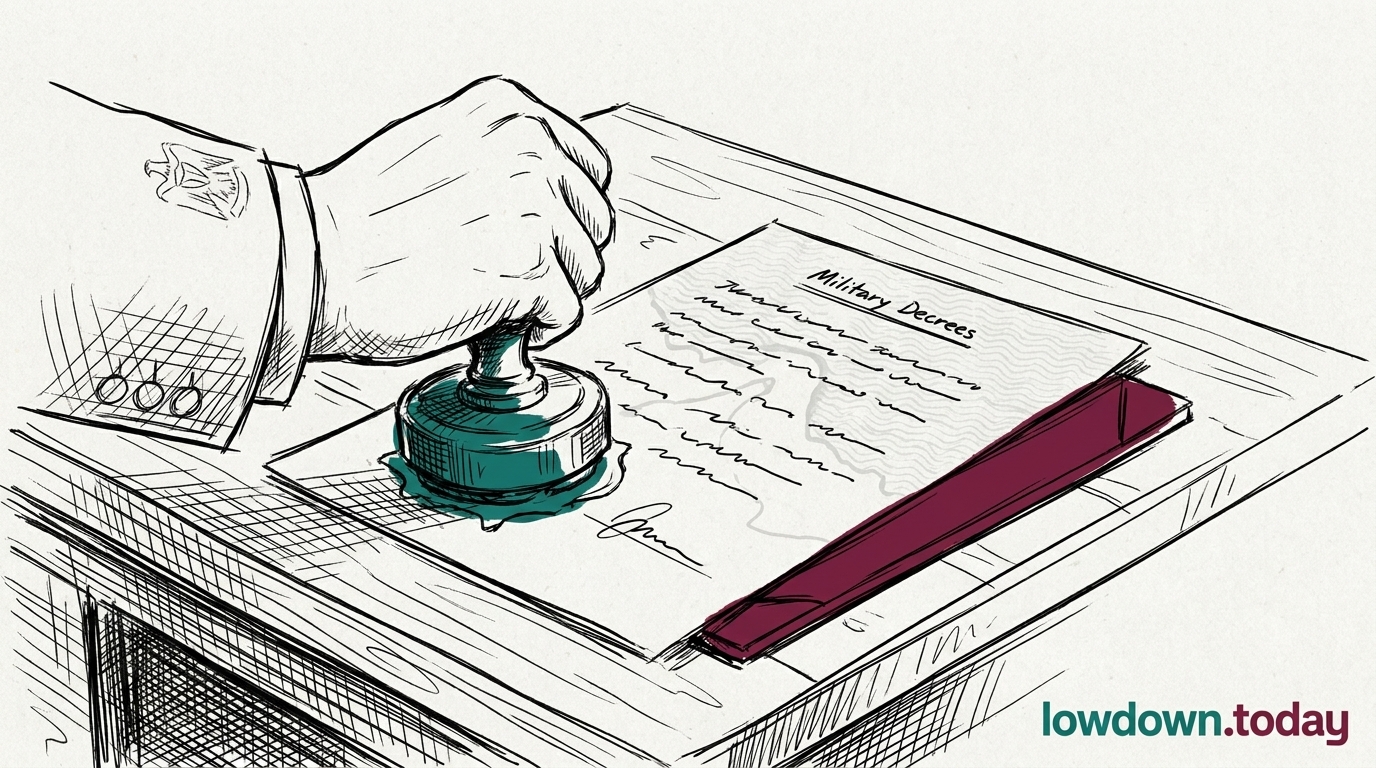
Secretary of State Marco Rubio said the US wants to end Russian oil waivers as soon as possible, breaking a monthly roll routine and sharpening the 17 June expiry of General License 134C with no successor announced.

ConflictDeveloping
Key takeaway

Rubio's routine-break converts the 17 June waiver expiry from a rollover into a genuine cliff for Indian buyers.

Marco Rubio, the US Secretary of State, said Washington wants to end Russian oil waivers "as soon as we possibly can"⁠1. The remark targets General License 134C, the OFAC authorisation covering vessel services for Russian oil shipments, which expires on 17 June with no GL 134D announced. OFAC is the US Treasury's sanctions enforcement office; a general license is the carve-out that lets specific transactions continue despite sanctions.

The waivers had rolled over monthly since March, which had trained the market to treat each expiry as a formality. Rubio's wording breaks that routine. When the senior US diplomat says the goal is to end the cover rather than extend it, the 17 June date stops being a rollover and becomes a genuine cliff, repricing the risk for everyone holding Russian-linked cargo.

India carries the most exposure as the primary off-take for discounted Russian crude under this cover. Lose the waiver on 17 June and Indian refiners face the choice of finding compliant alternatives at higher cost or risking secondary sanctions. Rubio's statement sharpens the 17 June cliff the prior briefing had already flagged, turning a quiet administrative deadline into the single largest sanctions hinge on the calendar.

Deep Analysis

In plain English

Deputy Prime Minister Alexander Novak publicly admitted on 4 June that Ukrainian drone strikes are reducing Russia's oil production, Moscow's first official acknowledgement. He specifically named the Yaroslavl refinery north-east of Moscow, a facility processing 300,000 barrels of oil per day that was struck in May. Russia has already banned exports of jet fuel until November 2026 and petrol since April. Ukraine's own energy strike teams assess total Russian refinery capacity knocked offline at up to 700kbd, suggesting Novak's single-refinery figure may be only a partial picture of the damage.

Deep Analysis
Root Causes

The political significance of Novak's admission lies in the structural choice it reveals. Russian domestic fuel supply has been under strain since the April gasoline export ban; acknowledging drone damage while banning exports simultaneously allows the Kremlin to attribute fuel tightness to external attack rather than sanctions-driven refinery underinvestment.

The admission is both factually accurate and politically useful: it shifts blame for consumer fuel scarcity while potentially justifying further export restrictions as 'defensive' rather than revenue-protecting. Novak's specific naming of Yaroslavl, a refinery whose operator Lukoil is already on the OFAC SDN list, adds a layer of signalling to Western audiences about the domestic consequences of sanctions enforcement.

What could happen next?
  • Consequence

    Novak's admission validates the UK's RUSI-assessed $1.2-1.4bn annual flow of third-country Russian-crude distillates, but also raises the risk that the source supply those distillates depend on is declining, undermining the policy rationale for the UK's May sanctions easement.

  • Risk

    If Ukrainian strikes have taken 600-700kbd of Russian refinery capacity offline rather than Yaroslavl's 300kbd alone, Russian crude available-for-export rises while domestic products tighten, a bullish crude signal for Europe's Urals-dependent refiners.

First Reported In

Update #6 · OPEC's quota is fiction at a 37-year low

OilPrice.com· 8 Jun 2026
Read original →
Causes and effects
This Event
Rubio signals end of Russian oil waivers
Indian refiners are the primary off-take for Russian crude under the waiver, so a routine-break by the top US diplomat puts their purchase cover at risk overnight and reprices a date the market had treated as a formality.
Different Perspectives
Office for Budget Responsibility
The OBR's 28 October forecast assumed $82 oil for 2026 and 2027, from market prices for the ten working days to 19 August, and blamed dearer wholesale energy on the war without naming Iran. It expects CPI inflation close to 4% in early 2027 even at that price.
Hengaw, Kurdish rights group
Hengaw reported the 3 November hangings of Amirhossein Maleki and Amirhossein Ebrahimi in Isfahan, saying Ebrahimi was tortured into confessing and that nine of 12 people sentenced to death in the case have now been hanged. Iran's judiciary holds that the defendants killed members of the security forces.
FINTRAC, Canada's financial intelligence unit
FINTRAC worked with the US Treasury on the 6 November designation of eight money services businesses in British Columbia, Ontario and Quebec. Treasury says the businesses still operate, some under new names, so closing them falls to Ottawa.
Abdul Qadir al-Dakhil, Governor of Nineveh
Al-Dakhil cancelled three Mosul International Airport contracts on 7 November over alleged links to armed groups, after meeting Prime Minister Ali al-Zaidi in Baghdad. He named no group or company, and said the contracts will go to international companies.
Kuwait
Kuwait
Kuwait condemned the Houthi missile fired towards the Madinah region on 5 November and restated its support for Saudi Arabia, the Qatar News Agency reported. Its state tanker company, Kuwait Oil Tankers Company, is among the Gulf state fleets on Iran's expanded Hormuz list.
Scott Bessent, US Treasury Secretary
Treasury designated an alleged Chandigarh false-flag network on 4 November and eight Canadian exchangers on 6 November, while State sanctioned alleged MANPADS intermediaries. None of the actions touches an oil buyer; they target the paper, cash and procurement around Iran's trade.

Written with AI from Lowdown's published reporting. Not individually reviewed by an editor. Editorial standards.
