Skip to content
You can now search across every topic, entity and event.What's new
Iran Conflict 2026
31JUL

Putin asks Trump for parade-day truce

3 min read
09:24UTC

Putin spent 90 minutes on the phone to Trump on 29 April and proposed a Victory Day ceasefire; Trump told reporters Putin 'might announce something, a little bit of a ceasefire'.

ConflictDeveloping
Key takeaway

Putin is again offering a Russian-anniversary truce through the White House rather than negotiating with Kyiv.

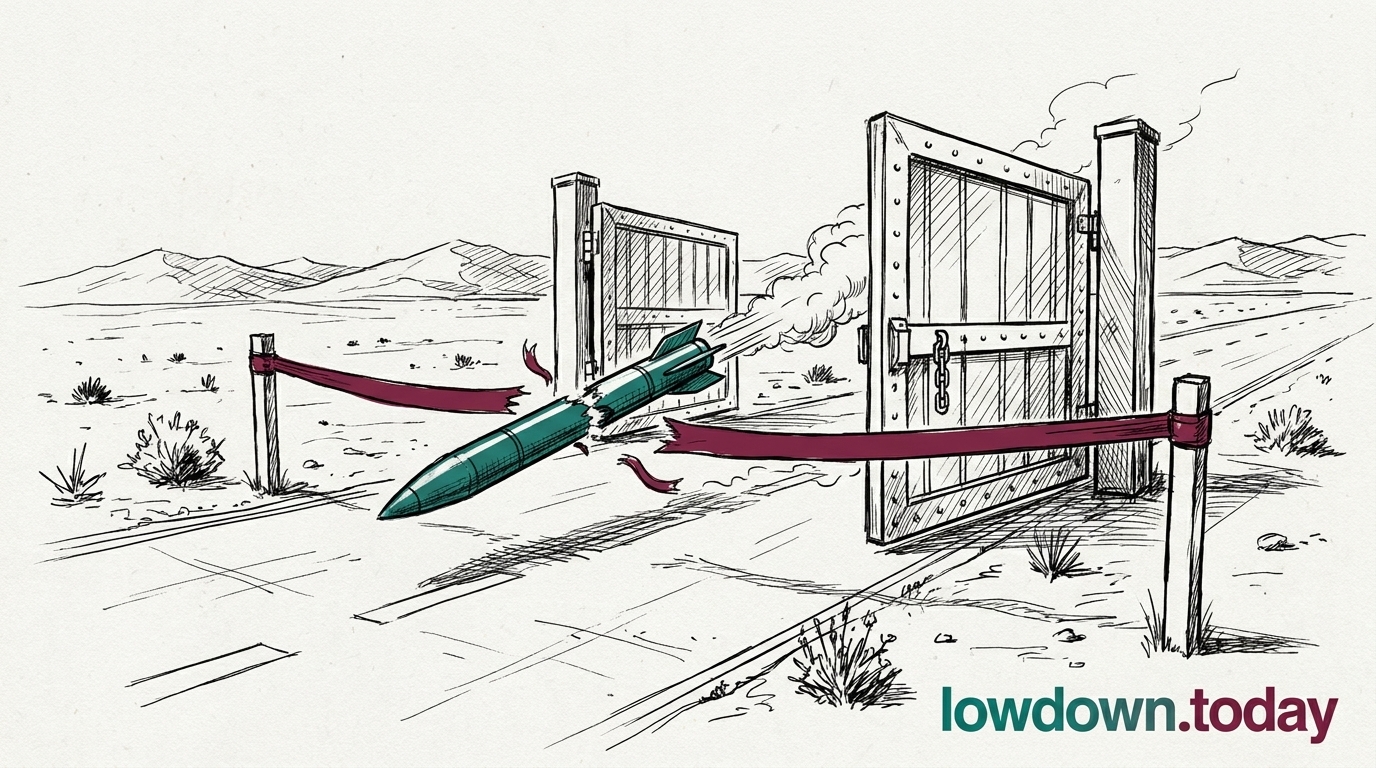
Vladimir Putin called Donald Trump on 29 April for a 90-minute conversation and proposed a Victory Day ceasefire around the 9 May parade. Kremlin foreign-policy aide Yuri Ushakov told reporters Trump 'actively supported' the proposal. Trump, asked outside the Oval Office, said Putin 'might announce something, a little bit of a ceasefire'. The White House issued no signed instrument during the gap window.

Putin did not contact Volodymyr Zelenskyy. He contacted Trump, framed the request as a calendar gesture rather than a negotiating step, and offered no reciprocal hold on Russian deep strikes inside Ukraine. Russia's later messaging floated a revised three-day window covering 7 to 9 May, then retracted it pending what Kremlin spokesman Dmitry Peskov called concrete decisions still to be made.

The pattern matches Putin's 32-hour Easter decree , which was issued without prior US contact and expired with 10,721 Russian violations on Ukraine's count . Both proposals share the same architecture: Russia announces a window pegged to a domestic anniversary, Western governments are asked to validate it, and Ukraine is presented with a finished offer rather than a negotiating draft. The Easter decree gave Putin 32 hours of Russian-controlled optics; the Victory Day proposal asks for the same arrangement around the security perimeter the Kremlin needs for its own parade.

The Trump channel substitutes for direct Russia-Ukraine contact that Moscow has avoided since the 2022 Istanbul talks collapsed. For the Kremlin, a Western-validated truce produced through The White House is preferable to a bilateral negotiation that would treat Kyiv as the primary counterparty.


Deep Analysis

In plain English

Vladimir Putin called Donald Trump on 29 April 2026 and proposed a temporary ceasefire around Russia's 9 May Victory Day celebrations. Trump reportedly told the Russian side he 'actively supported' the idea, and told reporters that Putin 'might announce something, a little bit of a ceasefire'. The two sides have not agreed on the length of any pause, the monitoring arrangements, or what happens on 10 May when it ends. Ukraine's President Zelenskyy, who was not part of the call, said the proposal sounded like 'a few hours of security for a parade in Moscow' rather than a genuine step toward peace.

Deep Analysis
Root Causes

The structural reason the Putin-Trump call followed the Easter ceasefire template rather than producing anything new is that Russia and the United States have no functioning bilateral working group on Ukraine.

The Witkoff-Kushner channel is a personal envoy operation, not an institutional mechanism; it has no permanent staff, no shared document platform, and no Ukrainian counterpart embedded in it. Every Putin-Trump agreement therefore lands in a procedural vacuum where it can be claimed by both sides as endorsed and by neither side as binding.

Kirill Dmitriev's 9-10 April Washington meetings established Russia's preferred format: a US-Russia bilateral that Ukraine joins as a third party rather than a co-principal. Ukraine's insistence on being a co-principal from the start means the two sides' procedural preconditions for even beginning formal talks have not been met after fourteen months of the Trump administration.

The ceasefire proposal's positioning around 9 May also reflects Moscow's domestic clock. The parade requires a security perimeter; the ceasefire functions as the diplomatic frame for that perimeter. Putin is asking Washington to enforce a 24-to-72-hour pause that solves a logistics problem Moscow cannot solve militarily.

What could happen next?
  • Risk

    If the Victory Day ceasefire proposal follows the Easter pattern, a 72-hour pause followed by resumption at elevated tempo would set a precedent that ceremonial ceasefires serve Russian operational interests without advancing durable peace.

    Short term · 0.82
  • Opportunity

    A successful 72-hour pause with verifiable compliance would give the Witkoff-Kushner channel a working template for a longer monitored ceasefire, the first one in the conflict's history.

    Medium term · 0.55
  • Consequence

    Trump's verbal endorsement without a signed instrument creates a pattern in which Moscow can claim US backing for any Russian-initiated pause while Kyiv has no institutional mechanism to challenge that characterisation.

    Medium term · 0.78
First Reported In

Update #15 · Hardware-free parade; crude waiver lives on

KTEP / Associated Press· 3 May 2026
Read original
Different Perspectives
Shipping and insurance underwriters
Underwriters can price Houthi strikes because the group announces its targets, but an unclaimed drone at Damietta and a mandatory Iranian insurance scheme both deny them a pattern to price against. War-risk premiums are increasingly being set by the absence of a claimant, not the scale of the damage.
Jordan
Jordan
Azraq absorbed its fourth Iranian strike in seven weeks, again drawing no direct Jordanian retaliation, only an American one. Amman's exposure, hosting US basing without the Patriot density of Gulf allies, has not changed even as the war around it widens.
Houthi movement
Houthi movement
The Houthis' 20 July blockade of Saudi-linked shipping is the injury Riyadh's new 43-nation coalition directly answers, yet the group itself was never asked to join and remains outside every proposal on the table. Sanaa-aligned commentators call the coalition a paper reassurance for insurers rather than a deployable force.
Egypt's Cabinet
Egypt's Cabinet
Egypt confirmed the Damietta blaze was an attack, not an accident, on soil the war had never touched before. Cairo now faces an unclaimed threat to a facility supplying roughly 7% of its domestic gas, with no author to hold accountable and no pattern yet to defend against.
Oman
Oman
Muscat is running the only channel Iran will use, a voluntary Hormuz fee modelled on Malacca, but stayed out of Saudi Arabia's new naval coalition entirely. Oman's mediating leverage depends on treating Hormuz as shared and non-exclusive, the opposite of what Tehran is now demanding of it.
Iraq's Prime Minister
Al-Zaidi cancelled his first official Riyadh visit and convened the Coordination Framework, the coalition that keeps him in power and whose factions sit inside the PMF that Saudi jets just struck. He is caught between a five-year Saudi investment relationship and armed groups inside his own state he does not fully control.



