Skip to content
You can now search across every topic, entity and event.What's new
Iran Conflict 2026
31JUL

IDF: halfway done. Trump: already won.

4 min read
09:24UTC

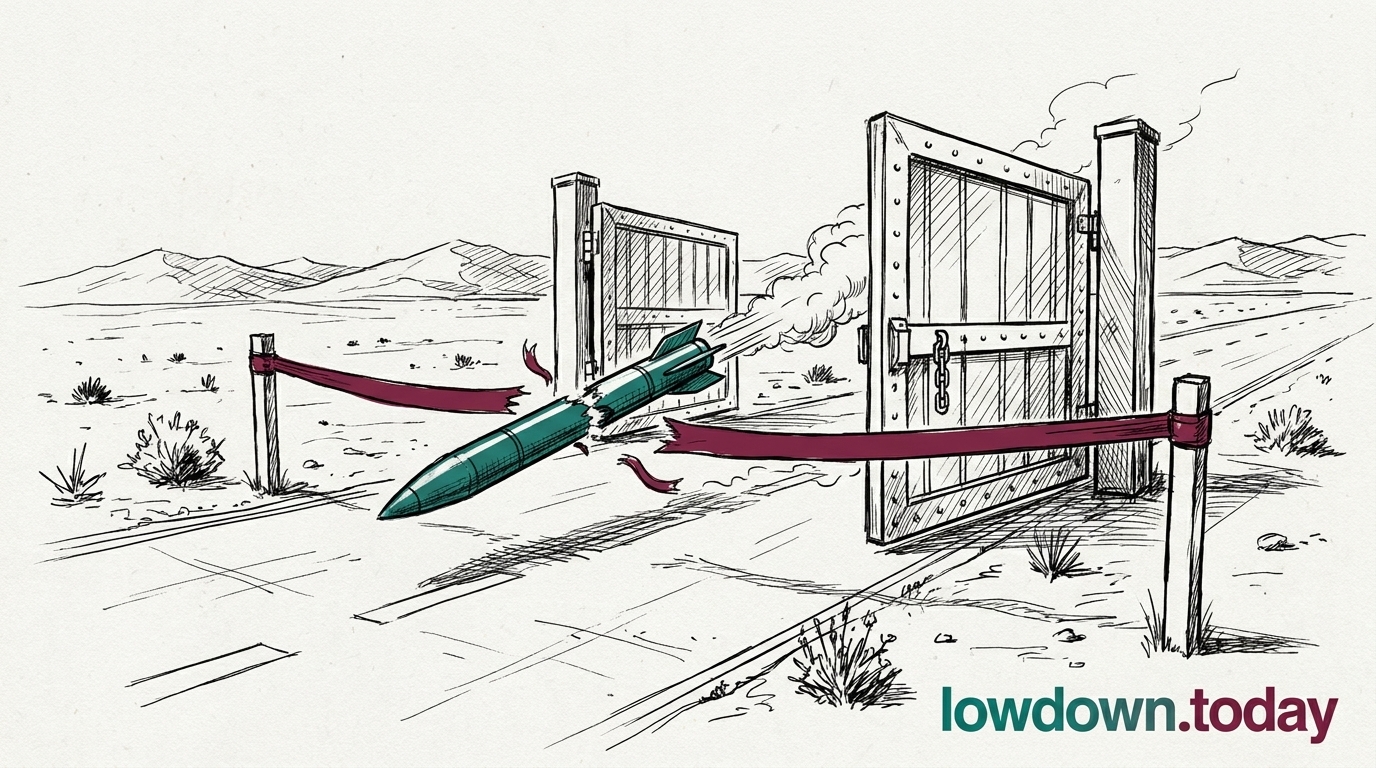
Israel's top general assessed the war at its midpoint with three more weeks of operations planned. Three days earlier, Trump declared it 'militarily won.'

ConflictDeveloping
Key takeaway

'Halfway through' to mid-April reveals a six-week campaign with no publicly defined end-state.

IDF Chief of Staff Lt. Gen. Eyal Zamir released a video statement Saturday: "We are halfway through, but the direction is clear." Defence Minister Israel Katz, speaking from the IDF's underground command centre, stated strikes "will significantly escalate" this week. According to The Times of Israel, the IDF is planning at least three more weeks of operations; the operational timeline extends through Passover in mid-April, with contingencies beyond 1. A senior Iranian source told CNN that Tehran does not believe Trump's wind-down claim 2.

Three days before Zamir's assessment, Trump posted on Truth Social that the US was "getting very close to meeting our objectives" and considering "winding down" military operations, describing the war as "Militarily WON" . Zamir's own words place the campaign at its midpoint — meaning the earliest conclusion, by Israeli military reckoning, falls in mid-April, putting the conflict's total duration at roughly seven weeks. The $200 billion supplemental funding request the Pentagon submitted — which Fortune calculated funds approximately 140 more days at the current burn rate — aligns with the IDF's extended timeline far more closely than it does with a war already won. At CSIS's estimate of $900 million per day , the three additional weeks the IDF is planning would cost the United States another $19 billion, on top of the estimated $19 billion already spent.

The gap between political messaging and operational reality has direct consequences. Republican opposition to the war supplemental is forming around precisely this contradiction : Senator Lisa Murkowski will not vote without a strategy outline; Representative Lauren Boebert declared herself "a no"; CNN reported GOP leaders do not believe they have the votes within their own caucus. If the war is won, the funding is inexplicable. If it is halfway through, the money is essential. Katz's promise of escalation compounds the problem — escalation is what an expanding campaign looks like, not a wind-down. NBC News reported that military officials include exit options in Trump's daily briefings; he has exercised none . Tehran, for its part, has read the operational signals rather than the political ones. FM Araghchi shifted last week from categorical refusal to a conditional end-state framework , but Zamir's halfway assessment and Katz's escalation pledge close the space for any near-term off-ramp. The war's timeline is being set in Tel Aviv's underground command centre, not on Truth Social.


Deep Analysis

In plain English

When the IDF Chief of Staff says 'we are halfway through,' he is revealing that this is a planned, phased military campaign with a deliberate timeline — not a reactive escalation spiral. Measured from the conflict's apparent start around 1 March, 'halfway through' to mid-April implies roughly a six-week operational plan. Defence Minister Katz's announcement of 'significant escalation' this week means more strikes on Iranian infrastructure, which will generate more Iranian retaliation and more civilian casualties on both sides before any end-state is reached. Critically, neither Zamir nor Katz defined what 'complete' looks like. They did not say operations will stop when enrichment capacity is destroyed, or when the Strait reopens, or when Iran's missile stocks fall below a threshold. Campaigns without defined end-states have a documented historical tendency to extend past their originally planned duration — 2006 is the canonical Israeli case.

Deep Analysis
Synthesis

The 'halfway through' statement exposes a structural US-Israel misalignment on end-state that becomes acutely operational when Trump's 48-hour Hormuz ultimatum expires Monday. If the US strikes Iranian power infrastructure, it commits to an extended conflict that directly contradicts the 'militarily WON' framing the White House issued two days earlier. If it does not, it surrenders the ultimatum's credibility at the moment of enforcement. The IDF's explicit three-week timeline forecloses the diplomatic exit that Trump's wind-down language appeared to be creating — Tel Aviv is signalling a conflict it intends to define and conclude on its own terms, not Washington's political calendar.

Root Causes

The IDF's commitment to a multi-week operational timeline reflects the structural preference in Israeli strategic culture for hakhraah — decisive military outcome — over negotiated settlement when military superiority is assessed. The Begin Doctrine's internal logic demands demonstrable physical destruction of threat capability, not mere suppression or diplomatic pause. This creates a built-in imperative to continue until destruction thresholds are met, regardless of external pressure from Washington or international partners to accept a ceasefire.

Escalation

Katz's announcement of 'significant escalation' this week, combined with the confirmed Dimona air defence failure, creates structural pressure to expand the target set beyond nuclear infrastructure to Iranian ballistic missile production and launch facilities. This would represent a qualitative shift — from targeting what Iran has built to targeting its capacity to build — and would predictably trigger a proportionate Iranian response against a broader set of US and Israeli assets across the region.

What could happen next?
2 risk1 consequence1 meaning1 precedent
  • Risk

    The IEA's 400-million-barrel SPR release will be substantially consumed before the IDF's operational timeline concludes, removing the primary market stabilisation instrument precisely when disruption peaks.

    Short term · Assessed
  • Consequence

    Iran's escalation calculus will intensify as it adjusts to a confirmed six-week IDF timeline rather than the imminent wind-down that Trump's language implied.

    Short term · Assessed
  • Risk

    US-Israel end-state divergence creates risk of a unilateral Israeli decision to continue operations past any Washington-brokered ceasefire, as the IDF timeline does not appear to be Washington's to control.

    Medium term · Suggested
  • Meaning

    The Passover constraint in mid-April imposes a domestic Israeli religious-political deadline on war termination — the operational calendar is now shaped by the civilian calendar.

    Short term · Suggested
  • Precedent

    The Winograd Commission parallel suggests campaigns framed as 'halfway through' without defined end-states systematically extend past their originally announced duration.

    Medium term · Suggested
First Reported In

Update #44 · Trump: 48 hours to destroy Iran power grid

Times of Israel· 22 Mar 2026
Read original
Causes and effects
This Event
IDF: halfway done. Trump: already won.
The IDF's own operational timeline — extending through mid-April at minimum — directly contradicts the White House narrative of imminent victory and complicates the political case for the $200 billion war supplemental that already lacks the votes to pass.
Different Perspectives
Shipping and insurance underwriters
Underwriters can price Houthi strikes because the group announces its targets, but an unclaimed drone at Damietta and a mandatory Iranian insurance scheme both deny them a pattern to price against. War-risk premiums are increasingly being set by the absence of a claimant, not the scale of the damage.
Jordan
Jordan
Azraq absorbed its fourth Iranian strike in seven weeks, again drawing no direct Jordanian retaliation, only an American one. Amman's exposure, hosting US basing without the Patriot density of Gulf allies, has not changed even as the war around it widens.
Houthi movement
Houthi movement
The Houthis' 20 July blockade of Saudi-linked shipping is the injury Riyadh's new 43-nation coalition directly answers, yet the group itself was never asked to join and remains outside every proposal on the table. Sanaa-aligned commentators call the coalition a paper reassurance for insurers rather than a deployable force.
Egypt's Cabinet
Egypt's Cabinet
Egypt confirmed the Damietta blaze was an attack, not an accident, on soil the war had never touched before. Cairo now faces an unclaimed threat to a facility supplying roughly 7% of its domestic gas, with no author to hold accountable and no pattern yet to defend against.
Oman
Oman
Muscat is running the only channel Iran will use, a voluntary Hormuz fee modelled on Malacca, but stayed out of Saudi Arabia's new naval coalition entirely. Oman's mediating leverage depends on treating Hormuz as shared and non-exclusive, the opposite of what Tehran is now demanding of it.
Iraq's Prime Minister
Al-Zaidi cancelled his first official Riyadh visit and convened the Coordination Framework, the coalition that keeps him in power and whose factions sit inside the PMF that Saudi jets just struck. He is caught between a five-year Saudi investment relationship and armed groups inside his own state he does not fully control.



