Skip to content
You can now search across every topic, entity and event.What's new
Iran Conflict 2026
31JUL

Half of Iran's missiles survive, WSJ reports

2 min read
09:24UTC

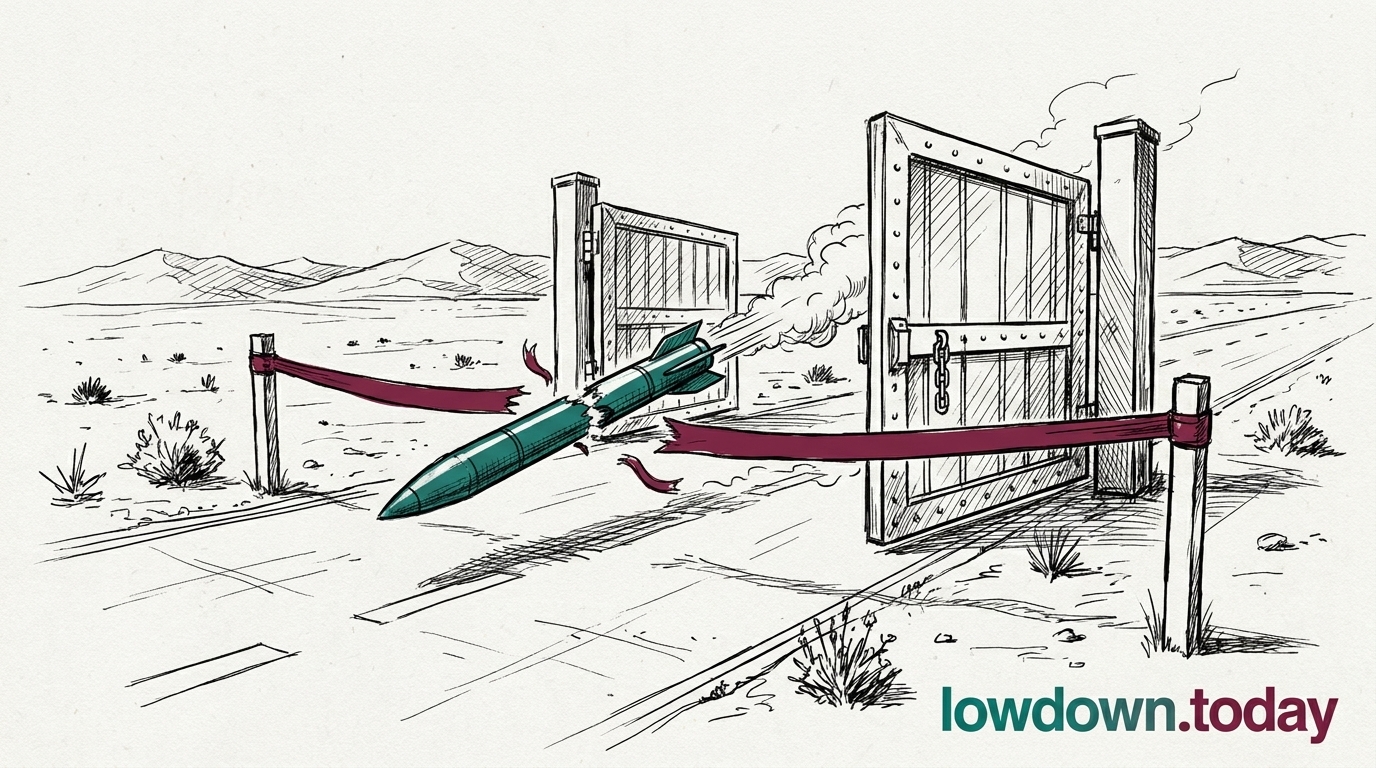
The Wall Street Journal, citing US intelligence officials, reported on 10 April that Iran has preserved roughly half its ballistic missile and attack-drone stockpile. Defence Secretary Pete Hegseth called the programme 'functionally destroyed' a fortnight earlier.

ConflictDeveloping
Key takeaway

Washington's spies believe Iran can still hurt things; Washington's ministers do not say so.

The Wall Street Journal, citing US intelligence officials, reported on 10 April that Tehran has preserved roughly half its ballistic missile and attack-drone stockpile and retains "thousands of ballistic missiles" 1. Defence Secretary Pete Hegseth had told reporters in late March that Iran's missile and drone programmes were "functionally destroyed", and Benjamin Netanyahu said last month that Iran had "no ability" to rebuild.

More than half of Iran's missile launchers have been destroyed, damaged, or buried by US and Israeli strikes, the same officials say, but Tehran can still repair them or dig the buried ones out. US intelligence believes Iran can reconstitute significant strike capability on a timeline measured in months, not years. This is single-provenance US-intelligence reporting relayed through one American paper.

The assessment arrives in the same week Washington has issued zero formal Iran presidential instruments across the full war and during the diplomatic window opened at Islamabad . Every declaration of completion in this war has been followed within days by an intelligence assessment that quietly contradicts it: Trump's "nuclear objective attained", Hegseth's "functionally destroyed", Netanyahu's "no ability". The public claim shrinks; the private estimate catches up.


Deep Analysis

In plain English

Defence Secretary Hegseth said Iran's missiles were 'functionally destroyed'. Israel's Netanyahu said Iran had 'no ability to rebuild'. The US intelligence community — the same officials whose analysis underlies both those claims — now says Iran has kept roughly half its missiles. This does not mean the strikes failed entirely: more than half of Iran's launch platforms (the vehicles and fixed sites from which missiles are fired) have been damaged or destroyed. But the missiles themselves, buried in dispersed underground sites, survived in much larger numbers than the public statements suggested.

Deep Analysis
Root Causes

Iran's missile survivability reflects two design choices made over 15 years of sanctions pressure. The IRGC Aerospace Force built geographically-dispersed underground storage — the buried launchers US officials acknowledge can be excavated — specifically anticipating an air campaign that could not sustain ground-level destruction of hardened sites.

The second factor is the Decentralised Mosaic Defence doctrine itself: by devolving launch authority to autonomous provincial units, Iran reduced the command-and-control concentration that would make a decapitation strike operationally effective. A 50% launcher loss with dispersed warhead survival is a designed outcome, not a failure.

First Reported In

Update #65 · Iran lost its own minefield

Haaretz· 11 Apr 2026
Read original
Causes and effects
This Event
Half of Iran's missiles survive, WSJ reports
The rhetoric-versus-reality gap is becoming the war's most consistent pattern, and every future strike calculus must assume Iranian retaliation capability rather than a degraded one.
Different Perspectives
United States
United States
OFAC gazetted two wind-down licences expiring four days apart and adopted a presumption of denial for new Iran sanctions requests, while the State Department separately sanctioned Kataib Hezbollah and Hezbollah financial networks. Washington is closing legal channels on a published calendar rather than all at once.
United Arab Emirates
Crown Prince Sheikh Khaled bin Mohamed bin Zayed Al Nahyan met Iran's president in New Delhi, the first known face-to-face since the war began, weeks after cutting all Emirati trade and financial dealings with Iran. Abu Dhabi is running economic pressure and diplomatic contact at the same time.
Houthis
Houthis
Houthi forces completed the capture of Yemen's Red Sea coast and Mayun island this week, an offensive a Houthi official confirmed alongside Yemeni government officers. The gain locks in the Bab al-Mandeb closure to Saudi crude declared as an embargo on 23 July.
Iran
Iran
Foreign Ministry spokesman Esmail Baghaei credited Iranian diplomacy backed by military strength for pushing neighbours to negotiate, citing the Oman safe-passage talks, while addressing none of the pipeline strike, the Iraqi dismissals or Saudi restraint directly.
Iraq
Iraq
Prime Minister Ali al-Zaidi sacked two Maysan officials, closed and reopened three Iran border crossings inside three days, and approved a joint inquiry with Tehran into the launch site on his own territory. He is managing a militia network he does not fully control rather than confronting it.
Saudi Arabia
Saudi Arabia
Riyadh's Foreign Ministry confirmed the Petroline strike, named no attacker, and said it would hold off retaliating at Iraq's request while reserving the right to act on its own sovereignty. It expects Baghdad's inquiry, not a Saudi strike, to be the next move.



