Skip to content
You can now search across every topic, entity and event.What's new
Iran Conflict 2026
26JUL

US lets Iranian oil fund Iran's war

4 min read
12:01UTC

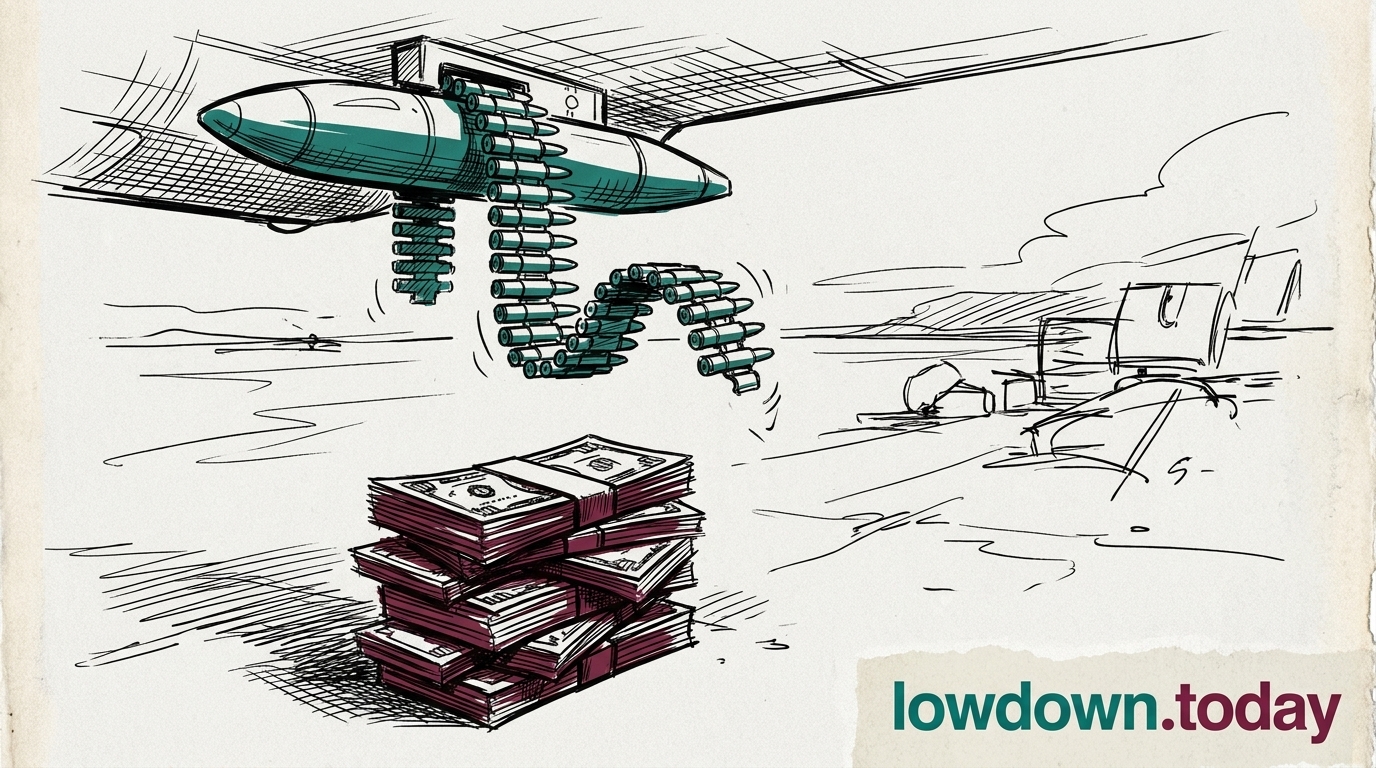
The US is at war with Iran and deliberately allowing Iranian tankers through the strait it describes as a kill box — because blocking them would break the oil market.

ConflictDeveloping
Key takeaway

Washington has an implicit oil price ceiling that overrides maximum economic pressure on Iran.

Treasury Secretary Scott Bessent told CNBC on Monday that the United States is deliberately allowing Iranian oil tankers through the strait of Hormuz. "The Iranian ships have been getting out already, and we've let that happen to supply the rest of the world," he said 1.

The US is spending roughly $1.4 billion per day on military operations against Iran . It has described Hormuz as a "kill box" with pre-registered Iranian fire zones . Every ally it asked to send warships has refused . And through the same waters, Iranian crude continues to flow — the revenue that funds the missiles, drones, and naval mines the US and its partners are absorbing daily.

The logic is economic. Gulf oil exports have dropped at least 60% since February. Brent traded at $106.18 on Monday — up from $67.41 on 27 February. Saudi spare capacity faces daily drone attack. The Shah Gas Field is offline. Fujairah oil loading is suspended. Iran exports roughly 1.3 million barrels per day. Interdicting that flow would tighten a market already producing below demand by the widest margin the IEA has recorded . The Administration has calculated that the inflationary cost of blocking Iranian exports exceeds the strategic cost of letting Tehran fund its defence.

Bessent predicted prices would fall "much lower" than $80 after the war 2. He named no timeline. Ten days earlier, he told Sky News escorts would begin "as soon as militarily possible" while Energy Secretary Wright said the Navy was "simply not ready" for them . TankerTrackers.com data showed 11.7 million barrels of Iranian oil had already transited to China by 10 March . Washington's non-interdiction policy means that figure is still climbing. The distance between stated war aims — destroying Iran's military capability — and operational reality — permitting the adversary's primary revenue stream — is the war's defining economic contradiction.


Deep Analysis

In plain English

The US is at war with Iran — conducting air strikes and military operations — but the US Treasury Secretary admitted on live television that American forces are letting Iranian oil tankers sail through the Strait of Hormuz freely. The reason is economic: Iran produces roughly 1.5 million barrels of oil per day. If the US stopped all of that oil reaching world markets on top of the 60% Gulf supply reduction already caused by the war, oil prices would likely surge well beyond $106, potentially triggering a global recession. So Washington has made a calculated trade-off: allow Iran to keep funding its own war effort in exchange for preventing an oil price spiral damaging to American consumers and allied economies. The problem is that this trade-off has now been said out loud on television — which weakens America's ability to credibly threaten Iran with economic isolation in this conflict or any future one.

Deep Analysis
Synthesis

Bessent's statement is the first explicit official acknowledgement that US economic warfare against Iran is partial by design, not merely by enforcement failure. This fundamentally degrades the credibility of the US sanctions regime. Any state observing this conflict will understand that US financial sanctions carry an implicit market-stability escape valve — a conclusion that weakens deterrence in future confrontations with any oil-producing adversary.

Root Causes

The US Strategic Petroleum Reserve holds approximately 350–400 million barrels — insufficient to offset a full Iranian export cutoff of approximately 1.5–2 million barrels per day for more than six to nine months without exhausting emergency reserves. No allied producer holds spare capacity capable of simultaneously replacing both Gulf disruption and Iranian exports. Washington has therefore calculated that enforcing full economic warfare on Iran is financially impossible without triggering a domestic energy crisis it cannot absorb politically.

Escalation

The primary escalation risk is domestic political rather than military. If the US Congress or influential media frame Bessent's admission as 'funding the enemy', the administration may face irresistible pressure to reverse course and stop Iranian exports. A forced policy reversal would immediately remove the only material buffer currently softening global oil prices — producing an acute price spike that itself carries geopolitical escalation potential across energy-importing economies.

What could happen next?
  • Meaning

    The US has an implicit oil price ceiling above which it modifies its own war aims and enforcement posture.

    Immediate · Assessed
  • Consequence

    Iran retains significant oil revenue to fund its defence despite sustained US kinetic strikes on Iranian territory.

    Short term · Assessed
  • Risk

    Congressional backlash framing Iranian oil tolerance as 'funding the enemy' could force a policy reversal and trigger an acute oil price spike.

    Short term · Suggested
  • Precedent

    US economic warfare against oil-producing adversaries now has a documented market-stability override, weakening future sanctions deterrence credibility.

    Long term · Assessed
First Reported In

Update #38 · Israel enters Lebanon; Hormuz pact fails

CNBC Bessent· 17 Mar 2026
Read original
Causes and effects
Different Perspectives
Hormuz shipping and insurance market
Kpler, Lloyd's List and S&P Global each independently put Strait of Hormuz transits at a seventh to a sixth of pre-war levels, against CENTCOM's own position that the strait remains open for transit. War-risk premiums rose from 0.25% to 3-10% of hull value in mid-July and have held steady since.
Pakistan (with China)
Iran's interior minister met Pakistan's army chief in Islamabad on 25 July, his second visit in ten days, with China separately pushing the same track; Islamabad's stated precondition, a halt to Gulf attacks, broke within hours when the Houthis struck Yanbu and Jazan. The channel inherits Baghdad's opening without yet fixing what broke it.
Saudi Arabia
Saudi Arabia
Saudi Arabia absorbed Houthi strikes on Aramco-linked sites at Jazan and Yanbu on 25 July without confirming them, while holding a 30-year civil nuclear agreement Trump made conditional on joining the Abraham Accords two days after signing it. Riyadh is fighting on one front while being asked to concede on another.
Iran (state security leadership)
Iran's security chief said strikes continue until the enemy's "total surrender", and no IRNA, Tasnim or Fars report carries any stand-down language to match Washington's pause. Tehran reads the halt as "strategic decision-making fatigue", not a restraint it needs to reciprocate.
Washington (Pentagon and White House)
A Defense Department source called the bombing halt "on a hold", Pentagon spokesman Sean Parnell insisted the US "retains a deep arsenal of capabilities", and the White House credited "successful sanctions" and thirteen days of strikes for the same pause. Three explanations from one government suggest none of them is the whole one.
Oil traders
Oil traders
Sent Brent down 2.29 per cent to $98.38 a barrel on reports that mediation was reviving, moving the price on CENTCOM's quiet night rather than on Trump's same-day promise of a bigger operation with no deadline attached.



