Skip to content
You can now search across every topic, entity and event.What's new
Iran Conflict 2026
23JUL

Sanchez shuts down Pentagon email from Cyprus

3 min read
19:27UTC

At the EU informal leaders' summit in Cyprus, Pedro Sanchez dismissed the Pentagon leak as non-official noise. Article 42.7 of the EU Treaty was already on the agenda.

ConflictDeveloping
Key takeaway

Spain classes the Pentagon leak as unofficial; Article 42.7 is the escalation path if Washington presses.

Spanish Prime Minister Pedro Sanchez responded to the Pentagon email leak on Friday 24 April from the EU informal leaders' summit in Cyprus: "We do not work on emails, we work on official documents and positions taken in this case by the United States Government" 1. Spain maintains "absolute collaboration with the allies, but always within the framework of international legality." The reference to legality is the diplomatic vocabulary for treating the Pentagon memo as unofficial noise.

The summit convened 26 heads of government in the same building when the leak surfaced. Cypriot President Nikos Christodoulides had already tabled Article 42.7 of the EU treaty, the bloc's mutual-defence clause, on an agenda alongside the Northwood Hormuz track , Ukraine and energy security. Article 42.7 has been invoked only once, by France after the 2015 Paris attacks. Putting it back on the summit table converts the leak from a Spanish bilateral issue into a potential collective-defence discussion.

Calling the memo "emails" rather than a Pentagon position denies its standing without triggering an escalation, and Sanchez's reference to "the framework of international legality" pre-positions the legal vocabulary Spain would reach for if the Pentagon memo were converted to policy. Emmanuel Macron and Keir Starmer used the same legality framing when declining the Iran-campaign coalition, the refusal that the Pentagon memo is now written to punish.

The decision point is whether Cyprus produces an Article 42.7 working group on allied-flagged shipping outside the US two-tier ceasefire bubble, or whether the summit closes with the Sanchez line as the collective position. The former hardens the memo leak into a structural alliance dispute; the latter lets Washington test a second leaked memo against weakened European cohesion. NATO Secretary General Mark Rutte's 9 April "paper tiger" gloss of Trump's view sits between the two possibilities.

Deep Analysis

In plain English

While 26 European leaders were meeting in Cyprus, Reuters broke the Pentagon memo story naming Spain as the primary target. Pedro Sanchez responded from the same Cyprus summit building, telling reporters Spain only acts on official US government documents, not leaked internal emails. At the same meeting, Cyprus put a little-used European Union treaty clause on the agenda: Article 42.7, which says if one EU country is attacked, others must help. It has only ever been used once before, by France after the 2015 Paris attacks. Cyprus raising it now suggests some EU countries are asking whether Iran's attacks on European-flagged ships in the Gulf count as an attack that the whole EU should respond to.

What could happen next?
  • Risk

    If Cyprus succeeds in getting an Article 42.7 working group established for allied-flagged shipping, the EU acquires a collective-defence argument for shipping protection that bypasses the NATO ABO-rights dispute the Pentagon memo triggered.

First Reported In

Update #78 · Allies flagged, adversaries listed, nothing signed

Democrata· 24 Apr 2026
Read original
Causes and effects
This Event
Sanchez shuts down Pentagon email from Cyprus
Europe's diplomatic response sets the test for whether the Pentagon memo becomes policy or deniable drafting.
Different Perspectives
India
India
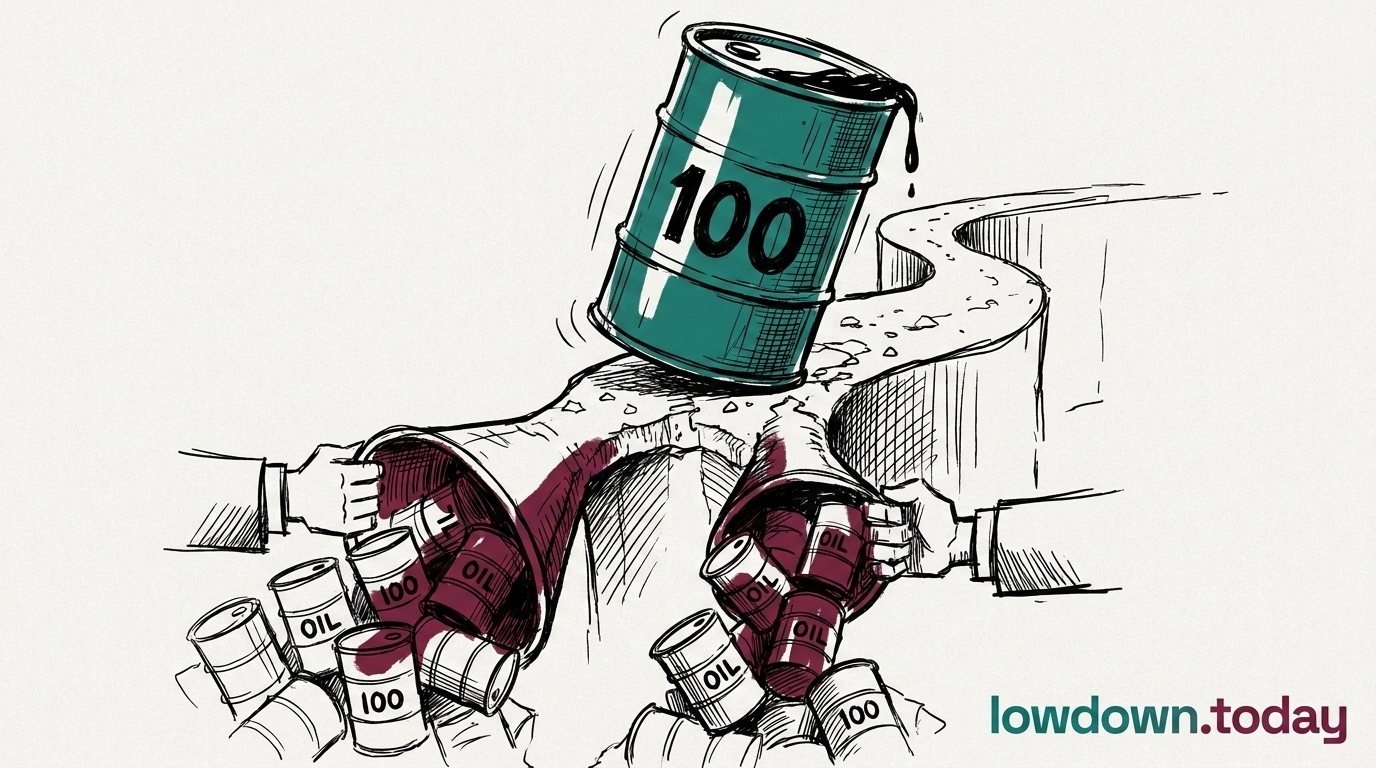
India buys more Saudi crude than any other country and has 2.5 million nationals working in the kingdom, so a $100 Brent and a live strike on Saudi tankers reach New Delhi through both fuel bills and remittance risk. Neither channel has an alternative route the way Saudi Arabia's own pipeline does.
Qatar
Qatar
Qatar co-authored the four-mediator ten-day ceasefire proposal alongside Egypt, Pakistan and Oman, centred on resuming Hormuz navigation, while separately pursuing its dated compensation claim against Iran at the UN Security Council filed on 21 July. Doha is mediating and litigating in the same week.
Israel
Israel
Israeli intelligence, reported by the Wall Street Journal, assesses Iran moved thousands of centrifuges and part of its roughly 440kg enriched-uranium stock into Pickaxe Mountain after the June 2025 strikes on its three main nuclear sites. Some of the US refuelling aircraft now deploying to the region are bound for Israeli bases and Ramon Airport.
Houthis
Houthis
Yahya Saree announced the missile and drone strikes on the Encelia and Layla on 22 July as enforcement of the embargo his forces had declared by radio warning alone two days earlier. Six vessels already turned back on the broadcast; the strike shows Houthi forces will use weapons once warnings stop working.
Saudi Arabia
Saudi Arabia
Saudi Arabia's state news agency confirmed only a fire on the Encelia's bow, with the crew safe; the Layla strike remains unconfirmed by Riyadh. The kingdom built its Petroline pipeline specifically to bypass Hormuz through the Red Sea, so the tanker fire lands on the route Riyadh had already spent billions escaping.
United States
United States
Washington is weighing both ten-day proposals but wants a longer truce than either offers, and moved F-16 and F-35 jets plus refuelling aircraft into the region while it decides. That deployment, not Trump's Pickaxe Mountain remarks, is the measurable US action, buying options for the day talks fail rather than betting on them.