Skip to content
You can now search across every topic, entity and event.What's new
Iran Conflict 2026
23JUL

Russia's wealth fund sheds $4.8bn

2 min read
19:27UTC

Rising oil prices could not prevent Russia's National Wealth Fund from haemorrhaging reserves as the business climate index turned negative for the first time in three years.

ConflictDeveloping
Key takeaway

Russia's financial buffers are shrinking despite oil prices above budget assumptions.

Russia's National Wealth Fund shed 400 billion roubles ($4.8 billion) in January and February 2026 1. The country's business climate index turned negative in March for the first time since October 2022. Fixed capital investment fell 2.3% in real terms during 2025.

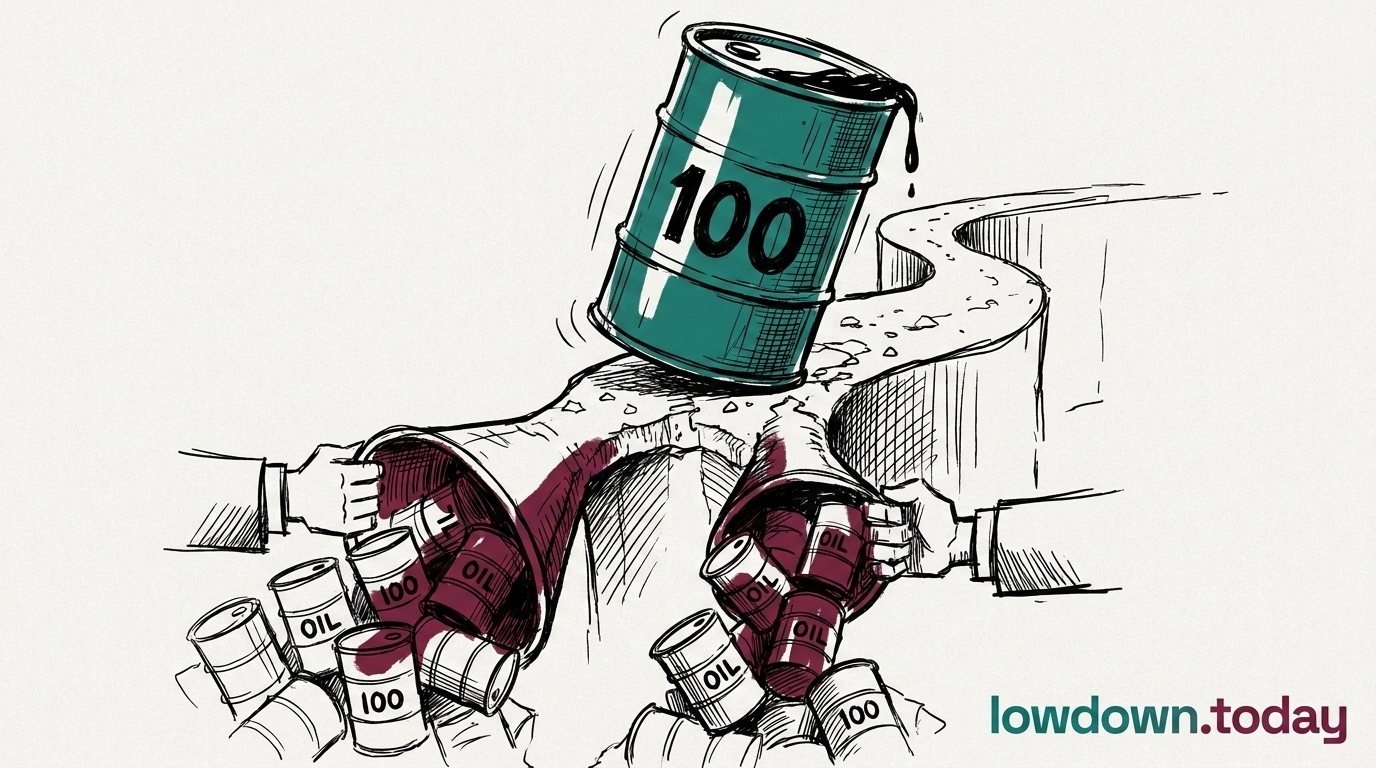
The Urals benchmark has risen $11.30 to $73.24 per barrel, well above Russia's $59 budget assumption. Yet rising prices did not prevent the fund's decline. Russia is spending 38 to 40% of its federal budget on defence, the highest proportion since the Soviet era . Moscow dropped planned 10% cuts to non-military spending after the Iran-war oil price surge, only to face a revenue squeeze from the opposite direction: not low prices, but destroyed export capacity at Baltic ports.

Deep Analysis

In plain English

Russia has a 'rainy day fund' called the National Wealth Fund, similar to a national savings account. It lost $4.8 billion in just two months at the start of 2026, even while oil prices were high. Why? Russia is spending 38-40% of its entire government budget on the military, the highest proportion since the Soviet era. High oil prices were supposed to offset that. But Russia is spending the money faster than it earns it. Now the oil export damage from the Baltic port strikes compounds the problem: Russia has high oil prices but can't ship as much oil. The business climate index turned negative in March for the first time in years, suggesting the civilian economy is feeling the strain.

Deep Analysis
Root Causes

Russia's fiscal deterioration reflects the simultaneous pressure of three forces. First: record defence spending at 38-40% of the federal budget, consuming reserves faster than revenues replenish them.

Second: investment collapse, with fixed capital investment down 2.3% in 2025, meaning Russia is not building the productive capacity needed to sustain long-term revenue growth. Third: the Baltic port disruption now compressing both the volume and revenue sides of the oil export equation simultaneously.

The business climate index turning negative for the first time since October 2022 is the civilian economy signal. It precedes consumer confidence deterioration by two to three quarters. If sustained, it indicates Russian business investment is contracting under war conditions despite high nominal oil prices.

What could happen next?
  • Consequence

    At current NWF depletion rates, Russia may need to cut non-military spending or increase deficit financing within 12-18 months, creating domestic economic pressure on the war effort.

First Reported In

Update #9 · Ukraine halves Russia's Baltic oil exports

Moscow Times· 1 Apr 2026
Read original
Different Perspectives
India
India
India buys more Saudi crude than any other country and has 2.5 million nationals working in the kingdom, so a $100 Brent and a live strike on Saudi tankers reach New Delhi through both fuel bills and remittance risk. Neither channel has an alternative route the way Saudi Arabia's own pipeline does.
Qatar
Qatar
Qatar co-authored the four-mediator ten-day ceasefire proposal alongside Egypt, Pakistan and Oman, centred on resuming Hormuz navigation, while separately pursuing its dated compensation claim against Iran at the UN Security Council filed on 21 July. Doha is mediating and litigating in the same week.
Israel
Israel
Israeli intelligence, reported by the Wall Street Journal, assesses Iran moved thousands of centrifuges and part of its roughly 440kg enriched-uranium stock into Pickaxe Mountain after the June 2025 strikes on its three main nuclear sites. Some of the US refuelling aircraft now deploying to the region are bound for Israeli bases and Ramon Airport.
Houthis
Houthis
Yahya Saree announced the missile and drone strikes on the Encelia and Layla on 22 July as enforcement of the embargo his forces had declared by radio warning alone two days earlier. Six vessels already turned back on the broadcast; the strike shows Houthi forces will use weapons once warnings stop working.
Saudi Arabia
Saudi Arabia
Saudi Arabia's state news agency confirmed only a fire on the Encelia's bow, with the crew safe; the Layla strike remains unconfirmed by Riyadh. The kingdom built its Petroline pipeline specifically to bypass Hormuz through the Red Sea, so the tanker fire lands on the route Riyadh had already spent billions escaping.
United States
United States
Washington is weighing both ten-day proposals but wants a longer truce than either offers, and moved F-16 and F-35 jets plus refuelling aircraft into the region while it decides. That deployment, not Trump's Pickaxe Mountain remarks, is the measurable US action, buying options for the day talks fail rather than betting on them.