Skip to content
You can now search across every topic, entity and event.What's new
Iran Conflict 2026
23JUL

Brent above $116, set for record month

2 min read
19:27UTC

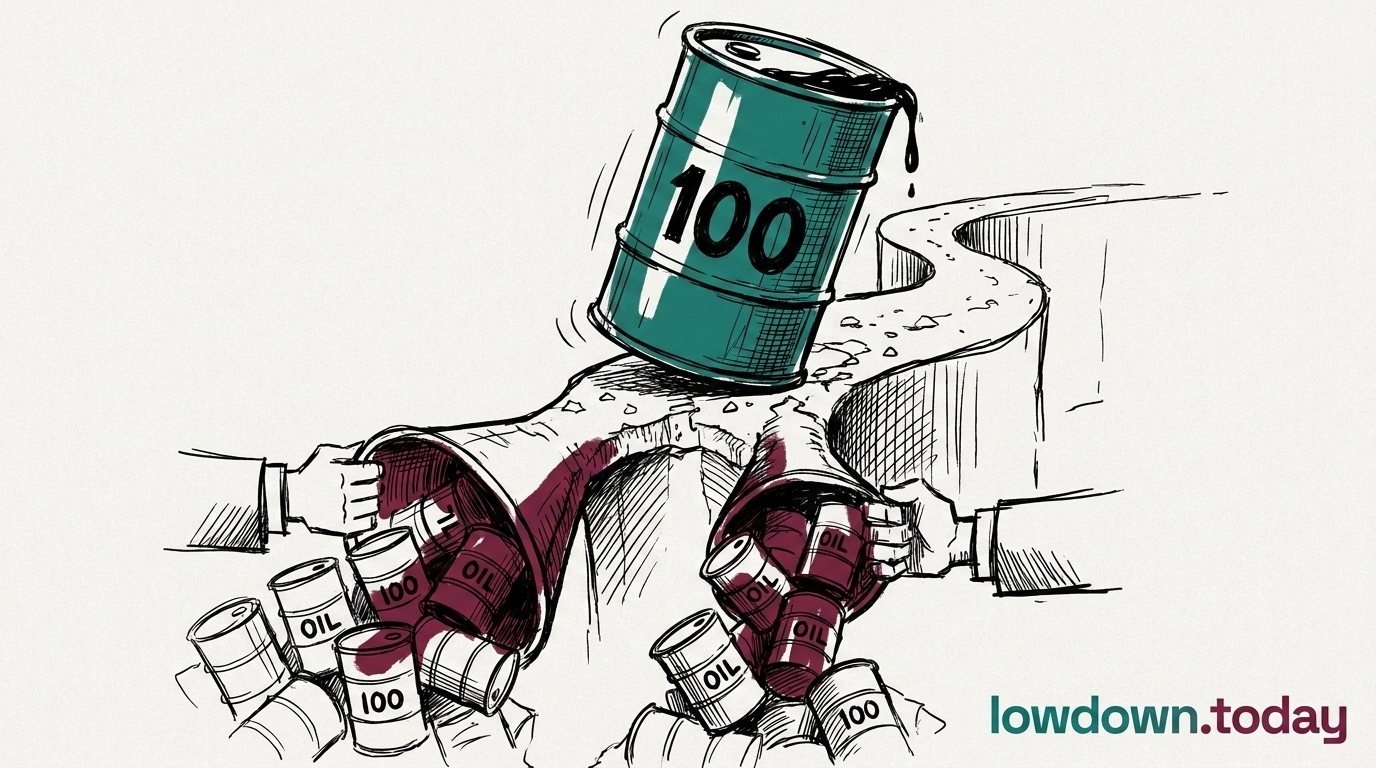
Brent crude advanced above $116, up 72% from pre-war levels and heading for its largest monthly increase on record. Markets are pricing prolonged conflict, not resolution.

ConflictAssessed
Key takeaway

Markets are pricing prolonged war, not imminent resolution.

Brent Crude advanced above $116 per barrel on 30 March, approximately 72% above its pre-war level of $67.41. 1 The monthly gain is heading for a record. Goldman Sachs maintained a $14 to $18 per barrel geopolitical risk premium is baked into the price. Global stock markets extended their selloff as Houthi entry and the US military build-up stoked prolonged-conflict fears.

The price trajectory tells the story of a market that has abandoned hope of a quick resolution. Brent settled at $112.57 on 28 March , already elevated by Houthi entry. Trump's oil seizure statement, the third consecutive Houthi attack on Israel, and Pentagon confirmation of ground operations planning pushed it above $116 two days later.

AIS tracking data paints a bleaker picture than headline prices suggest. Shadow fleet vessels account for 80% of Hormuz transits in March, up from 15% in February . Legitimate commercial traffic has effectively stopped: approximately three transits per 24 hours against a pre-war baseline of 138. The Hormuz 'reopening' is a reorganisation of traffic to benefit non-US-aligned operators, denominated in yuan, under IRGC naval supervision.

The 6 April deadline for Trump's power plant strike threat is six days away. If the deadline passes without diplomatic movement and the 82nd Airborne stages forward from Kuwait, Goldman's risk premium estimate will need revision upward. Every dollar on Brent translates to approximately 2.5 pence per litre at UK petrol pumps within a week.

Deep Analysis

In plain English

Brent crude is the main international benchmark for oil prices. Before the war started, a barrel of oil cost $67. By 30 March it cost over $116. That is a 72% increase in one month. Higher oil prices feed through into everything: petrol and diesel costs, heating bills, the price of food and goods that are transported, and the cost of making plastic and chemicals. The monthly increase is on track to be the largest in recorded history. Goldman Sachs, the US bank that tracks commodity prices, says there is an extra $14 to $18 on every barrel just because of the war risk. The closer US ground forces get to Iran's oil export terminal at Kharg Island, the higher the risk premium is likely to rise.

What could happen next?
  • Risk

    The 6 April power plant strike deadline, with no diplomatic movement, risks a further price spike beyond Goldman's current risk-premium estimate if Trump follows through.

  • Consequence

    The IEA's 400 million barrel emergency release has not stabilised prices. Markets are treating this as a structural supply disruption, not a temporary spike amenable to reserve releases.

First Reported In

Update #52 · Trump wants Iran's oil; 3,500 Marines land

Bloomberg· 30 Mar 2026
Read original
Different Perspectives
India
India
India buys more Saudi crude than any other country and has 2.5 million nationals working in the kingdom, so a $100 Brent and a live strike on Saudi tankers reach New Delhi through both fuel bills and remittance risk. Neither channel has an alternative route the way Saudi Arabia's own pipeline does.
Qatar
Qatar
Qatar co-authored the four-mediator ten-day ceasefire proposal alongside Egypt, Pakistan and Oman, centred on resuming Hormuz navigation, while separately pursuing its dated compensation claim against Iran at the UN Security Council filed on 21 July. Doha is mediating and litigating in the same week.
Israel
Israel
Israeli intelligence, reported by the Wall Street Journal, assesses Iran moved thousands of centrifuges and part of its roughly 440kg enriched-uranium stock into Pickaxe Mountain after the June 2025 strikes on its three main nuclear sites. Some of the US refuelling aircraft now deploying to the region are bound for Israeli bases and Ramon Airport.
Houthis
Houthis
Yahya Saree announced the missile and drone strikes on the Encelia and Layla on 22 July as enforcement of the embargo his forces had declared by radio warning alone two days earlier. Six vessels already turned back on the broadcast; the strike shows Houthi forces will use weapons once warnings stop working.
Saudi Arabia
Saudi Arabia
Saudi Arabia's state news agency confirmed only a fire on the Encelia's bow, with the crew safe; the Layla strike remains unconfirmed by Riyadh. The kingdom built its Petroline pipeline specifically to bypass Hormuz through the Red Sea, so the tanker fire lands on the route Riyadh had already spent billions escaping.
United States
United States
Washington is weighing both ten-day proposals but wants a longer truce than either offers, and moved F-16 and F-35 jets plus refuelling aircraft into the region while it decides. That deployment, not Trump's Pickaxe Mountain remarks, is the measurable US action, buying options for the day talks fail rather than betting on them.