Skip to content
You can now search across every topic, entity and event.What's new
Iran Conflict 2026
23JUL

Brent at $112 as Houthis enter the war

2 min read
19:27UTC

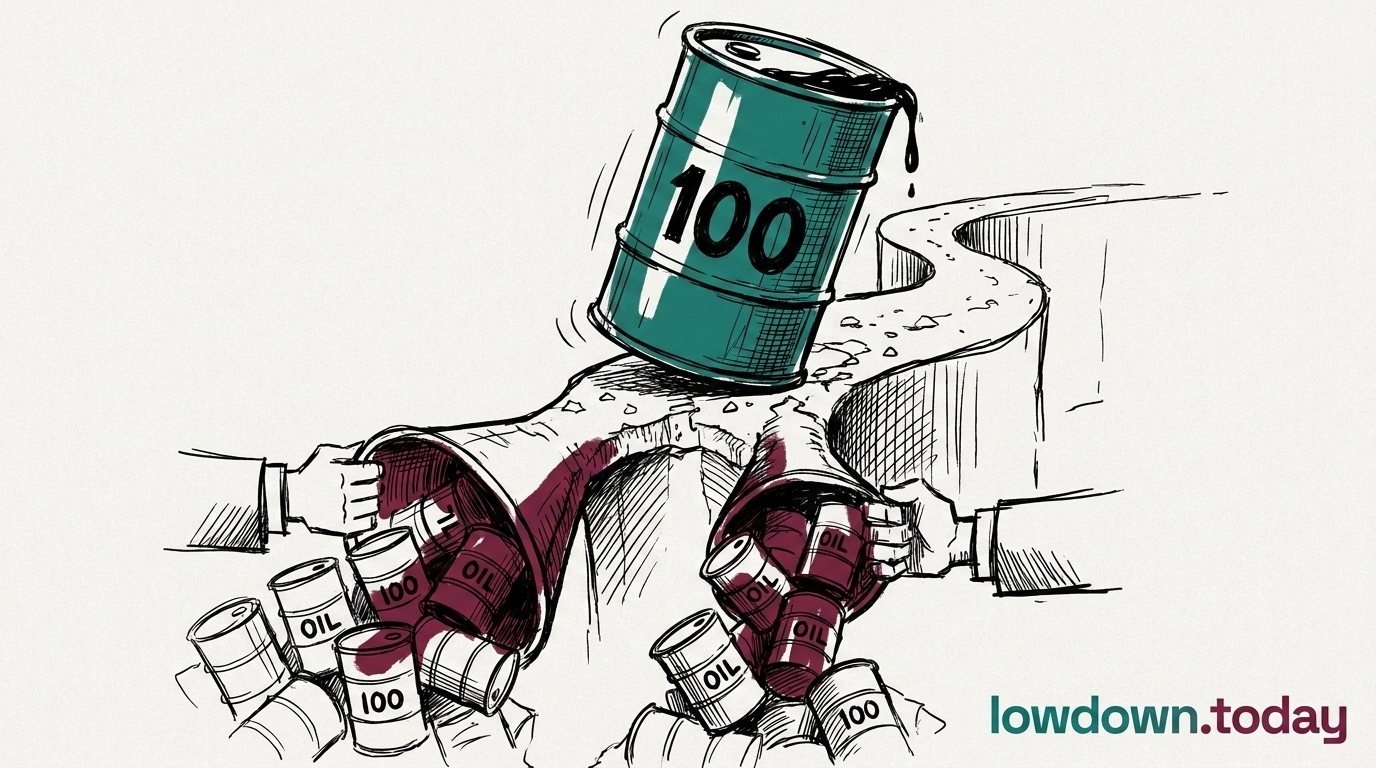
Oil climbed 4.2% to $112.57 as the Houthi attacks added a second chokepoint threat to a market already pricing in near-total Hormuz closure.

ConflictAssessed
Key takeaway

Brent's 51% monthly gain reflects dual-chokepoint risk not yet fully priced by markets.

Brent Crude settled at $112.57 on 28 March, up $4.56 (4.22%), driven by Houthi entry into the conflict 1. WTI crossed $100 for the first time since the Houthi escalation began. The monthly gain of approximately 51% is the largest single-month increase since the COVID recovery in mid-2021. Goldman Sachs estimates a $14 to $18 per barrel geopolitical risk premium is already baked into the price.

The Majlis Hormuz toll bill is expected to be finalised this week. Passage would embed Hormuz control in Iranian domestic law, making it constitutionally harder for any future negotiator to concede the point. The de facto $2 million per-voyage toll is already operational, denominated in Chinese yuan, with refusal to pay triggering boarding by IRGC naval forces. IEA demand destruction (growth revised down 210,000 barrels per day) suggests the price surge is partly offset by recession-driven demand collapse .

Deep Analysis

In plain English

Oil has risen 51% in 29 days, from about $67 per barrel before the war to $112.57. For comparison, petrol in the UK is now roughly £3.50 to £3.70 per litre where it was under £2.20 before the conflict. The immediate driver is the near-total closure of the Strait of Hormuz, through which 20% of the world's oil normally flows. The Houthi entry into the conflict on 28 March added another 4.22% to the price in a single day. The Iranian parliament is expected to pass a law this week making the Hormuz toll permanent under Iranian domestic legislation. If it does, markets will likely price in a longer-term disruption, pushing prices higher still.

First Reported In

Update #51 · Iran hits aluminium plants; Hormuz emptying

International Energy Agency· 29 Mar 2026
Read original
Different Perspectives
Golden Global Yatirim Bankasi
Golden Global told Turkey's KAP on 4 September that the parties OFAC named are not its customers and it had no dealings with them. It plans to contest the designation.
CENTCOM (US Central Command)
CENTCOM says its ships evaded the IRGC's 5 September missiles unharmed, then disabled two Iranian tankers and destroyed a third within hours. Admiral Cooper named that three-for-two ratio himself.
Islamic Revolutionary Guard Corps
The IRGC Navy claimed strikes on six vessels, three tankers and three US-linked ships, on 5 and 6 September, naming none of them. It conceded its own tankers were hit.
China's foreign ministry
Spokesman Lin Jian rejected Treasury Secretary Scott Bessent's 25 August warning that Iranian oil buyers face an "economic D-Day", saying sanctions do not help and that Beijing would safeguard its own rights and interests. China's Iranian crude imports had already halved for unrelated reasons.
Iraq's government and Erbil authorities
Erbil authorities said 10 explosive-laden drones were shot down over the city on 1-2 September with no casualties. Iraq's government condemned the attacks without naming Iran as their source, and neither Washington nor Baghdad confirmed the IRGC's claim to have hit US bases there.
Bahrain Defence Force
The General Command said air defences intercepted several Iranian missiles and drones on 1-2 September and called the use of such weapons against civilians and private property a flagrant violation of international humanitarian law.