Skip to content
You can now search across every topic, entity and event.What's new
Iran Conflict 2026
19JUL

USS Boxer sails with second MEU

4 min read
14:05UTC

The second Marine expeditionary unit in three weeks heads for the Gulf — alongside Kharg Island seizure options, 82nd Airborne readiness orders, and detention planning for Iranian prisoners. Trump says no troops are going anywhere.

ConflictDeveloping
Key takeaway

Pentagon ground-force logistics signature contradicts Trump's denial and signals genuine invasion optionality.

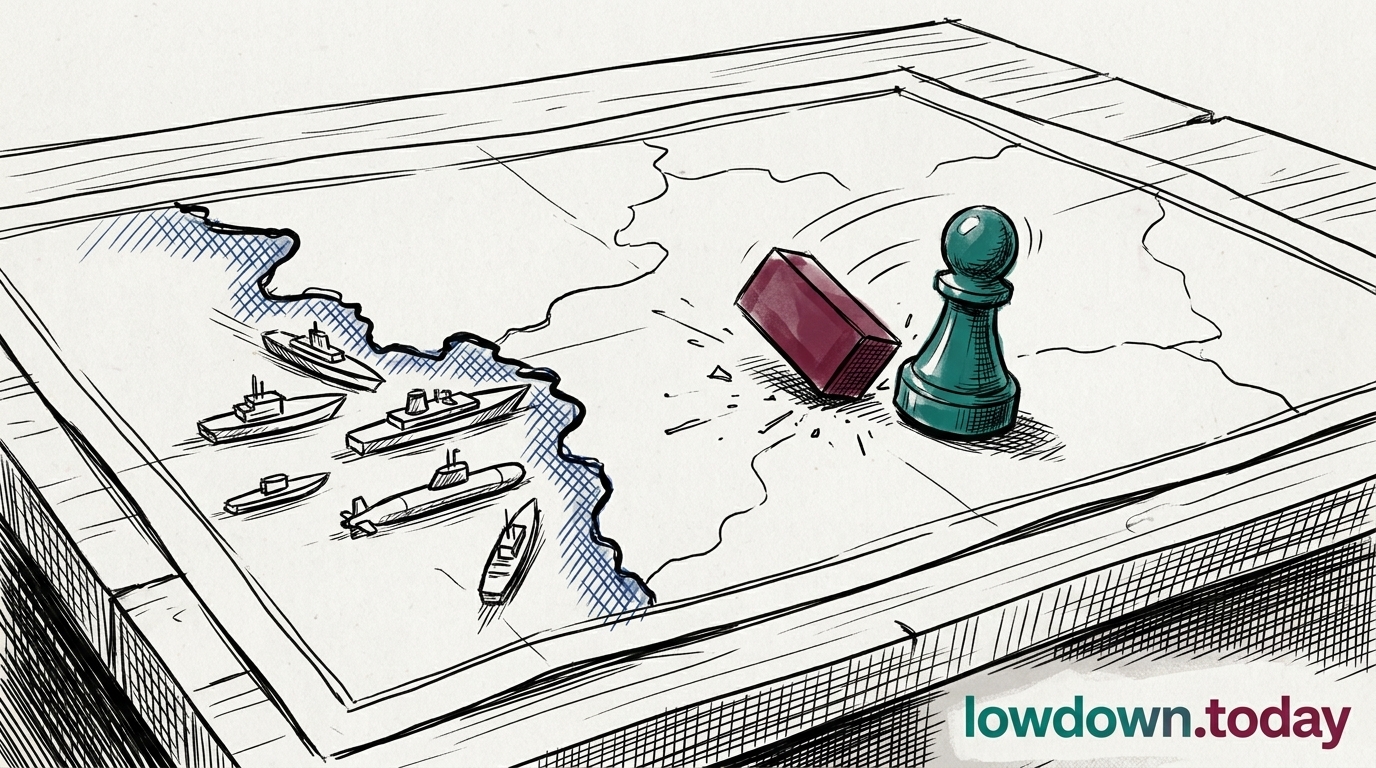
The USS Boxer amphibious ready group departed San Diego on Thursday carrying 2,200 Marines of the 11th Marine Expeditionary Unit — the second MEU deployment of the war, after the 31st MEU was ordered from its permanent station in Japan. CBS News reported the Pentagon is making "heavy preparations" for potential ground forces in Iran 1, including options to seize Kharg Island, 82nd Airborne readiness orders with all training exercises cancelled, and detention planning for Iranian prisoners. Trump denied it: "I'm not putting troops anywhere. If I were, I certainly wouldn't tell you."

The second sentence does the work the first tries to undo. Framing the denial as operational security — if I were, I wouldn't tell you — concedes the possibility rather than foreclosing it. This is the language of a president who has not ruled out ground forces; it is not the language of one who has.

Three weeks ago, Trump explicitly rejected ground troops and nation-building in Iran . The Pentagon's planning has moved in the opposite direction. More than 7,000 targets have been struck since 28 February , yet the IRGC announced its 66th wave of missile attacks on Thursday. IAEA Director General Rafael Grossi assessed that military action cannot eliminate Iran's nuclear programme — "the material will still be there" . When the gap between stated objectives and air-power results widens, ground-force options move from contingency folders to readiness orders. That transition appears to be under way.

The Kharg Island option carries particular weight. The US already struck military positions on the island , but seizing territory is a categorically different commitment — one that requires supply lines, force protection, and an exit strategy none of the president's public statements have addressed. The 82nd Airborne is the US military's global rapid-deployment division; cancelling its training exercises to place it on readiness is a concrete indicator, not posturing. Detention planning for Iranian prisoners implies ground contact producing captives — logistics that accompany occupation, not bombardment. Netanyahu's statement last week that "revolutions do not happen from the air" now reads less like aspiration and more like a shared operational premise between Washington and Jerusalem.

Deep Analysis

In plain English

When a military cancels training exercises for its rapid-deployment airborne forces and begins planning detention facilities for enemy prisoners, these are not precautionary paper exercises — they are the logistical prerequisites that must physically exist before a large-scale ground operation can begin. The USS Boxer carries the 11th Marine Expeditionary Unit: a self-contained assault force with its own aviation, armour, and logistics, specifically designed to seize and hold coastal objectives. Kharg Island, which handles the vast majority of Iranian crude exports, is precisely the kind of coastal objective such a unit is built for. Trump's denial that troops are going anywhere is technically consistent with no deployment order having been issued yet. But the preparations described — two MEUs deployed, 82nd Airborne on readiness, detention planning active — represent the irreversible early phases of a ground-operation pipeline. Once those phases are complete, the decision to execute becomes faster and cheaper to make.

Deep Analysis
Synthesis

Trump's denial creates a deliberate ambiguity serving two simultaneous functions: suppressing domestic political opposition to ground operations, and maintaining strategic surprise against Iran. The second-order consequence is that Congress cannot invoke the War Powers Resolution against an operation it has no official knowledge of — foreclosing the primary legislative check on presidential war-making at the precise moment when ground-force commitment is being logistically assembled.

Root Causes

US Central Command contingency planning for Kharg Island seizure has existed since at least the early 1980s, rooted in Cold War-era oil-denial doctrine. Kharg handles approximately 90% of Iranian crude exports; its seizure would collapse Iranian oil revenues whilst providing Washington a high-value bargaining chip in any eventual negotiation. This logic is doctrine-level, not administration-specific, which is why the planning persists regardless of public denials.

Escalation

The simultaneous occurrence of three distinct logistical phases — force projection (second MEU deployed), airborne readiness (82nd Airborne exercises cancelled), and prisoner-handling infrastructure — constitutes a recognisable pre-invasion pattern that military intelligence analysts treat as a leading indicator rather than precautionary posture. Each phase is individually deniable; their concurrence is not. The operational window created by this positioning is typically 30–60 days before readiness degrades.

What could happen next?
  • Risk

    If deployment orders follow within the 30–60 day readiness window, the US will have committed ground forces to Iran before Congress votes on war funding.

    Short term · Assessed
  • Precedent

    Detention planning for Iranian prisoners would mark the first US prisoner-of-war infrastructure built for operations inside Iranian territory since the 1980 Eagle Claw planning.

    Immediate · Reported
  • Consequence

    A Kharg Island seizure would remove approximately 90% of Iranian oil export capacity, potentially pushing Brent toward the Goldman Sachs $147.50 threshold regardless of Hormuz conditions.

    Short term · Assessed
  • Risk

    Operational deniability may degrade command coherence if junior commanders receive conflicting guidance from public presidential statements and classified operational orders.

    Immediate · Suggested
First Reported In

Update #43 · Trump floats wind-down, deploys 2,200 more

CBS News· 21 Mar 2026
Read original
Different Perspectives
International Group of P&I Clubs
The Group has kept its Hormuz war-risk exclusion in force through the entire shipping recovery, even as London hull war-risk premiums fell to about 2% of vessel value. A burning LNG carrier off Limah is now the fresh case for holding that line, with mutual pooling meaning one hit reprices the strait for every owner at once.
Jordan
Jordan
Jordan's government said no threats existed at Aqaba hours before Iranian missiles landed there, and has not addressed the IRGC's claim that Jordanian civilians and soldiers supplied targeting intelligence for the strike. Amman hosts forces it does not command and is saying as little as it can.
United States (CENTCOM)
The Pentagon named two of the seventeen American dead, 1st Lieutenant Tyler Feehan and Private Isabella Gonzales, both killed at Jordan's Muwaffaq Salti Air Base, days after its Amman embassy had warned citizens away from Aqaba's airport and seaport. Washington is naming its own cost while flagging threats it declines to attribute publicly.
Iran
Iran
Iran said on Monday it disabled two oil tankers crossing the Strait of Hormuz without its permission, asserting a right to license passage through the strait it borders. Tehran named neither vessel, and CENTCOM had already denied a comparable Iranian claim on 18 July.
Qatar
Qatar
Qatar moved from summoning Iran's deputy ambassador on 8 July to a dated written claim at the UN Security Council thirteen days later, citing Resolution 2817 and reserving its Article 51 right of self-defence. Doha is building a permanent record while still hosting CENTCOM's forward headquarters and mediating with Tehran.
CENTCOM
CENTCOM
CENTCOM confirmed a third American service member died in northern Iraq on 19 July clearing unexploded ordnance from a downed Iranian drone, and recovered unidentified remains at Muwaffaq Salti Air Base in Jordan. The Pentagon has framed its Khuzestan strikes as degrading IRGC capacity, a rationale that stretches to explain a reactor foundation with no nuclear material in it.