Skip to content
You can now search across every topic, entity and event.What's new
Iran Conflict 2026
28JUN

Drone hits ship in the safe corridor

2 min read
12:05UTC

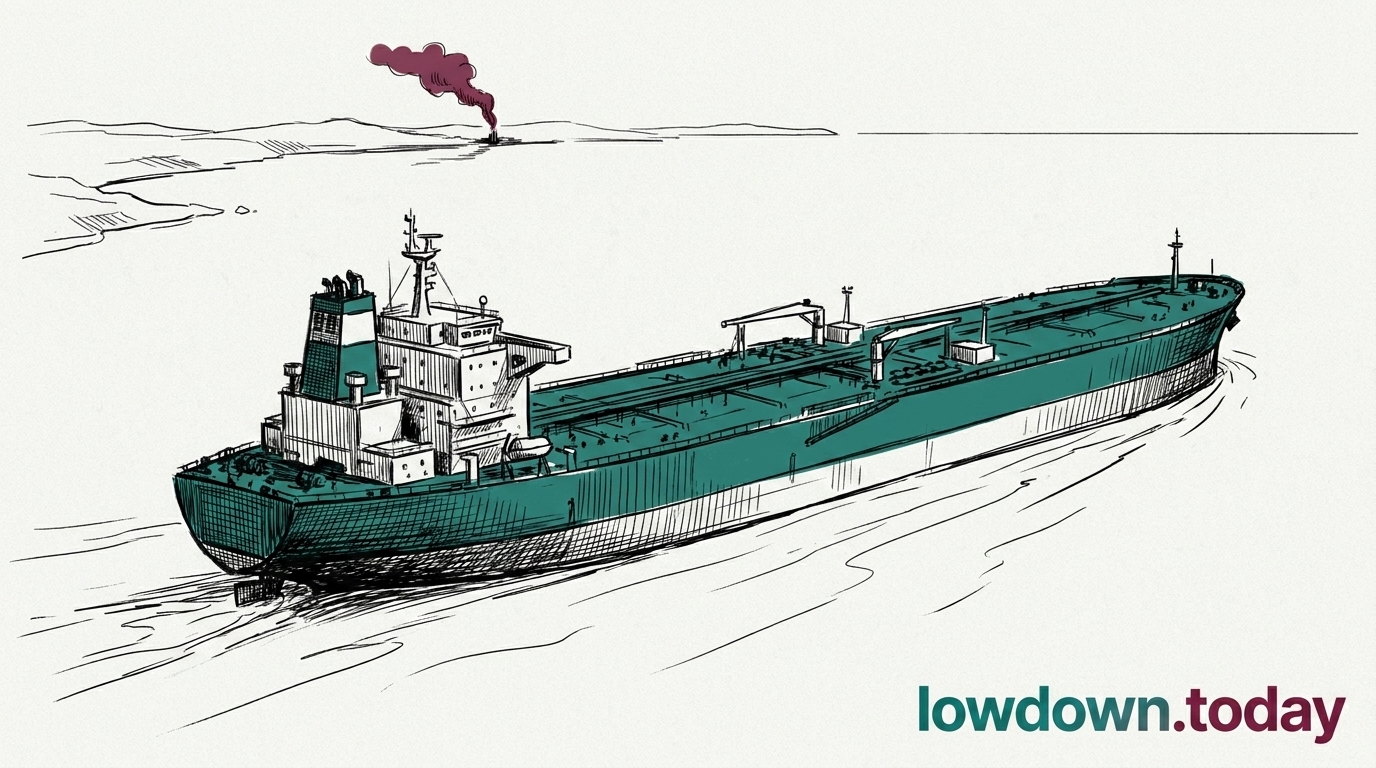
An IRGC drone hit the Singapore-flagged container ship Ever Lovely on 25 June, 7.5 nautical miles off Oman, inside the very lane the IMO had opened for safe passage.

ConflictDeveloping
Key takeaway

Iran struck a Taiwanese-operated ship while waving the Korea-China crude convoy through the same corridor.

An Islamic Revolutionary Guard Corps (IRGC) drone struck the Singapore-flagged container ship M/V Ever Lovely on its starboard side at 14:10 UTC on 25 June, 7.5 nautical miles south-east of Dahit, Oman. The ship was inside the safe-passage lane the International Maritime Organization (IMO), the UN's shipping regulator, had opened days earlier. The IRGC, Iran's elite military force, had formally rejected that corridor hours before the attack . 1

Iran fired four one-way attack drones. US forces shot down three; the fourth hit the Evergreen Marine vessel and caused no casualties. The Ever Lovely sailed on.

Five South Korean ships had transited the strait untouched that day . Iran struck a Taiwanese-operated box ship and waved the Korea-China crude convoy through, asserting control of the strait without closing it to the cargo that pays the Iranian state's bills. The attack came at the corridor's highest-traffic moment since the crisis began, when the lane looked as though it was working.

Deep Analysis

In plain English

Iran's Islamic Revolutionary Guard Corps, the country's ideological military force, fired four attack drones at a container ship called the Ever Lovely in the Persian Gulf on 25 June. The ship was sailing inside a special corridor that the United Nations' maritime body had set up so vessels could leave the region safely. US forces shot down three of the four drones, but one hit the ship on its side. The 25-member crew aboard escaped injury and the Ever Lovely resumed its voyage. Earlier the same morning, Iran's Guards had announced they considered the safety corridor 'unacceptable'. Five South Korean cargo ships crossed the same corridor the same day without being attacked, suggesting the Guards were deliberately choosing which ships to target rather than closing the corridor to everyone.

Deep Analysis
Root Causes

The IMO corridor was negotiated between Oman, the IMO and the US without any IRGC sign-off. The Guards rejected it publicly on 25 June as 'unacceptable and dangerous'. A transit corridor whose authority the waterway's de facto gatekeeper does not recognise carries a structural legitimacy gap: the Ever Lovely was in a corridor that existed on paper but not in IRGC doctrine.

The IRGC's Decentralised Mosaic Defence doctrine, activated after the February 2026 strikes, devolved launch authority to 31 autonomous provincial units to prevent command decapitation. A doctrine designed to survive decapitation creates a structural problem for central control: selective-enforcement orders from Tehran cannot be reliably translated into selective-enforcement actions on the water.

Escalation

Striking inside an internationally sanctioned safe-passage corridor raises the escalatory threshold significantly above previous Hormuz attacks on vessels outside designated lanes. The fact the IRGC allowed South Korean vessels through the same day signals calibrated, not uncontrolled, escalation, but the act of breaching a humanitarian corridor sets a precedent with no obvious self-limiting logic.

What could happen next?
  • Meaning

    The IRGC's decision to strike inside the IMO corridor rather than outside it transforms the corridor from a neutral safe-passage route into a target environment, making future IMO-brokered evacuation or transit arrangements structurally uninsurable.

    Immediate · Assessed
  • Risk

    Registry-selective enforcement, attacking Taiwanese-operated vessels while passing Korean ones, creates a precedent for economic coercion through maritime force: countries that have sanctioned Iran face a direct cost to their shipping, which may fragment international coalition solidarity.

    Short term · Reported
  • Consequence

    The attack at peak throughput, the same day Hormuz moved a record 20 million barrels, demonstrates the IRGC can enforce corridor control at any traffic volume, removing the assumption that high throughput deters attacks.

    Short term · Assessed
First Reported In

Update #140 · US bombs Iran, and the oil market shrugs

Al Jazeera· 28 Jun 2026
Read original
Causes and effects
This Event
Drone hits ship in the safe corridor
The strike turned the IRGC's rejection of the safe corridor into a kinetic fact, inside the lane meant to guarantee passage.
Different Perspectives
India
India
New Delhi has a national unaccounted for among GFS Galaxy's eleven-strong Indian crew, turning a standoff over transit rights into a consular emergency for a state with no seat at either table.
Oman
Oman
Muscat's 9 July arrangement to jointly manage Hormuz traffic with Iran, outside the frozen US channel, is overridden within days by Tehran's own unilateral closure and strike on GFS Galaxy.
Qatar
Qatar
Doha keeps mediating from an exposed position: Al Udeid hosts the CENTCOM strikes it is trying to broker a stand-down around, a week after a Qatari carrier was itself hit in the strait.
United States / CENTCOM
CENTCOM flew a third strike wave in a week, roughly 140 targets, killed Lieutenant Dehghani at Jask, and insists the strait remains open. It signed no instrument making that claim enforceable against Iran's closure.
Iran / IRGC
Iran / IRGC
Tehran struck GFS Galaxy and declared Hormuz closed, reasserting IRGC toll authority after its Oman-brokered management track failed to bind Washington to anything. The strike restores unilateral control after days of a negotiated alternative gaining ground.
Russia
Russia
Grossi's non-confirmation came from Kaliningrad, hours after Rosatom, the state agency that built and fuels Bushehr, hosted his talks. A refusal delivered from inside Russia's own nuclear orbit carries weight a Western capital could not manufacture, though Moscow itself made no statement on Iran's strike claim.