Skip to content
Welcome, thoughtbot's Giant Robots listeners!Start here
Iran Conflict 2026
25JUN

Iran's parliament claims the strait too

2 min read
14:30UTC

Majlis Speaker Mohammad Bagher Ghalibaf declared Iran the war's winner on 16 August. The same day, his parliament's security commission sat down to discuss managing the Strait of Hormuz.

ConflictDeveloping
Key takeaway

Parliament joined the security council and the foreign ministry in claiming a say over Hormuz.

Majlis Speaker Mohammad Bagher Ghalibaf said on Sunday 16 August that Iran had won the recent war "both militarily and politically", according to Mehr News Agency, an Iranian state wire⁠1. The same day, the Majlis National Security Commission met on the management of the Strait of Hormuz, reported by the Islamic Consultative Assembly News Agency (ICANA), the parliament's own outlet⁠2. Both accounts come from Iranian state media, and neither has been matched independently.

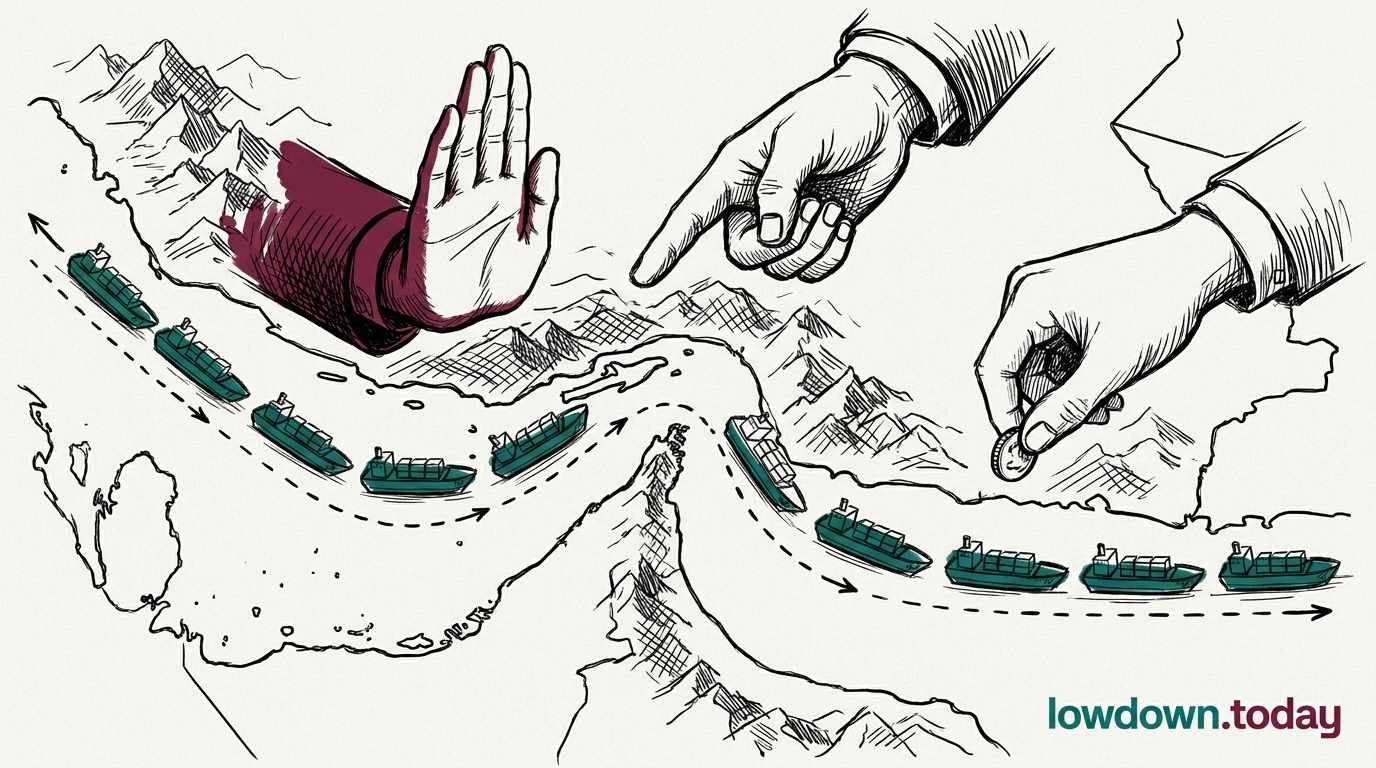
The meeting matters more than the claim. Parliament is now the third Iranian body with a stated interest in who administers the waterway, alongside the executive's security apparatus and the foreign ministry. Mohsen Rezaei has run the Supreme National Security Council (SNSC) track since President Masoud Pezeshkian appointed him following Zolghadr's resignation. He told China's ambassador in Tehran that the strait reopens only once Washington ends the war and unblocks Iran's frozen funds, the line he first drew on 11 August. The version now on the record adds a region-wide ceasefire covering Lebanon and Gaza to the price⁠3.

Ghalibaf's victory claim does not obviously contradict Rezaei's lengthening terms. A state that holds a chokepoint and refuses to trade it away can call that winning, whatever its wells are producing. The practical effect of a third claimant is arithmetic rather than rhetorical: every additional authority with a position on Hormuz is another position a mediator has to satisfy, and Oman, Qatar and Pakistan are all currently carrying messages into a system that has not yet said which of its three voices is binding.

Deep Analysis

In plain English

Iran's parliament, the Majlis, has a Speaker, Mohammad Bagher Ghalibaf, who on 16 August said Iran had won its recent war with the US and Israel. The same day, a Majlis committee that handles security matters met specifically to discuss the strait of Hormuz, the narrow waterway Iran borders that carries a large share of the world's oil. That gives Iran a third body with a public position on the strait, alongside its foreign ministry and its top security council. Anyone trying to work out what Iran actually wants now has to track three separate channels rather than one.

Deep Analysis
Root Causes

A state that wants to keep a chokepoint while appearing to negotiate benefits from running three separate channels at once: a diplomatic track that cannot bind it, an executive track that sets a price nobody will pay, and a legislative track that can be presented as domestic pressure.

Under the doctrine of velayat-e faqih, the Majlis is formally subordinate to the Supreme Leader, so a parliamentary committee position never has to reconcile with the negotiating track even when it is presented as pressure on it.

What could happen next?
  • Consequence

    Any outside reading of an Iranian concession on Hormuz must now specify which of the three institutions made it, since the parliamentary and executive tracks are not bound to agree.

  • Risk

    Oman's shipping-map arrangement now has to survive three separate Iranian veto points rather than one.

First Reported In

Update #171 · A 35-party Iran action, invisible to search

Mehr News Agency· 17 Aug 2026
Read original →
Different Perspectives
Office for Budget Responsibility
The OBR's 28 October forecast assumed $82 oil for 2026 and 2027, from market prices for the ten working days to 19 August, and blamed dearer wholesale energy on the war without naming Iran. It expects CPI inflation close to 4% in early 2027 even at that price.
Hengaw, Kurdish rights group
Hengaw reported the 3 November hangings of Amirhossein Maleki and Amirhossein Ebrahimi in Isfahan, saying Ebrahimi was tortured into confessing and that nine of 12 people sentenced to death in the case have now been hanged. Iran's judiciary holds that the defendants killed members of the security forces.
FINTRAC, Canada's financial intelligence unit
FINTRAC worked with the US Treasury on the 6 November designation of eight money services businesses in British Columbia, Ontario and Quebec. Treasury says the businesses still operate, some under new names, so closing them falls to Ottawa.
Abdul Qadir al-Dakhil, Governor of Nineveh
Al-Dakhil cancelled three Mosul International Airport contracts on 7 November over alleged links to armed groups, after meeting Prime Minister Ali al-Zaidi in Baghdad. He named no group or company, and said the contracts will go to international companies.
Kuwait
Kuwait
Kuwait condemned the Houthi missile fired towards the Madinah region on 5 November and restated its support for Saudi Arabia, the Qatar News Agency reported. Its state tanker company, Kuwait Oil Tankers Company, is among the Gulf state fleets on Iran's expanded Hormuz list.
Scott Bessent, US Treasury Secretary
Treasury designated an alleged Chandigarh false-flag network on 4 November and eight Canadian exchangers on 6 November, while State sanctioned alleged MANPADS intermediaries. None of the actions touches an oil buyer; they target the paper, cash and procurement around Iran's trade.

Written with AI from Lowdown's published reporting. Not individually reviewed by an editor. Editorial standards.
