Skip to content
Welcome, thoughtbot's Giant Robots listeners!Start here
Iran Conflict 2026
25JUN

Iran oil exports fall below 300,000 bpd

3 min read
14:30UTC

Kpler and Lloyd's List data put Iran's oil exports below 300,000 barrels a day in May, down from 1.84m before the war. Some 67m barrels sit stranded in the Gulf.

ConflictAssessed
Key takeaway

Iran's oil exports have collapsed to one-sixth of pre-war volume, with 67m barrels stranded in The Gulf.

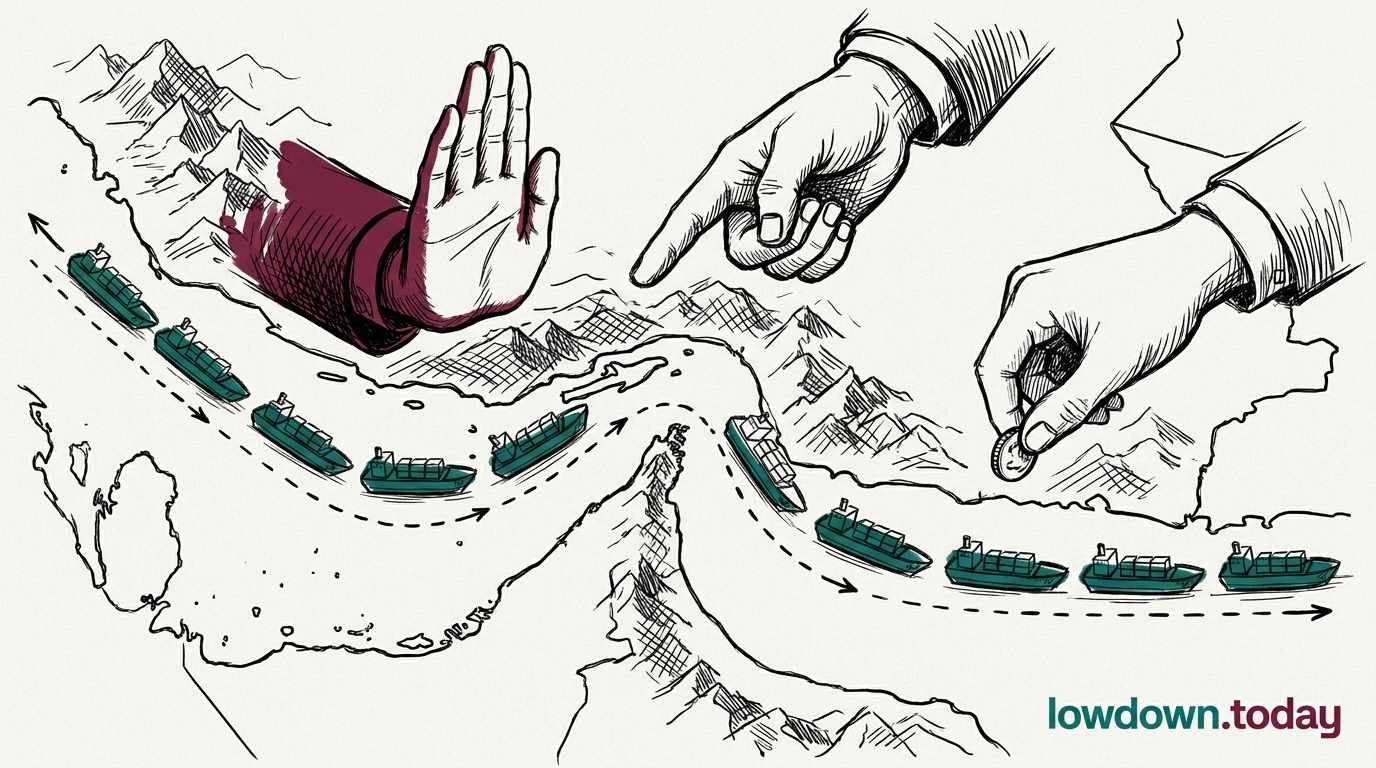
Kpler trade intelligence and Lloyd's List maritime data found Iran's oil exports fell below 300,000 barrels per day in May 2026, down from 1.84m bpd before the war began, roughly one-sixth of the pre-blockade flow⁠1. The lost revenue since April runs to about $5.8bn, and some 67m barrels sit stranded inside The Gulf, unable to clear the blockade.

The collapse is the revenue consequence of CENTCOM's 121-vessel naval blockade. Ship-tracking measures cargoes that move, so the figure is anchored outside Tehran's control: hard for Iran to inflate, hard for outsiders to dispute.

At a conservative $90 a barrel, Iran's monthly oil income has now fallen below what Saudi Arabia spends in a single day. Read alongside the 77.2 per cent inflation print, the two numbers approach the squeeze from opposite ends, Tehran's own statistics and independent vessel data, and meet on the same floor under the war's economic cost.

Deep Analysis

In plain English

Before the war, Iran sold roughly 1.84 million barrels of oil per day on the international market. That oil was a major source of government revenue. By May 2026, exports had fallen below 300,000 barrels per day, less than one sixth of the pre-war level, because CENTCOM is blocking most tankers from carrying Iranian oil and buyers are too nervous to participate. As a result, 67 million barrels are sitting in ships and storage inside The Gulf, unable to move. Iran has lost approximately $5.8bn in revenue since April. This does not directly affect most Western consumers because global supply has been partly replaced by Saudi and other OPEC production, but it does keep Brent Crude elevated above the pre-war price and contributes to higher fuel bills across the importing world.

What could happen next?
  • Consequence

    Iran's daily government revenue from oil has fallen from roughly $145m to roughly $25m, a structural deficit that makes negotiated settlement economically urgent for Tehran.

    Immediate · Assessed
  • Risk

    The 67 million stranded barrels will create a price-suppression spike when any deal permits their release, potentially dropping Brent by $8-15 per barrel in a single trading session.

    Medium term · Reported
  • Opportunity

    China's pre-war Iranian crude contracts give Beijing leverage in any post-deal commodity arbitrage; Chinese absorption of stranded barrels may accelerate Iran's economic recovery faster than sanctions relief alone.

    Medium term · Reported
First Reported In

Update #119 · Trump's Iran deal: 95% done, 0% signed

Al Jazeera· 6 Jun 2026
Read original →
Different Perspectives
Office for Budget Responsibility
The OBR's 28 October forecast assumed $82 oil for 2026 and 2027, from market prices for the ten working days to 19 August, and blamed dearer wholesale energy on the war without naming Iran. It expects CPI inflation close to 4% in early 2027 even at that price.
Hengaw, Kurdish rights group
Hengaw reported the 3 November hangings of Amirhossein Maleki and Amirhossein Ebrahimi in Isfahan, saying Ebrahimi was tortured into confessing and that nine of 12 people sentenced to death in the case have now been hanged. Iran's judiciary holds that the defendants killed members of the security forces.
FINTRAC, Canada's financial intelligence unit
FINTRAC worked with the US Treasury on the 6 November designation of eight money services businesses in British Columbia, Ontario and Quebec. Treasury says the businesses still operate, some under new names, so closing them falls to Ottawa.
Abdul Qadir al-Dakhil, Governor of Nineveh
Al-Dakhil cancelled three Mosul International Airport contracts on 7 November over alleged links to armed groups, after meeting Prime Minister Ali al-Zaidi in Baghdad. He named no group or company, and said the contracts will go to international companies.
Kuwait
Kuwait
Kuwait condemned the Houthi missile fired towards the Madinah region on 5 November and restated its support for Saudi Arabia, the Qatar News Agency reported. Its state tanker company, Kuwait Oil Tankers Company, is among the Gulf state fleets on Iran's expanded Hormuz list.
Scott Bessent, US Treasury Secretary
Treasury designated an alleged Chandigarh false-flag network on 4 November and eight Canadian exchangers on 6 November, while State sanctioned alleged MANPADS intermediaries. None of the actions touches an oil buyer; they target the paper, cash and procurement around Iran's trade.

Written with AI from Lowdown's published reporting. Not individually reviewed by an editor. Editorial standards.
