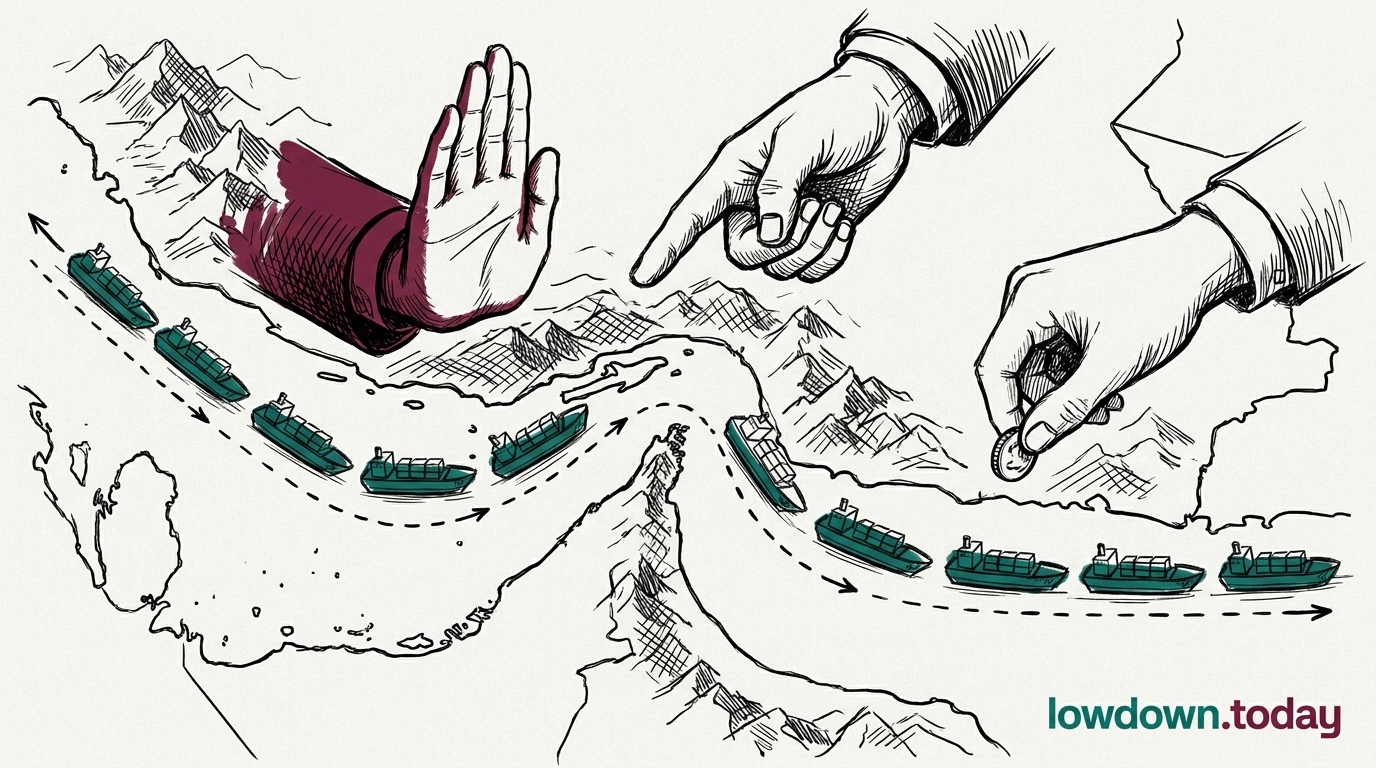
Mohammed Mansour, Houthi deputy information minister, told reporters: "We are conducting this battle in stages, and closing the Bab al-Mandeb strait is among our options."1 Roughly 30% of Israeli imports and 6-7 million barrels per day of oil, approximately 7% of global supply, pass through the strait.
Mansour's language mirrors Iranian diplomatic formulations around Hormuz in the war's first week. The framing is a staged escalation ladder, not a single decision. Yahya Saree announced three formal red lines before the missile attack: US and Israeli use of the Red Sea for strikes, growing third-country participation, and escalating attacks on the "Axis of Resistance."
The IEA stated explicitly that its 400 million barrel emergency release "cannot substitute for the transit route itself". Iran's Hormuz traffic control already routes vessels through a narrow corridor past Larak Island under IRGC escort; the Majlis toll bill would codify that system into domestic law. If both chokepoints tighten further, no reserve release addresses the shortfall.


