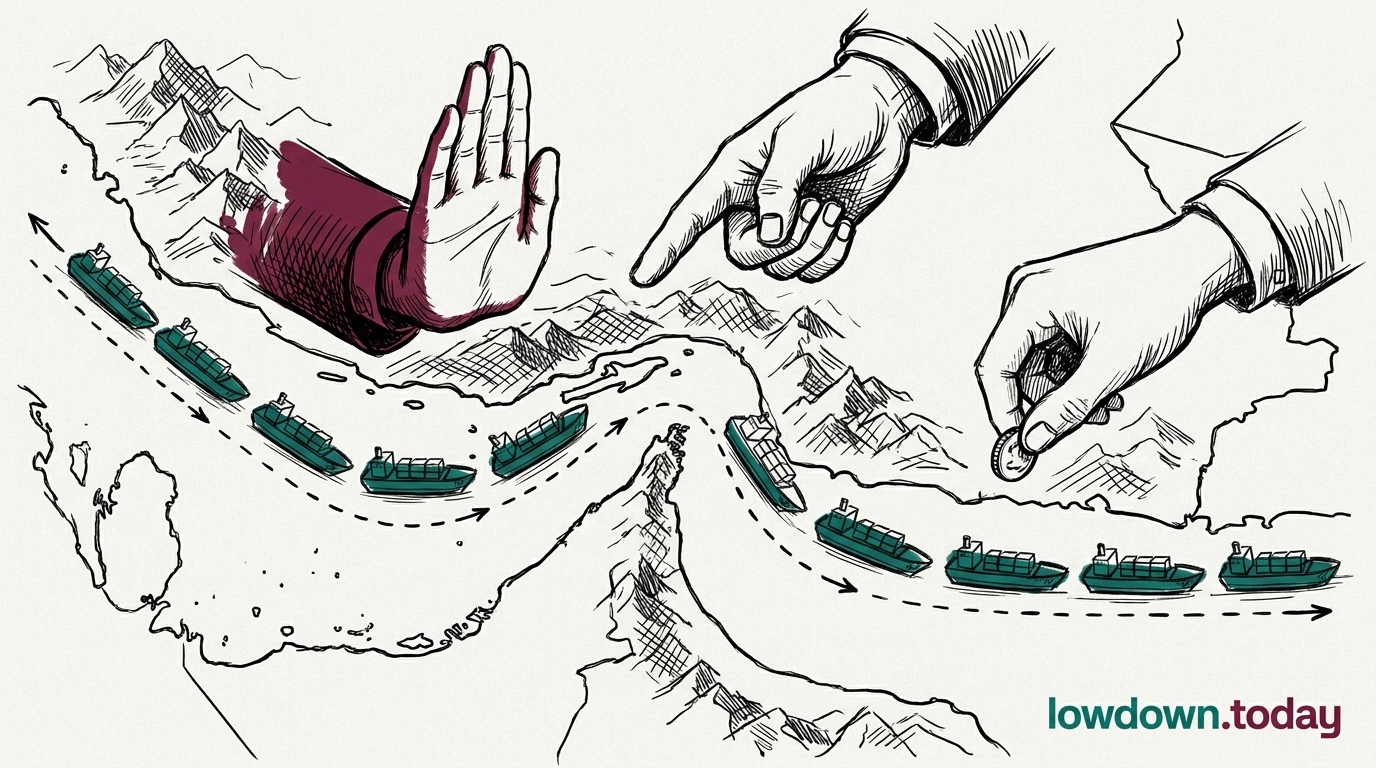
Two ships transited the Strait of Hormuz across 15-16 June, the 33-kilometre Gulf chokepoint that carries about a fifth of the world's seaborne oil.1 Before the war the strait handled roughly 94 vessels a day. The newly signed memorandum promises a full reopening when the deal is formalised in Geneva on Friday, yet no major operator has sent a tanker through on the strength of it.
Underwriters, not nerves, keep the tankers in port. Protection-and-indemnity clubs, the mutual insurers that cover a vessel's third-party liability, will not underwrite a Hormuz crossing while the IRGC, Iran's Islamic Revolutionary Guard Corps, still runs the toll authority it set up on 5 May and has refused to dissolve. Iran reasserted its sovereignty over the strait and its right to charge for passage the day of the signing, so the clubs have no security grounds to reinstate cover. Without cover, no major charterer sails. Jotaro Tamura, a shipping executive quoted by the Financial Times, said operators will wait weeks until conditions change "on the water".2
Brent Crude settled near $83.61, down a further 4.3 per cent and below the two-month low it had already reached when the deal first looked probable. That is not a peace dividend. Traders are pricing the distance between signed paper and a moving tanker, discounting the chance that Friday produces actual flows rather than a ceremony. Lower crude eases fuel costs for importers, but with the toll authority intact and the underwriting absent, the relief rests on cargoes no one will yet insure.





