Skip to content
Welcome, thoughtbot's Giant Robots listeners!Start here
Iran Conflict 2026
24JUN

Trump orders Navy to shoot mine-layers

3 min read
09:14UTC

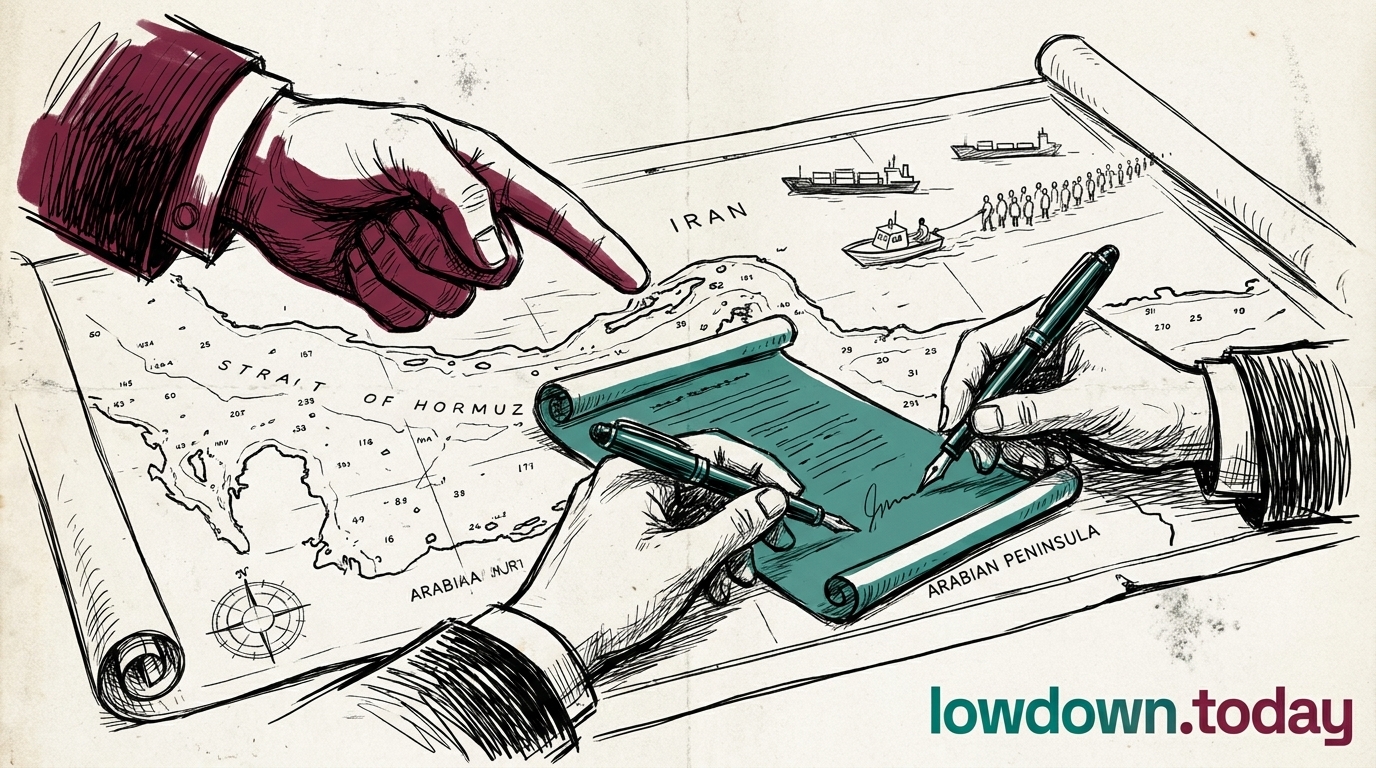
Donald Trump instructed the US Navy to shoot any Iranian vessel laying mines in the Strait of Hormuz, with minesweepers tripled up. CENTCOM intercepts climbed to 31 vessels. No military order was published.

ConflictDeveloping
Key takeaway

Verbal shoot-kill order leaves CENTCOM commanders executing rules of engagement no court can read.

Donald Trump on Thursday 23 April ordered the US Navy to "shoot and kill any Iranian vessel laying mines in the strait", with minesweepers to clear it "at a tripled up level"⁠1. US Central Command (CENTCOM), which runs Middle East operations, saw its cumulative intercept count climb from 28 on Day 54 to 31 vessels directed to turn around or return to port by Friday. No published military order accompanied the instruction.

The instruction tightens rules of engagement in one of the world's most congested maritime chokepoints without anything a Navy lawyer can point to in writing. CENTCOM officers are operating on the 28 February strike authorisation that Congress never ratified, layered with verbal presidential force authority. No published military order and no Iran executive instrument accompany the command, the same paper gap that has run across 55 days of war.

The mine-clearance assumption sits awkwardly against prior Pentagon internal estimates that Hormuz mine clearance requires six months of sustained operations. "Tripled up" minesweeper cadence compresses that timeline only if deployment assets match the talking point, and at the moment those assets remain on escort duty rather than clearance. The ratio of talk to hull matters because every additional mine-layer attempt the Navy engages under verbal authority expands the legal exposure of the officers executing it.

Kingsley Wilson's refusal to comment on internal deliberations on the same day kept the Pentagon's written record deliberately thin. Three separate lines now converge on unsigned coercion: verbal force authority in the strait, unsigned sanctions via OFAC NSPM-2, and an internal Pentagon memo threatening allies. Each runs on paper that does not yet exist.

Deep Analysis

In plain English

On 23 April, President Trump told reporters the US Navy should 'shoot and kill' any Iranian vessel it catches laying mines in the strait of Hormuz, the narrow channel that most of the world's oil passes through. He also ordered minesweepers to work at triple their normal pace. No written military order accompanied either instruction. The Navy operates on detailed written rules specifying when it can open fire. Without a written order, individual ship commanders face a legal grey area: they have presidential words but no signed document. Trump has signed zero Iran-related executive documents across 55 days of war, and this order follows the same pattern.

Deep Analysis
Root Causes

The verbal shoot-kill order reflects the same no-signed-paper architecture that governs the broader campaign. CENTCOM's cumulative intercept count at 31 vessels rests on the 28 February strike authorisation, itself unsigned by Congress. Adding a new written force authority for mine-laying vessels would require either a new executive order or an AUMF, either of which creates a legal instrument that constrains The White House's later discretion on ceasefire terms.

The Pentagon briefed the House Armed Services Committee on 22 April that Hormuz mine clearance could take six months and would not begin until the war ends. A verbal engagement order against mine-layers is the executive response to a threat the military has already characterised as a six-month problem: it signals intent without creating the legal record that a mine incident followed by congressional inquiry would require The Administration to produce.

What could happen next?
  • Risk

    A US Navy engagement of an Iranian mine-laying vessel without published rules of engagement creates simultaneous legal exposure for individual commanders under the UCMJ and political exposure for the administration under the War Powers Resolution.

  • Precedent

    Verbal engagement orders for lethal force in the Strait of Hormuz, if uncontested by courts or Congress, establish that the president can authorise mine-warfare engagements through press-pool statements without producing a signed instrument.

First Reported In

Update #78 · Allies flagged, adversaries listed, nothing signed

Time· 24 Apr 2026
Read original →
Different Perspectives
Office for Budget Responsibility
The OBR's 28 October forecast assumed $82 oil for 2026 and 2027, from market prices for the ten working days to 19 August, and blamed dearer wholesale energy on the war without naming Iran. It expects CPI inflation close to 4% in early 2027 even at that price.
Hengaw, Kurdish rights group
Hengaw reported the 3 November hangings of Amirhossein Maleki and Amirhossein Ebrahimi in Isfahan, saying Ebrahimi was tortured into confessing and that nine of 12 people sentenced to death in the case have now been hanged. Iran's judiciary holds that the defendants killed members of the security forces.
FINTRAC, Canada's financial intelligence unit
FINTRAC worked with the US Treasury on the 6 November designation of eight money services businesses in British Columbia, Ontario and Quebec. Treasury says the businesses still operate, some under new names, so closing them falls to Ottawa.
Abdul Qadir al-Dakhil, Governor of Nineveh
Al-Dakhil cancelled three Mosul International Airport contracts on 7 November over alleged links to armed groups, after meeting Prime Minister Ali al-Zaidi in Baghdad. He named no group or company, and said the contracts will go to international companies.
Kuwait
Kuwait
Kuwait condemned the Houthi missile fired towards the Madinah region on 5 November and restated its support for Saudi Arabia, the Qatar News Agency reported. Its state tanker company, Kuwait Oil Tankers Company, is among the Gulf state fleets on Iran's expanded Hormuz list.
Scott Bessent, US Treasury Secretary
Treasury designated an alleged Chandigarh false-flag network on 4 November and eight Canadian exchangers on 6 November, while State sanctioned alleged MANPADS intermediaries. None of the actions touches an oil buyer; they target the paper, cash and procurement around Iran's trade.

Written with AI from Lowdown's published reporting. Not individually reviewed by an editor. Editorial standards.
