Skip to content
You can now search across every topic, entity and event.What's new
Iran Conflict 2026
23JUN

Trump declares war won, orders pullout

2 min read
11:42UTC

President Trump claimed victory in the Oval Office, announcing US withdrawal in two to three weeks while abandoning the Strait of Hormuz as a war objective. The speech contradicted the administration's own classified briefings and Trump's statements from hours earlier.

ConflictAssessed
Key takeaway

Trump declared victory while abandoning Hormuz, the war's core economic trigger, as a US objective.

President Trump addressed the nation from the Oval Office on 1 April, declaring Operation Epic Fury's nuclear objective attained and announcing US withdrawal in two to three weeks. Trump had already abandoned Hormuz reopening as a war objective the previous day , so the speech confirmed rather than introduced that shift.

The address contained three contradictions The Administration cannot easily paper over. Trump claimed 'regime change was not the goal' while describing an outcome that looks exactly like regime change. He declared the nuclear objective attained while admitting to CBS hours earlier that Iran's enriched uranium is so deeply buried it would be 'very difficult for anyone to destroy.' The IAEA had already confirmed the stockpile moved beyond inspectors' sight weeks before this claim.

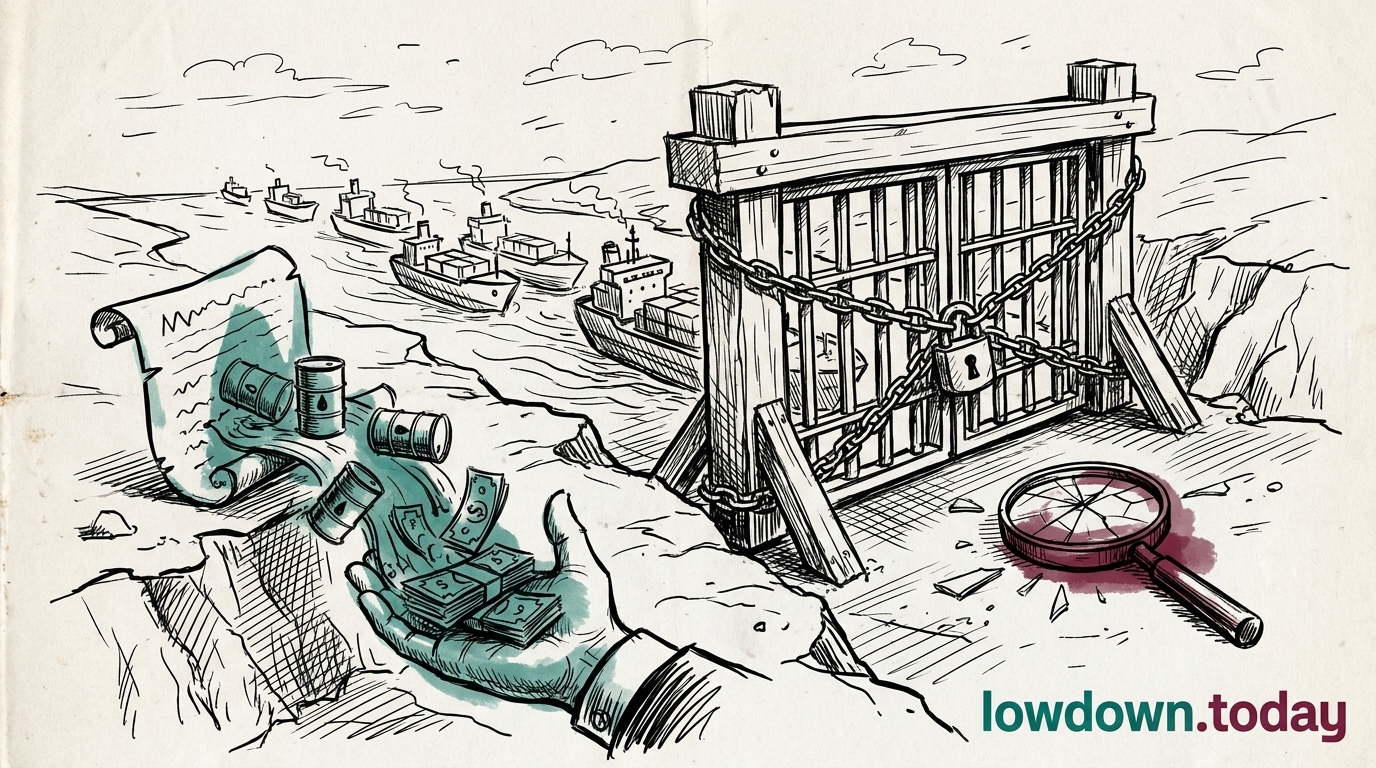
The most consequential line was the least remarked upon: Hormuz is no longer a US war objective. Trump told France, China, and other nations to figure it out for themselves. This reversal puts the US in the position of having started a war to open the strait, then leaving it closed. Brent had already surged past $112 when Houthi entry widened the risk premium ; the Oval Office speech pushed it to $107.72 on the withdrawal announcement, a temporary dip on hopes of resolution.

Netanyahu declined to endorse the two-to-three-week timeline, saying he was 'not necessarily halfway in terms of time.' House Armed Services Committee members from both parties told reporters they were unsatisfied with the classified briefing . Trump had claimed victory once before, on Day 12, while the 82nd Airborne was still deploying; the pattern of declaration outpacing military reality is established.


Deep Analysis

In plain English

Trump went on television to say the US has achieved its goal of stopping Iran from building a nuclear weapon, and that American troops will start coming home in two to three weeks. The problem is that the same day, Trump told a news programme that Iran's enriched uranium ; the material needed to build a bomb ; is so deeply buried that it would be very difficult for anyone to destroy. The goal he declared attained may not actually have been attained. He also announced the US will no longer try to reopen the Strait of Hormuz, the narrow waterway Iran is blockading. That blockade is why petrol is above $4 a gallon in the US. By abandoning that objective, Trump has effectively told Americans: the $4 petrol stays.

Deep Analysis
Root Causes

Trump's declaration follows the 6 April power grid deadline ; his third extension ; which expires in five days. Declaring victory converts a failed ultimatum into a completed objective, resolving the credibility problem without admitting the deadline was not enforced.

Escalation

Declaring the war over while B-52s conduct overland missions and 50,000 troops are in theatre creates a dangerous ambiguity: military posture suggests escalation while political messaging suggests withdrawal. The two positions cannot hold simultaneously for more than days.

What could happen next?
  • Risk

    Premature withdrawal declaration may embolden Iran to sustain strikes, knowing US public commitment to the war is declining.

    Short term · Assessed
  • Consequence

    Abandoning Hormuz reopening as a US war objective means the oil price disruption becomes a structural feature rather than a temporary crisis.

    Medium term · Assessed
  • Precedent

    A US withdrawal before Hormuz reopens would be the first time Washington left a strategic waterway under adversary control since the Cold War.

    Long term · Reported
First Reported In

Update #54 · Trump declares victory and withdrawal

OFAC/US Treasury· 1 Apr 2026
Read original
Different Perspectives
Turkiye
Turkiye
Erdogan followed the Pakistani delegation to Jeddah for an instrument that has not been signed. Ankara's entry widens Saudi Arabia's defence architecture beyond the existing Pakistan pact, adding a second non-Gulf military partner mid-conflict.
Oman
Oman
Muscat is the corridor's broker but has published nothing about the arrangement Fars describes on its behalf. The account leaves Oman administering outbound traffic only, a narrower role than the shared route its mediation has rested on since 1979.
Pakistan
Pakistan
Islamabad sent Sharif, Munir and Dar to Jeddah to widen a defence commitment it has honoured in cheaper registers since March, when Dar invoked the Saudi mutual defence pact. Jeddah tests whether that hedge becomes a binding trilateral instrument with Turkiye.
United States
United States
Washington rejected the Majlis Hormuz bill outright while CENTCOM's own tally kept climbing to 49 vessels redirected since 14 July. Both instruments tightened in the same week Trump promised the strait would reopen soon.
Iran
Iran
Iran's foreign ministry is selling a phased Hormuz corridor through Oman and denying any percentage cargo tariff, while its own Majlis is legislating fines to 20% and a bar on Israeli-linked cargo. The two accounts, from the same government, do not agree with each other.
Saudi Arabia
Saudi Arabia
Riyadh published a target forecast, not an attribution, for the campaign it says the Najran strike previewed. That keeps an Article 51 case available while it formalises a trilateral defence architecture with Pakistan and Turkiye.



