Skip to content
You can now search across every topic, entity and event.What's new
Iran Conflict 2026
21JUN

Marines start boarding ships off Iran

2 min read
17:51UTC

US Marines began boarding ships on 16 July to enforce Iran's naval blockade, and boarded the sanctioned tanker Wen Yao under its alias Lan Jing in the Gulf of Oman.

ConflictDeveloping
Key takeaway

Marines are now boarding ships to enforce Iran's blockade, a step up from the redirect-only spring operation.

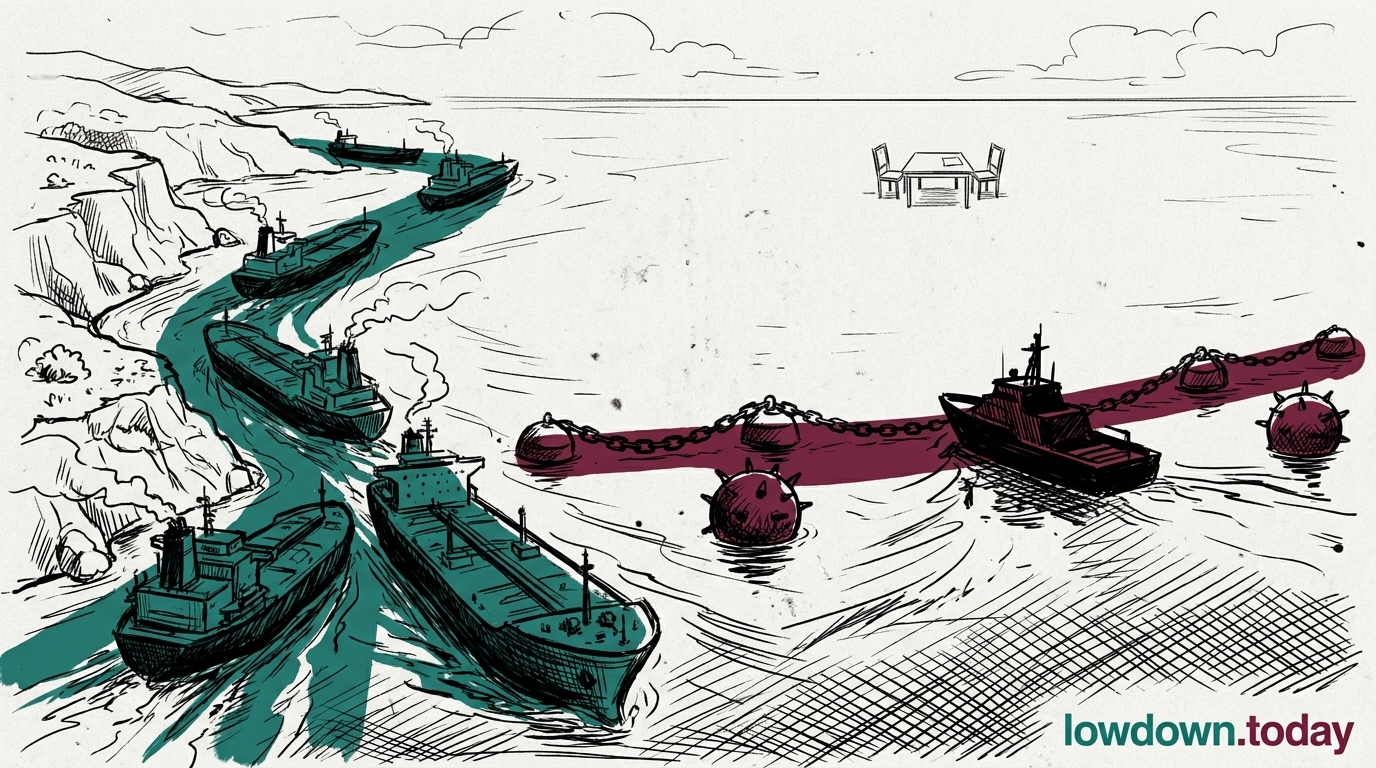
US Marines began physically boarding vessels on 16 July to enforce the naval blockade CENTCOM reimposed on Iranian ports two days earlier , a harder posture than the redirect-only enforcement of the spring blockade. 1

A redirect turns a ship away; a boarding puts armed personnel on a foreign-flagged deck to search it. In the blockade's first three days CENTCOM redirected four commercial vessels, disabled one and boarded one, according to The War Zone, its first public enforcement tally since the closure returned. 2 The original April-to-June blockade redirected more than 140 vessels and disabled nine across a full 66-day run, so the new operation's three-day pace runs proportionally faster.

CENTCOM separately confirmed a Marine verification boarding of the sanctioned tanker Wen Yao, sailing under the alias Lan Jing, in The Gulf of Oman on 16 July. 3 The rename is the evasion; the boarding is the answer to it. A tanker that changes its name to slip a sanctions list still has to carry its cargo past a warship.

Boarding commercial shipping is exactly the act the IRGC (Islamic Revolutionary Guard Corps) has used to justify its own seizures, including the two supertankers it disabled in Omani waters on 14 July . Iran and several shipping bodies argue the blockade breaches transit-passage rights protected under the UN Convention on the Law of the Sea; Washington maintains its remit covers only Iranian-port traffic. Each armed boarding hands Tehran a fresh grievance while tightening the sea lane.


Deep Analysis

In plain English

CENTCOM is the US military command that runs a naval blockade around Iran's ports, meant to stop sanctioned oil and goods moving by sea. Until this week, CENTCOM mostly just turned suspect ships away rather than boarding them. Now US Marines have started actually boarding vessels to check them by hand, including a tanker called Wen Yao that was sailing under a fake name, Lan Jing, to try to slip past the blockade.

Deep Analysis
Root Causes

Sanctioned tankers routinely re-flag and rename to defeat AIS-based tracking, and the Wen Yao's alias Lan Jing is a case in point.

Redirect-only enforcement depends on remote identification, which a renamed hull can spoof; physical boarding is the only method that confirms a vessel's true identity against the sanctions list once it has already changed its transponder name.

What could happen next?
  • Consequence

    Physical boarding raises the odds of a confrontation with a sanctioned vessel's crew or its flag state, a risk redirect-only enforcement did not carry.

First Reported In

Update #155 · US bombing moves inland as blockade hardens

Hengaw· 18 Jul 2026
Read original
Different Perspectives
Hengaw
Hengaw
The Norway-based monitoring group reported the Urmia executions of Omid Behzad and Pouria Safvat, the only source to do so, consistent with its documented pattern of recording far more executions than the Iranian state acknowledges. Iran's government has not confirmed either execution.
Shipping and insurance underwriters
War-risk premiums price the Houthi campaign because the group announces its targets in advance, but a reopening Trump has promised without a published text gives underwriters no benchmark to reprice Hormuz cover against. Insurers want a text before they move rates, not a promise.
Houthi movement
Houthi movement
Spokesman Yahya Saree claimed strikes on two tankers in the Red Sea and Gulf of Aden on 5 August, only one of which UKMTO could confirm. The group's campaign against shipping continues on its own schedule, independent of any Hormuz arrangement further north.
Oman
Oman
Muscat has brokered the coordinates both Tehran and Washington's wire sources now describe differently, but has published no account of its own. Oman's position depends on treating Hormuz as a shared route, which is not what Iran is currently describing.
United States Central Command
CENTCOM raised its interdiction tally from 35 to 44 redirected vessels and disclosed its first boardings on 3 August, the day before Trump promised a reopening. The command's own enforcement record does not yet reflect the release the President has described.
Iran's Foreign Ministry
Spokesman Esmaeil Baghaei described the agreed Hormuz coordinates as a wholly new corridor under Iranian management, not a split of the existing route, days after his own deputy rejected Oman's lane proposal. Tehran wants the arrangement read as a change of ownership, not a compromise on access.



