Skip to content
You can now search across every topic, entity and event.What's new
Iran Conflict 2026
21JUN

Islamabad talks end without a statement

2 min read
17:51UTC

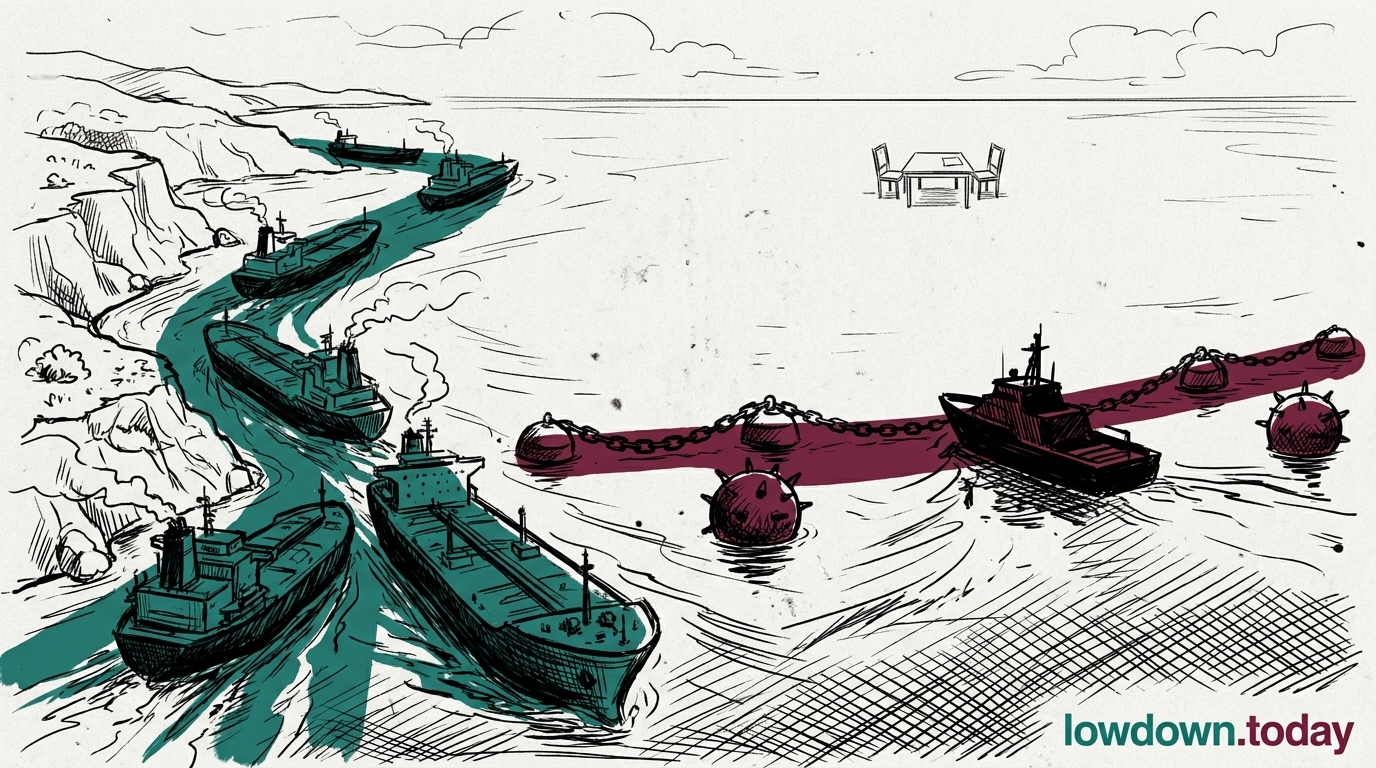
Four nations spent two days building a ceasefire framework. They produced the war's most substantial diplomatic initiative, and then concluded without committing a single word to paper.

ConflictAssessed
Key takeaway

The war's best diplomatic effort ended with no commitment.

Foreign ministers from Pakistan, Turkey, Egypt, and Saudi Arabia concluded two days of talks in Islamabad on 30 March. 1 China declared 'full support.' Pakistan's Foreign Minister Ishaq Dar announced his country would host direct US-Iran talks 'in coming days.' No formal communique was published.

The absence of a statement may reflect disagreement on language. It may reflect a deliberate decision not to commit positions in writing while Trump's Financial Times interview circulated. Either way, the four nations that convened to build a ceasefire framework concluded without committing to one. The summit was the most substantial multilateral diplomatic initiative since the war began , and it ended with an offer and a silence.

The structural problem has not changed. Iran's five conditions for ending the war include permanent sovereignty over the strait of Hormuz. The US 15-point plan demands guaranteed transit passage. No mediator can bridge a gap where one side claims ownership and the other denies it. Iran's Foreign Minister Abbas Araghchi repeated the position: 'Intermediary messages are not direct negotiations.'

Turkey's participation through Foreign Minister Hakan Fidan is worth noting: a NATO member participating in a ceasefire initiative independently of Washington signals the depth of the transatlantic fracture. But good intentions do not overcome incompatible red lines. Until either Washington drops its Hormuz transit demand or Tehran abandons its sovereignty claim, any mediator is working a problem that has no mathematical solution.


Deep Analysis

In plain English

Four countries, Pakistan, Turkey, Egypt, and Saudi Arabia, sent their foreign ministers to the Pakistani capital Islamabad for two days of meetings designed to find a way to end the war. China also voiced its support. At the end of two days, they produced nothing in writing. In diplomacy, a statement or communique is how countries show they agreed on something. Without one, there is no shared position and no commitment. The core problem has not changed: Iran insists it owns the Strait of Hormuz, the world's most important oil shipping lane. The United States demands free passage through it as a condition for any deal. No mediator can close a gap where one side says 'we own it' and the other says 'no you don't'. Then Trump gave an interview saying he wants to seize Iran's oil, on the same day the summit concluded.

What could happen next?
  • Consequence

    Turkey's NATO membership makes its independent participation in a ceasefire initiative a public signal of transatlantic fracture, with real countries on the ground diverging from Washington's position.

  • Risk

    The strongest multilateral mediation effort of the conflict has produced no binding framework. Each failed initiative reduces the credibility of the next.

First Reported In

Update #52 · Trump wants Iran's oil; 3,500 Marines land

Bloomberg / Al Jazeera· 30 Mar 2026
Read original
Causes and effects
This Event
Islamabad talks end without a statement
The absent communique means the strongest multilateral mediation effort of the conflict produced no binding framework. Trump's oil seizure statement, arriving the same day, structurally undermined any mediation before it could begin.
Different Perspectives
Shipping and insurance industry
UKMTO counted about 20 US-facilitated Hormuz transits a day to 11 September against only 6 visible on AIS, with traffic still around 90% below the 138-a-day pre-war baseline. War-risk underwriters cannot price hulls they cannot see, or resolve whether the tanker El Gaia hit a mine, as Iran claims, or a missile and drone, as CENTCOM says.
European refiners
European refiners
European refiners, including Poland's Orlen, absorbed a roughly $26 gap between Dated Brent at $130.80 on 15 September and ICE Brent futures settling at $103.87 on 18 September, a spread that widened from $13.45 on 9 September rather than newly opening. Their futures hedges no longer cover what they now pay for physical barrels.
Saudi Arabia
Saudi Arabia
Saudi Aramco zeroed European term customers' October allocations and rerouted roughly 60 million barrels to Asia through Ras Tanura and Sohar, using Red Sea and Gulf terminal capacity built years ago to cut Hormuz exposure. Riyadh reallocated existing supply rather than negotiating a shortfall with Europe.
Qatar
Qatar
Qatar's energy minister Saad al-Kaabi told Bloomberg at the Qatar Economic Forum on 20 September that Bessent's two-year Hormuz-obsolescence forecast is wrong, and that Doha has deliberately built no bypass pipeline. Qatar's gas exports run through one waterway by choice, not oversight.
Iran (foreign ministry and Majlis)
Iran's foreign ministry and 130 Majlis deputies moved toward NPT withdrawal this week, with lawmaker Hossein-Ali Haji Deligani filing a triple-urgency bill on 20 September that Speaker Qalibaf has not yet scheduled. Tehran treats treaty membership as leverage still on the table, not yet spent.
Russia and China
Russia and China
Moscow and Beijing vetoed the Panel of Experts' renewal, maintaining Resolution 2231 lapsed in October 2025 and the 2025 snapback was never validly triggered, so the sanctions architecture the Panel enforces has no current legal standing. Both governments frame the veto as upholding law, not shielding Tehran.



