Skip to content
You can now search across every topic, entity and event.What's new
Iran Conflict 2026
21JUN

Brent tops $100 as the reroute closes

2 min read
17:51UTC

Brent crude crossed $100 a barrel on 23 July for the first time since May, and traders tied the jump straight to the tanker strikes in the Bab al-Mandab.

ConflictDeveloping
Key takeaway

Brent cleared $100 because the southern reroute closed, not because the strikes on Iran grew heavier.

Brent Crude crossed $100 a barrel on 23 July for the first time since 26 May, rising about 6.7% to roughly $100.37 by 1401 GMT, with traders tying the move directly to the previous day's tanker strikes 1. The benchmark had closed at $92.09 only a day earlier , the top of a slow four-session climb.

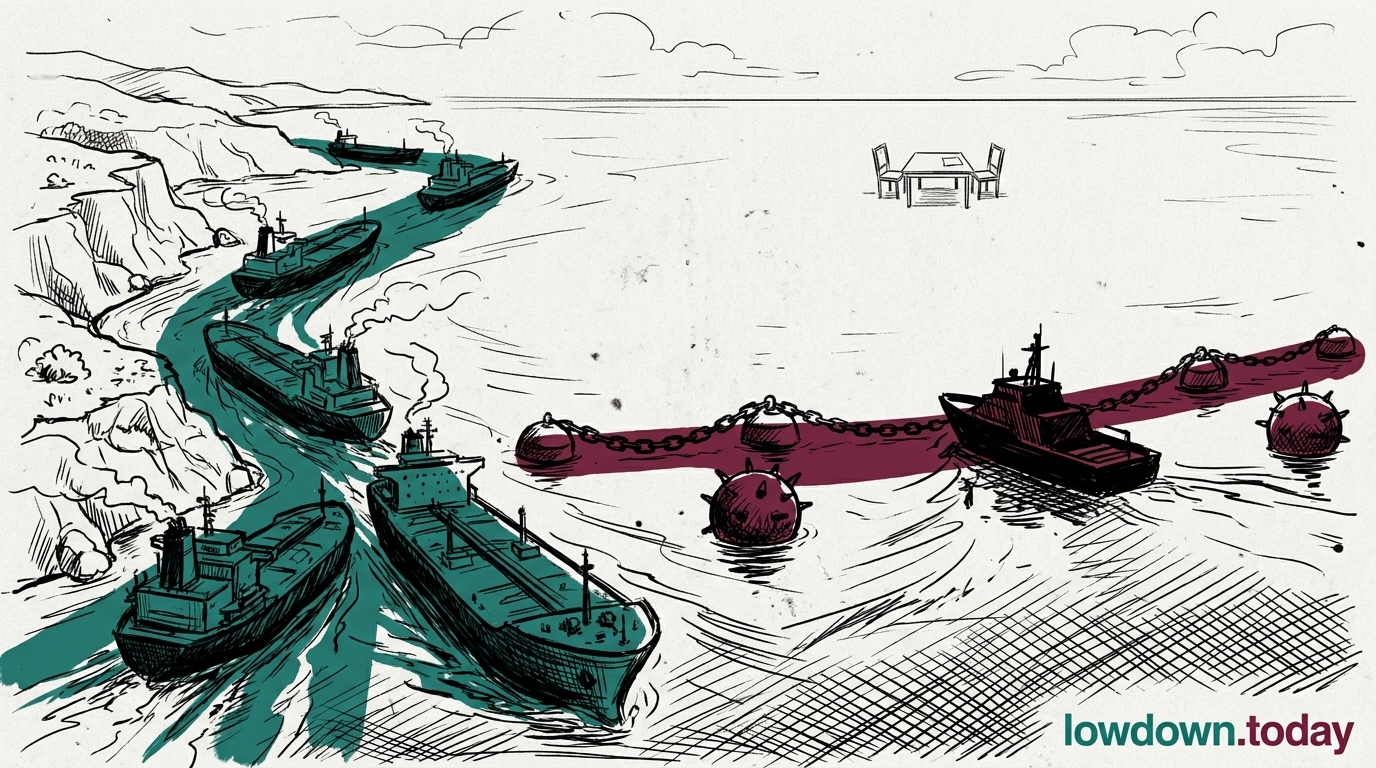
Brent is the international price for seaborne crude, the benchmark behind roughly two-thirds of the world's traded oil, and it carries structural exposure to shipping chokepoints that inland grades do not. For a fortnight it had shrugged off vertical escalation, more nights and a rising toll, because the barrels kept moving through the dark fleet and the Omani-shore reroute south of Hormuz, which kept cargoes reaching buyers even as the northern strait was contested.

A strike in the Bab al-Mandab removes that release valve, so the market is now pricing two contested chokepoints at once rather than one. One caution belongs on the print. Oil has spiked and faded before in this war, clearing $87 on the July blockade before sliding as cargoes found a way round. The second tanker, the Layla, remains an unconfirmed Houthi claim, and a single denied strike could take the premium out as quickly as it went in.


Deep Analysis

In plain English

Brent crude is the main international price used to set oil costs around the world. On 23 July it went above $100 a barrel for the first time since May, jumping sharply in a single day. Traders say the jump is a direct reaction to the tanker strikes: when ships carrying oil through dangerous waters become targets themselves, the oil gets more expensive because it costs more to ship and insure. This matters at the petrol pump and in home energy bills. Oil prices this high, if they hold, tend to filter through to what people pay to fill a car or heat a home within weeks.

Deep Analysis
Root Causes

Brent's structural exposure to chokepoint risk is built into the benchmark itself: it prices seaborne North Sea and Gulf cargoes, unlike West Texas Intermediate, which moves overwhelmingly by pipeline and reacts far less to Gulf shipping risk.

The move above $100 also compounds a climb that was already under way before the Encelia strike, so the jump builds on an existing tightening rather than starting from a calm baseline.

What could happen next?
  • Consequence

    Sustained Brent prices above $100 typically reach UK and European pump prices within two to four weeks, given normal refining and distribution lags.

  • Risk

    If insurers keep pricing Bab al-Mandab and Hormuz as active war zones, the premium embedded in Brent may not unwind quickly even if strikes pause, unlike the rapid snapback seen after Abqaiq in 2019.

First Reported In

Update #160 · Houthis hit Saudi tankers; Brent tops $100

Reuters· 23 Jul 2026
Read original
Different Perspectives
Hengaw
Hengaw
The Norway-based monitoring group reported the Urmia executions of Omid Behzad and Pouria Safvat, the only source to do so, consistent with its documented pattern of recording far more executions than the Iranian state acknowledges. Iran's government has not confirmed either execution.
Shipping and insurance underwriters
War-risk premiums price the Houthi campaign because the group announces its targets in advance, but a reopening Trump has promised without a published text gives underwriters no benchmark to reprice Hormuz cover against. Insurers want a text before they move rates, not a promise.
Houthi movement
Houthi movement
Spokesman Yahya Saree claimed strikes on two tankers in the Red Sea and Gulf of Aden on 5 August, only one of which UKMTO could confirm. The group's campaign against shipping continues on its own schedule, independent of any Hormuz arrangement further north.
Oman
Oman
Muscat has brokered the coordinates both Tehran and Washington's wire sources now describe differently, but has published no account of its own. Oman's position depends on treating Hormuz as a shared route, which is not what Iran is currently describing.
United States Central Command
CENTCOM raised its interdiction tally from 35 to 44 redirected vessels and disclosed its first boardings on 3 August, the day before Trump promised a reopening. The command's own enforcement record does not yet reflect the release the President has described.
Iran's Foreign Ministry
Spokesman Esmaeil Baghaei described the agreed Hormuz coordinates as a wholly new corridor under Iranian management, not a split of the existing route, days after his own deputy rejected Oman's lane proposal. Tehran wants the arrangement read as a change of ownership, not a compromise on access.



