Skip to content
You can now search across every topic, entity and event.What's new
Iran Conflict 2026
21JUN

Brent slips to $98.38 on talks reports

1 min read
17:51UTC

Brent crude closed at $98.38 a barrel on 24 July, down 2.29 per cent, one day after crossing $100 for the first time since May. Reports of reviving mediation did the work.

ConflictDeveloping
Key takeaway

Brent gave back its move above $100 within a day, on mediation reports rather than any signed agreement.

Brent Crude, the global benchmark for seaborne oil, settled at $98.38 a barrel on 24 July, down 2.29 per cent, as reports circulated that mediation between Washington and Tehran was reviving 1. The fall came a day after the contract crossed $100 for the first time since May .

Donald Trump spent 24 July telling Axios he was weighing a larger operation, and the price still fell. Traders priced the pause rather than the promise: a quiet night over Iranian airspace and mediation chatter around the Iraqi channel moved the benchmark down more than two per cent in a session, while the rhetoric moved it not at all.

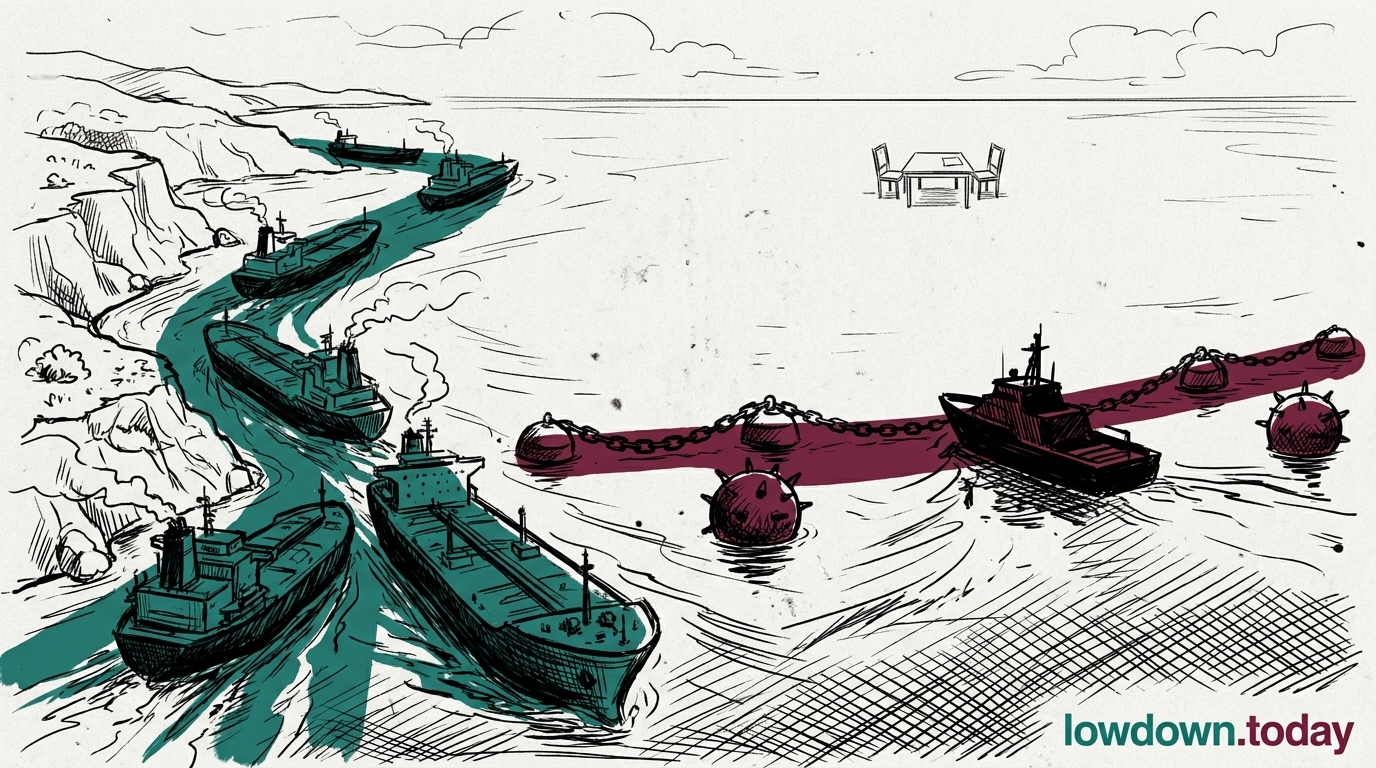
Roughly a fifth of the world's seaborne crude passes through the Strait of Hormuz, so the conflict premium embedded in that $98.38 is a function of shipping risk rather than of barrels lost to date. The 24 July session showed that premium responding to diplomatic signals, which matters to refiners hedging cargoes and to Gulf producers setting budgets against a number that can move two dollars on a report neither government has confirmed.


Deep Analysis

In plain English

Brent crude is the main global price used for oil bought and sold by sea, and it affects what people pay for petrol and heating. It dropped by about 2 per cent on 24 July, to $98.38 a barrel, after reports suggested that US and Iranian mediators were talking again. The day before, the price had gone above $100 for the first time since May. Oil traders tend to react quickly to any hint of peace talks in this war, even before anyone confirms whether the talks are real, so prices can jump around a lot on rumour alone.

What could happen next?
  • Consequence

    A one-day price fall on mediation rumours, rather than a confirmed diplomatic breakthrough, leaves Brent vulnerable to snapping back if the reports prove unfounded.

First Reported In

Update #161 · Bahrain and Kuwait struck Iran, WSJ reports

Trading Economics· 25 Jul 2026
Read original
Different Perspectives
Hengaw
Hengaw
The Norway-based monitoring group reported the Urmia executions of Omid Behzad and Pouria Safvat, the only source to do so, consistent with its documented pattern of recording far more executions than the Iranian state acknowledges. Iran's government has not confirmed either execution.
Shipping and insurance underwriters
War-risk premiums price the Houthi campaign because the group announces its targets in advance, but a reopening Trump has promised without a published text gives underwriters no benchmark to reprice Hormuz cover against. Insurers want a text before they move rates, not a promise.
Houthi movement
Houthi movement
Spokesman Yahya Saree claimed strikes on two tankers in the Red Sea and Gulf of Aden on 5 August, only one of which UKMTO could confirm. The group's campaign against shipping continues on its own schedule, independent of any Hormuz arrangement further north.
Oman
Oman
Muscat has brokered the coordinates both Tehran and Washington's wire sources now describe differently, but has published no account of its own. Oman's position depends on treating Hormuz as a shared route, which is not what Iran is currently describing.
United States Central Command
CENTCOM raised its interdiction tally from 35 to 44 redirected vessels and disclosed its first boardings on 3 August, the day before Trump promised a reopening. The command's own enforcement record does not yet reflect the release the President has described.
Iran's Foreign Ministry
Spokesman Esmaeil Baghaei described the agreed Hormuz coordinates as a wholly new corridor under Iranian management, not a split of the existing route, days after his own deputy rejected Oman's lane proposal. Tehran wants the arrangement read as a change of ownership, not a compromise on access.



