Skip to content
You can now search across every topic, entity and event.What's new
Iran Conflict 2026
15JUN

No Iran signature for nearly 100 days

3 min read
11:40UTC

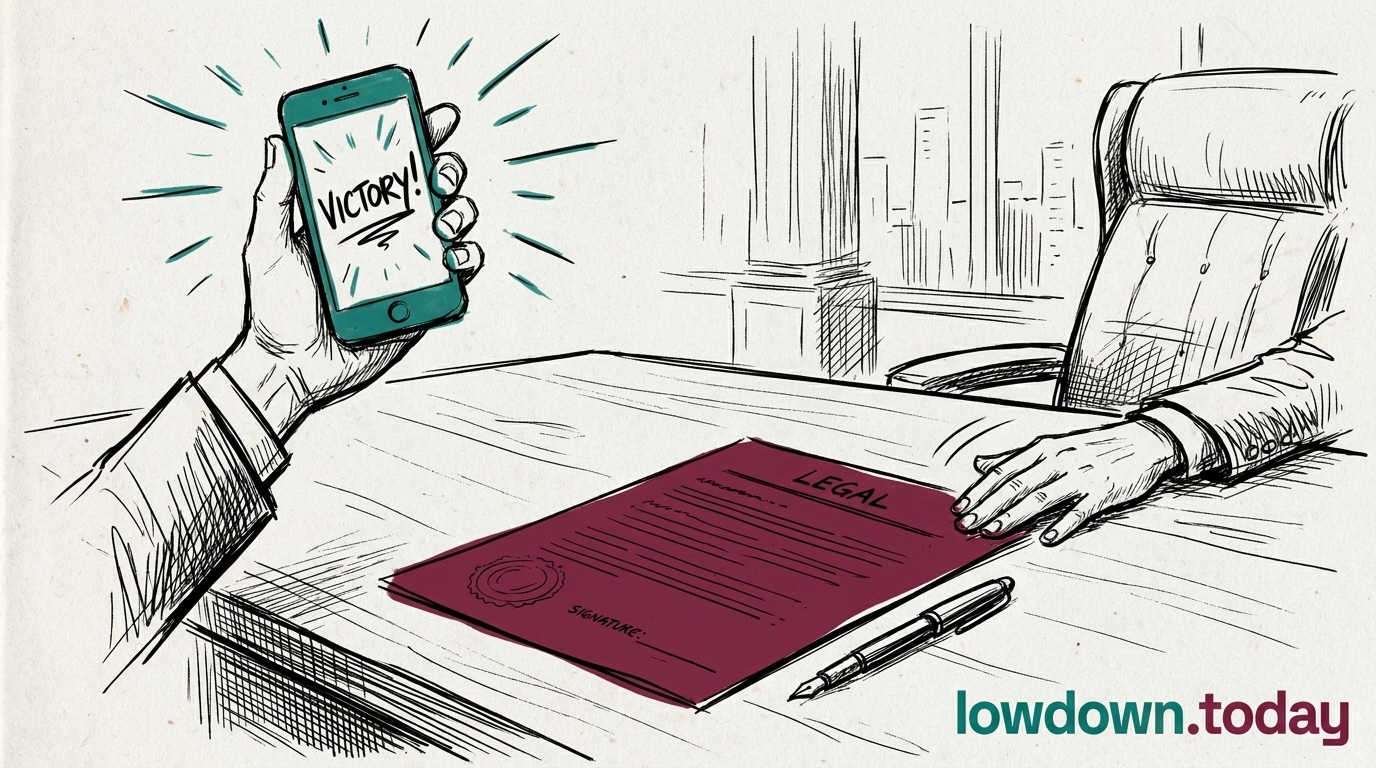
Across 5-6 June the White House signed no executive order, no deployment directive, no nuclear memorandum and no fresh Iran sanctions, extending its zero-Iran-instruments streak to nearly 100 days. OFAC's only new designations targeted Cuba.

ConflictAssessed
Key takeaway

Officials call the Iran deal 95 per cent done, but the signed record across 5-6 June is zero.

Washington signed no executive order, no deployment directive, no nuclear memorandum and no fresh Iran sanctions proclamation across 5-6 June 2026. OFAC (the Office of Foreign Assets Control, the US Treasury's sanctions bureau) designated only Cuban entities on that cycle, not Iranian ones, extending The Administration's zero-Iran-instruments streak to nearly 100 days .

Officials describe a deal all but done. Marco Rubio put it at "95 per cent complete" on 4 June and Donald Trump called Iran's uranium "entombed". Those are words said, not paper signed. The signed record across the same window reads zero.

The Administration cleared a $1.98bn arms case to Kuwait this week, so it moves fast when it chooses to. OFAC's Cuba-only designations follow the same selective pattern after the 2 June crypto-exchange round that did target Iran . On the war, the blockade and the nuclear talks, the absence of any signature is itself the position: a deal nobody signs does not yet exist.


Deep Analysis

In plain English

When the US government wants to take a formal foreign-policy action, like imposing new sanctions or signing a deal, it produces official signed documents: executive orders, proclamations, Federal Register notices. These are public records. For 99 days of the Iran conflict, the Trump administration has produced zero such documents specifically about Iran. The sanctions bureau OFAC has only acted against Cuba in the latest cycle. Meanwhile, Secretary of State Marco Rubio said the Iran deal is '95 per cent complete' and Trump has called the nuclear stockpile 'entombed'. These are statements, not signed paper. The distinction matters because signed instruments can be verified, tracked, and challenged in court; statements cannot. The US House of Representatives passed a resolution on 3 June ordering Trump to wind down military involvement, but it only becomes legally binding if the Senate also passes it.

Deep Analysis
Root Causes

Three structural forces produce the zero-instruments pattern. First, Trump's deal-making style treats signed executive paper as a commitment that constrains future negotiating leverage; by not signing, he preserves optionality. Second, any Iran-specific OFAC action during the 95-per-cent-complete window would require a public justification that either confirms the deal's terms or contradicts them.

Third, the courier channel to Mojtaba Khamenei runs on a 3-to-5 day lag , meaning the White House physically cannot receive and react to an Iranian counter within a standard news cycle, making any public announcement of progress a mismatch with the operational clock.

The zero-Cuba-sanctions note deserves separate weight: OFAC's Cuba-only action on 5-6 June follows a pattern of displacing Iran pressure onto easier targets (Cuba, crypto exchanges) when the Iran track is in a sensitive phase.

Escalation

The zero-instruments streak through Day 99 compounds the legal vulnerability exposed by the House WPR vote. If the Senate passes the resolution the week of 8 June, Trump will face the first formal congressional-executive confrontation over Iran war authority.

Without a signed AUMF or declaration of war, the White House is exposed to a constitutional challenge it cannot defeat on statutory grounds, only on Article II inherent authority arguments that have not been tested in the 2026 conflict context.

What could happen next?
  • Risk

    Senate passage of the WPR resolution the week of 8 June would create the first legally documented congressional-executive confrontation over the Iran war's authority.

    Immediate · Assessed
  • Consequence

    Lloyd's of London and insurance markets cannot formally reprice Hormuz war risk until a signed government certification exists, keeping shipping costs elevated regardless of verbal deal claims.

    Short term · Assessed
  • Precedent

    A 100-day undocumented military campaign sets a precedent for executive war-making without instruments that future administrations will cite.

    Long term · Reported
First Reported In

Update #119 · Trump's Iran deal: 95% done, 0% signed

The White House· 6 Jun 2026
Read original
Different Perspectives
Shipping and insurance underwriters
Underwriters can price Houthi strikes because the group announces its targets, but an unclaimed drone at Damietta and a mandatory Iranian insurance scheme both deny them a pattern to price against. War-risk premiums are increasingly being set by the absence of a claimant, not the scale of the damage.
Jordan
Jordan
Azraq absorbed its fourth Iranian strike in seven weeks, again drawing no direct Jordanian retaliation, only an American one. Amman's exposure, hosting US basing without the Patriot density of Gulf allies, has not changed even as the war around it widens.
Houthi movement
Houthi movement
The Houthis' 20 July blockade of Saudi-linked shipping is the injury Riyadh's new 43-nation coalition directly answers, yet the group itself was never asked to join and remains outside every proposal on the table. Sanaa-aligned commentators call the coalition a paper reassurance for insurers rather than a deployable force.
Egypt's Cabinet
Egypt's Cabinet
Egypt confirmed the Damietta blaze was an attack, not an accident, on soil the war had never touched before. Cairo now faces an unclaimed threat to a facility supplying roughly 7% of its domestic gas, with no author to hold accountable and no pattern yet to defend against.
Oman
Oman
Muscat is running the only channel Iran will use, a voluntary Hormuz fee modelled on Malacca, but stayed out of Saudi Arabia's new naval coalition entirely. Oman's mediating leverage depends on treating Hormuz as shared and non-exclusive, the opposite of what Tehran is now demanding of it.
Iraq's Prime Minister
Al-Zaidi cancelled his first official Riyadh visit and convened the Coordination Framework, the coalition that keeps him in power and whose factions sit inside the PMF that Saudi jets just struck. He is caught between a five-year Saudi investment relationship and armed groups inside his own state he does not fully control.



