Skip to content
You can now search across every topic, entity and event.What's new
Iran Conflict 2026
13JUN

Trump halts strikes, Iran denies deal

3 min read
10:52UTC

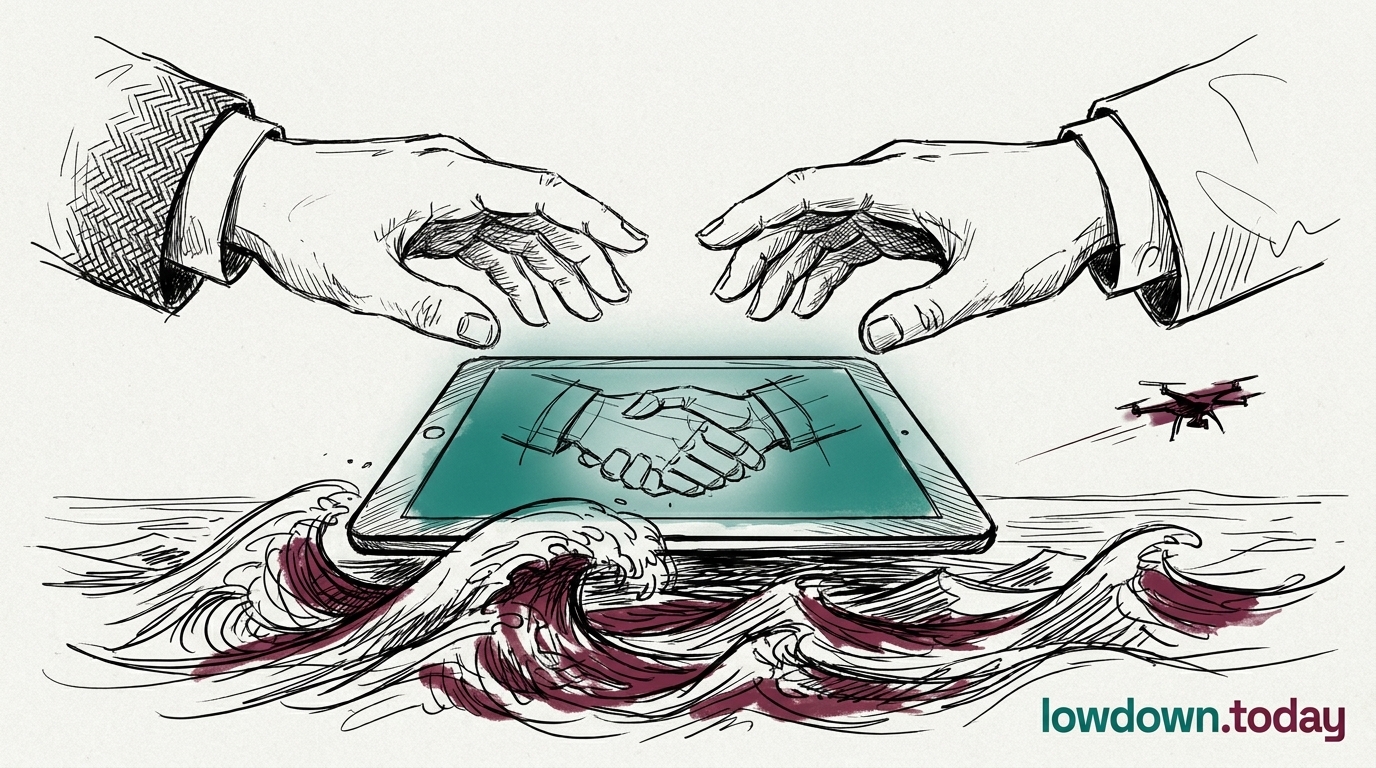
Donald Trump cancelled a third day of US strikes on 12 June and touted a memorandum he called "a little conceptual". Iran's foreign ministry called any finalised deal "merely speculation".

ConflictDeveloping
Key takeaway

The stand-down is real and checkable; the deal stays a claim until someone signs it.

Donald Trump called off a planned third consecutive day of US strikes on Iran on 12 June, citing a "breakthrough" and a very strong MoU (memorandum of understanding) he said could be signed "as soon as this weekend" 1. He hedged the same document as "a little conceptual". The stood-down order halts a second straight day of CENTCOM (US Central Command) strikes on Tehran, Sirik and Minab that Trump had personally directed , a campaign that opened on 9-10 June with the first US strikes on Iranian air-defence sites near Hormuz .

For roughly fifteen weeks the war ran on the opposite pattern: Trump talked of imminent deals, signed nothing, and the strikes continued. The cancelled order is the first time his deed and his rhetoric both point the same way. The man who ordered the bombing is now the one calling it off, while the deal he points to remains a claim.

Tehran disputes that claim. Foreign ministry spokesman Esmail Baghaei told IRNA (Iran's state news agency) that reports of a finalised deal were "merely speculation" and that Iran had "not yet made a final decision" 2. The operational channel is the one that produced April's ceasefire. Pakistan's interior minister Mohsin Naqvi was in Tehran for a second visit in under a week, carrying civilian and military messages to Iran's leadership on the same route days earlier , with Qatar co-mediating. That channel delivered the April truce after an identical cycle of public denial followed by quiet confirmation, which is why Baghaei's "speculation" line reads as routine deniability rather than a refusal.

Deep Analysis

In plain English

The United States has been bombing Iran and, at the same time, trying to negotiate a peace deal. On 12 June, President Trump cancelled a planned third day of bombing and said a deal was almost done, though he admitted the agreement was still "a little conceptual" and nobody had signed it yet. Baghaei, Iran's foreign ministry spokesman, called any finalised deal 'merely speculation' in remarks to IRNA. Two months earlier, during talks that produced a brief ceasefire, Iranian officials made almost identical statements right before a deal quietly emerged. A Pakistani diplomat named Mohsin Naqvi was in Tehran for the second time in less than a week, using the same behind-the-scenes route that produced that earlier ceasefire. CENTCOM confirmed Trump's strike stand-down in its own reporting, making it a verifiable fact rather than a claim. The deal itself remains a claim until someone signs something.

Deep Analysis
Root Causes

Trump's coercive sequencing, ordering strikes while simultaneously running a back-channel, reflects a strategy documented by CSIS as "bombing as negotiation", in which military pressure is meant to accelerate Iranian decision-making. The method has a structural ceiling: an Iranian command structure deliberately decentralised after the 28 February decapitation cannot be accelerated by external pressure in the way a unified command could.

Baghaei's "merely speculation" line serves two functions simultaneously. It gives Tehran room to walk away without a domestic concession narrative if the IRGC vetoes the framework. It also gives the civilian side cover to keep the channel open if the corps stays quiet. The two functions are incompatible with public confirmation, so the denial is rational regardless of whether a deal is real.

Escalation

De-escalatory in deed for the first time in the war: a cancelled strike order is a concrete act, not a statement. Conditional on a text that has not been signed and a decision node operating on a three-to-five-day courier lag.

What could happen next?
  • Consequence

    If the MoU is not signed by the end of the weekend, the pattern of Trump announcing near-deals that dissolve will repeat, and Brent is likely to reprice back above $90.

    Immediate · Assessed
  • Risk

    Pakistan's Naqvi channel is the sole functioning route between Washington and Tehran. Any breakdown in that channel, Naqvi losing access or the IRGC publicly rejecting the framework, collapses the entire negotiating architecture.

    Short term · Assessed
  • Precedent

    If the denial-then-confirmation cycle produces a signed text, it establishes that Iranian public denials during active mediation are not reliable indicators of negotiating intent, changing how analysts should interpret future Iranian statements.

    Medium term · Suggested
First Reported In

Update #125 · Trump halts strikes, touts deal Iran denies

CBS News· 12 Jun 2026
Read original
Causes and effects
This Event
Trump halts strikes, Iran denies deal
For the first time in fifteen weeks of war, Trump's action and his rhetoric both point towards de-escalation, though the deal he is selling stays unsigned.
Different Perspectives
Iran's Supreme Leader's office and Iranian households
A letter published through state media named Lebanon's territorial integrity and an end to Israeli operations there as the war's ending condition; the same week, spokesperson Mohajerani cut the subsidised petrol ration from 70 to 50 litres a month. Iranian agencies still disagree on who inside the office signed the letter.
Oman
Oman
Muscat proposed a voluntary-funded coalition to police Hormuz, the corridor its own coastline gives it standing to manage, while Iran wants control and toll rights over shipping and Washington insists on free navigation. Oman's remit stops at the strait; it has no comparable claim over Iraq, the Caspian, or Lebanon.
Kyiv
Kyiv
President Volodymyr Zelenskyy confirmed the Caspian strike on an Iranian vessel carrying military cargo from Russia's Astrakhan region, opening a front that ties Iran's war to its supply relationship with Moscow rather than to anything the Gulf mediators are discussing.
Riyadh
Riyadh
Maj Gen Turki Al Malki named Iraq as the launch point for drones intercepted over the Eastern Province and Riyadh, the first time this war has reached Saudi Arabia from that direction rather than from Yemen. Nothing landed, but a second launch geography aimed at Saudi oil now exists alongside the Houthi front.
Baghdad
Baghdad
Iraq's Foreign Ministry summoned its own ambassador in Riyadh after Saudi Arabia's Defence Ministry said the drones came from Iraqi territory, while the same day drones struck Iranian-Kurdish opposition camps inside Iraq. Baghdad is disowning attacks it did not launch from territory it does not fully control.
The Pentagon and Congress
Acting press secretary Joel Valdez attributed the toll's reversal to site anomalies, the same explanation the department gave for the opposite cut on 24 July; Representative Thomas Massie called the category change an absurd ruse designed to reset the war's legal clock. Neither side agrees on which explanation, or which war, is real.