Skip to content
You can now search across every topic, entity and event.What's new
Iran Conflict 2026
13JUN

Four officials, one text, four answers

3 min read
10:52UTC

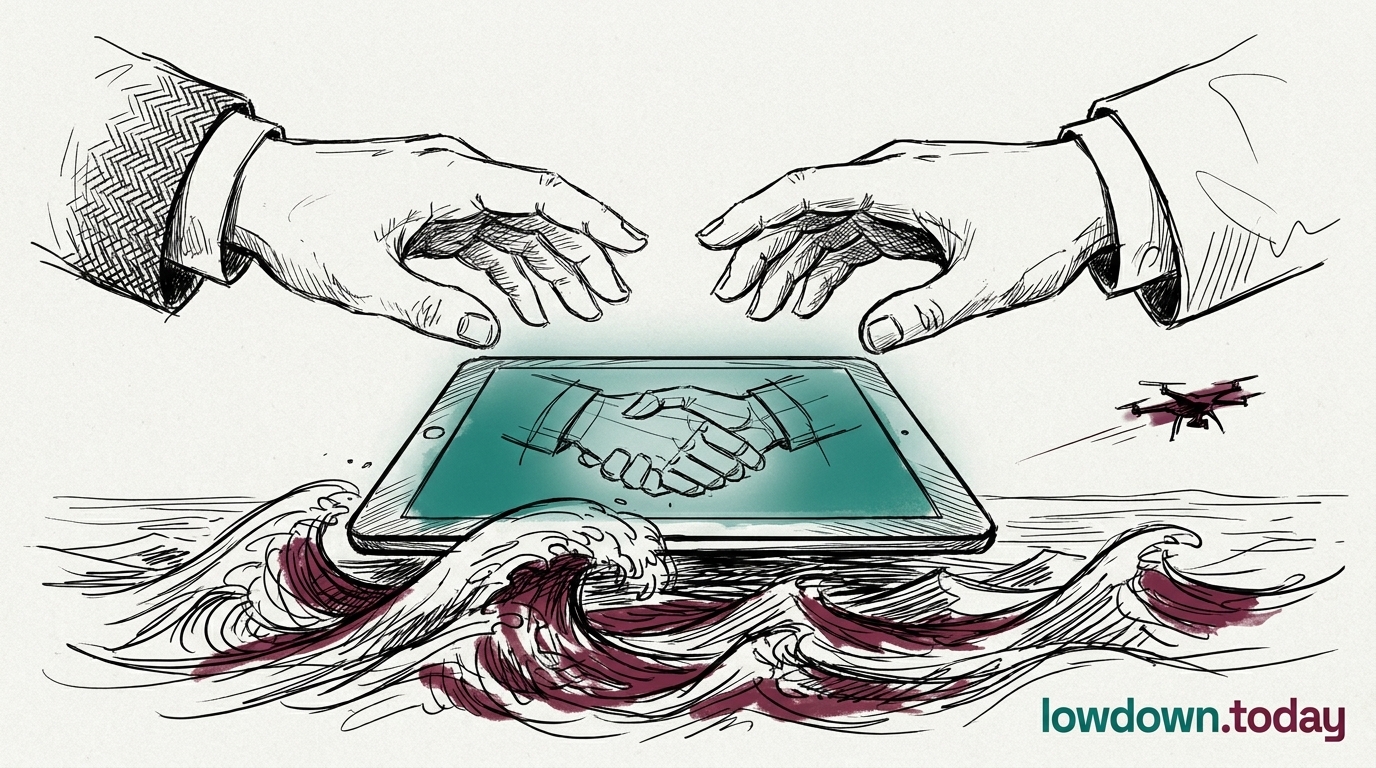
Pakistan's PM called the Iran deal text final on 12 June; Vance called it TBD the same day; the White House register stayed blank.

ConflictDeveloping
Key takeaway

The mediator and the diplomats called the deal done; the men who must sign it stayed silent.

Pakistan's Prime Minister Shehbaz Sharif declared on 12 June that "a final, agreed upon text" of the US-Iran deal had been reached. 1 Within the same hours US Vice President JD Vance told CBS the deal was "still TBD", a senior US official put it at "75 per cent complete", and Iran's Foreign Minister Abbas Araghchi said the Islamabad memorandum of understanding (MoU) had "never been closer" and would be signed digitally "within the next few days". 2 Four principals, one text, four incompatible accounts on a single day.

The White House Presidential Actions register, the public log of every executive instrument, carried no Iran document dated 12 or 13 June. 3 The only 12 June entry, a National Security Presidential Memorandum (NSPM-12), governs cybersecurity. What President Donald Trump did this weekend, stand down a third strike day and tout the unsigned MoU as Iran dismissed it as speculation , contradicts what he said.

The spread sorts the actors by leverage. Pakistan carried the dual civilian-military message to Tehran on 6-7 June , and Islamabad's incentive to claim a diplomatic win outruns its standing to deliver either capital's signature. A mediator and a foreign ministry called the text done. The US vice president, speaking for the man who would actually sign, called it three-quarters there.

Trump's claim that Iran approved the deal at its very top rests on a Supreme Leader unreachable at deal speed, so it stays unverified. Across this war, every "close to over" statement has come from a verbal channel and never coincided with a signed instrument in the same week. The only hard 13 June facts are an empty register and a blockade that never paused.

Deep Analysis

In plain English

On 12 June, four officials described the same Iran deal to different journalists and gave four different answers. Pakistan's PM Shehbaz Sharif called it a finalised text. US Vice President JD Vance called it "still TBD". A US official put it at 75 per cent done. Iran FM Abbas Araghchi said it was "never been closer" but not yet signed. The one objective check sits on the White House website, where every presidential decision gets a public record. That register showed no Iran document on 12 or 13 June. Without a signed text on the register, all four accounts describe different stages of wishful thinking rather than different readings of the same finished deal.

Deep Analysis
Root Causes

Pakistan's mediation role depends on keeping both capitals engaged, so Islamabad faces a structural incentive to declare progress before either capital confirms it. Sharif's "final text" claim on 12 June reflects that pressure, not a factual read of the register.

The White House register blank is itself structural: Trump has not signed a single Iran instrument in 105 days of conflict. A verbal Oval Office commitment and a public tweet are the only instruments he has used, leaving no paper trail for Sharif to cite or Vance to contradict from the same document.

What could happen next?
  • Risk

    Sharif's premature announcement depletes Pakistan's mediating credibility if the deal slips again, reducing Islamabad's leverage in the next round.

    Short term · Suggested
  • Consequence

    A continued blank White House register after a 12 June "breakthrough" would sharply reprice both Brent crude and Gulf shipping insurance.

    Immediate · Assessed
  • Meaning

    Vance calling the deal "still TBD" on the same day Sharif declared it final reveals Washington has not unified its public position, which Iran's IRGC will read as permission to delay endorsement.

    Immediate · Assessed
First Reported In

Update #126 · The weekend signing that never reached paper

The White House· 13 Jun 2026
Read original
Different Perspectives
Iran's Supreme Leader's office and Iranian households
A letter published through state media named Lebanon's territorial integrity and an end to Israeli operations there as the war's ending condition; the same week, spokesperson Mohajerani cut the subsidised petrol ration from 70 to 50 litres a month. Iranian agencies still disagree on who inside the office signed the letter.
Oman
Oman
Muscat proposed a voluntary-funded coalition to police Hormuz, the corridor its own coastline gives it standing to manage, while Iran wants control and toll rights over shipping and Washington insists on free navigation. Oman's remit stops at the strait; it has no comparable claim over Iraq, the Caspian, or Lebanon.
Kyiv
Kyiv
President Volodymyr Zelenskyy confirmed the Caspian strike on an Iranian vessel carrying military cargo from Russia's Astrakhan region, opening a front that ties Iran's war to its supply relationship with Moscow rather than to anything the Gulf mediators are discussing.
Riyadh
Riyadh
Maj Gen Turki Al Malki named Iraq as the launch point for drones intercepted over the Eastern Province and Riyadh, the first time this war has reached Saudi Arabia from that direction rather than from Yemen. Nothing landed, but a second launch geography aimed at Saudi oil now exists alongside the Houthi front.
Baghdad
Baghdad
Iraq's Foreign Ministry summoned its own ambassador in Riyadh after Saudi Arabia's Defence Ministry said the drones came from Iraqi territory, while the same day drones struck Iranian-Kurdish opposition camps inside Iraq. Baghdad is disowning attacks it did not launch from territory it does not fully control.
The Pentagon and Congress
Acting press secretary Joel Valdez attributed the toll's reversal to site anomalies, the same explanation the department gave for the opposite cut on 24 July; Representative Thomas Massie called the category change an absurd ruse designed to reset the war's legal clock. Neither side agrees on which explanation, or which war, is real.