Skip to content
You can now search across every topic, entity and event.What's new
Iran Conflict 2026
13JUN

Enrichment gap blocks any nuclear text

3 min read
10:52UTC

Iran's 10-point plan claims a right to enrichment; the US demands zero. The gap is publicly irreconcilable.

ConflictDeveloping
Key takeaway

Both sides published irreconcilable enrichment positions with no verification architecture to bridge the gap.

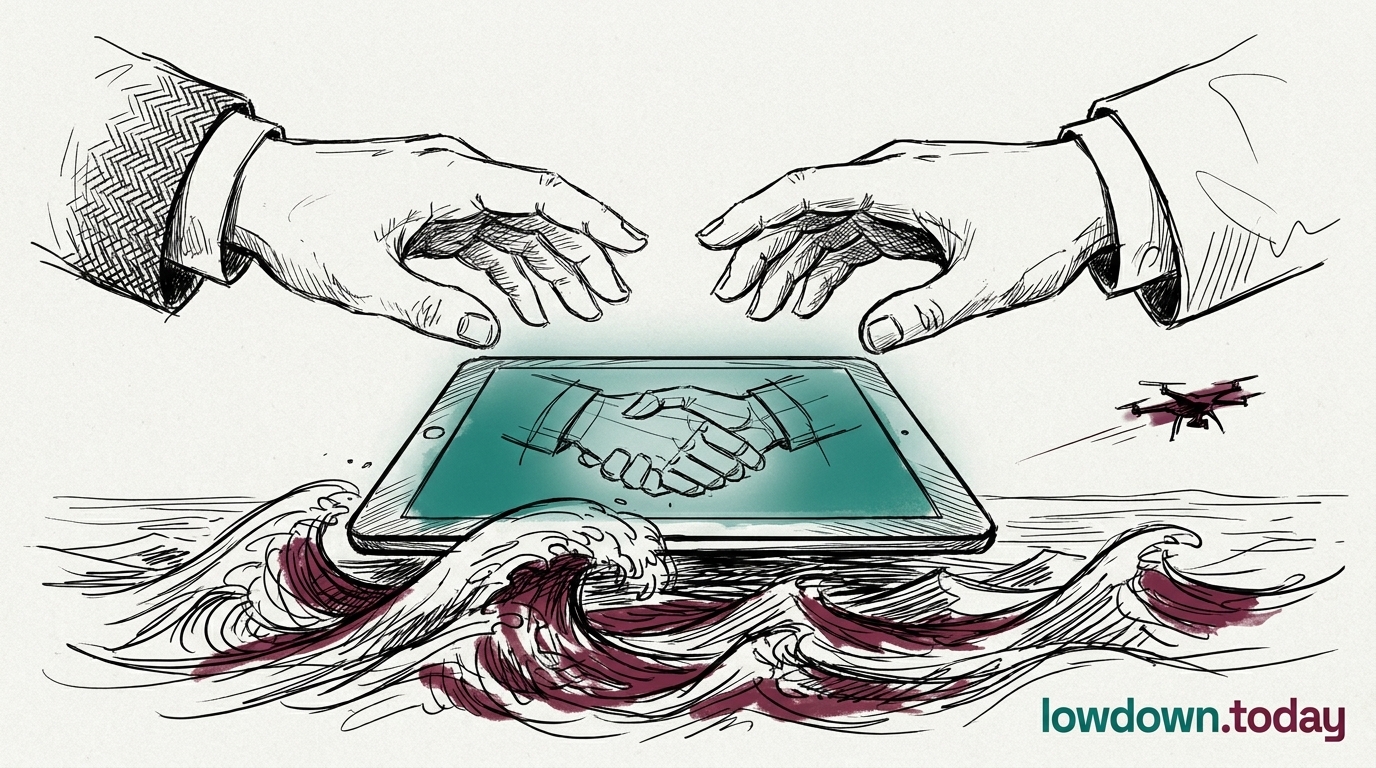
Iran tabled a 10-point plan at Islamabad listing "acceptance of enrichment" as non-negotiable. The United States tabled a 15-point plan demanding a zero nuclear weapons commitment, removal of Iran's HEU stockpile from the country, limits on defence capabilities, and unconditional Hormuz reopening. Donald Trump posted that "there will be no enrichment of Uranium" ; Iran's plan explicitly claims the right to it.

Sanam Vakil, Chatham House's Middle East and North Africa director, assessed that Iran is "unlikely" to surrender its HEU stockpile and that downblending to lower enrichment levels is the realistic floor for any deal. Iran's Foreign Minister Abbas Araghchi had publicly offered downblending on CBS in March, but Islamabad's US demands went further: full removal of the material from Iranian territory.

The last verified stockpile figure is 440.9 kg of uranium enriched to 60%, recorded by the IAEA (International Atomic Energy Agency) in September 2025, before the strikes. At 60% purity, that quantity requires relatively modest further enrichment to reach weapons-grade; the IAEA defines a "significant quantity" for a single device at 25 kg of 90%-enriched uranium. Since the Majlis voted 221-0 to suspend all IAEA cooperation on 3 April , no independent verification has been possible.

The Arms Control Association assessed in March that US negotiators were "ill-prepared for serious nuclear negotiations." The JCPOA (Joint Comprehensive Plan of Action) took 20 months of structured talks with continuous IAEA access to bridge a comparable enrichment gap. Islamabad attempted the same in two days, without inspectors.

Deep Analysis

In plain English

Enriched uranium is nuclear fuel. You enrich it a little (3-5%) and it powers a reactor. You enrich it a lot (90%+) and you can make a bomb. Iran is enriching to 60%, which is well above reactor grade and much closer to weapons grade than is comfortable. The US wants Iran to hand over this stockpile and never enrich again. Iran says that enriching uranium is its sovereign right, like any country operating nuclear power. The two positions are like arguing whether someone should be allowed to own a gun: one side says no guns at all, the other says guns are a constitutional right. The extra complication is that the international inspectors who would verify any deal, the IAEA, have been banned from Iran since early April. So even if both sides agreed on something, there is currently no one to check whether Iran is doing what it promised.

Deep Analysis
Root Causes

Iran's enrichment programme is not purely a weapons issue, it is tied to domestic electricity generation ambitions and to a sovereignty narrative built over 20 years of sanctions. Accepting zero enrichment would require Iran's leadership to abandon a national project that predates the current conflict by decades.

The IAEA monitoring blackout since the Majlis vote of 3 April means any enrichment concession Iran makes cannot be verified by a neutral third party. Without verified downblending, the US cannot make a political case domestically that a deal has worked. The monitoring gap is therefore a prerequisite problem, not a technical footnote.

The post-strike status of the 440.9 kg stockpile is unknown. If strikes have degraded or destroyed some portion of it, Iran may be offering to 'downblend' material it no longer holds in its pre-strike form, a concession with less strategic cost than it appears.

What could happen next?
  • Risk

    The Majlis 221-0 vote suspending IAEA cooperation means any nuclear concession Iran makes cannot be verified, removing the technical foundation for a deal that would satisfy US domestic and Congressional scrutiny.

    Immediate · High
  • Consequence

    Iran's public 10-point plan listing enrichment as non-negotiable has created a domestic accountability problem: any Iranian delegation that walks back enrichment rights now faces parliamentary backlash, shrinking the negotiating space even if leadership privately wanted to move.

    Short term · High
  • Opportunity

    Araghchi's March downblending offer and the Oman FM's 'irreversible fuel conversion' claim suggest a middle position exists if both sides can find face-saving language, a JCPOA-style 'limited enrichment under monitoring' framework could provide that cover.

    Medium term · Medium
First Reported In

Update #66 · Islamabad collapses: 10 days to expiry

Times of Israel· 12 Apr 2026
Read original
Different Perspectives
Oil markets / Lloyd's of London
Brent fell to near $87.33 on 80 per cent deal-probability pricing, but Lloyd's has not de-listed Hormuz from its war-risk register and shipping diversions continue at 139 vessels. Insurance markets are lagging futures: physical risk remains while financial markets have spent the good news before the paper exists.
India
India
Modi is expected to raise the deaths of three Indian sailors in the 11 June CENTCOM strike on the MT Settebello with Trump at G7 sidelines, the first non-party leader to put the blockade's human cost into a formal bilateral. New Delhi is also a major Iranian oil buyer whose import volumes the sanctions-relief terms will govern.
Israel (Netanyahu)
Israel (Netanyahu)
Netanyahu stated Israel is not party to the deal on 12 June; Defence Minister Katz ruled out the Lebanon withdrawal Iran's draft demands, inserting a third blocker the US-Iran negotiating channel cannot resolve. Israel's position tethers Hormuz reopening to a Lebanon settlement Washington has not brokered.
Pakistan (mediator, Sharif/Naqvi)
Sharif declared a final agreed text on 12 June before either principal confirmed it, running two Tehran visits in under a week without securing a written IRGC or Khamenei response. Islamabad's incentive to claim a diplomatic win outpaces its standing to deliver either capital's signature.
Iran foreign ministry (Araghchi)
Araghchi declared digital signing within days while setting dilute-in-Iran as a non-negotiable red line on the 440.9 kg HEU stockpile, a standing Tehran position he cannot override without authorisation from Khamenei, reachable only by courier. The FM track is sprinting to close before the IRGC reasserts control.
Trump administration / CENTCOM
Vance called the deal still TBD on 12 June while CENTCOM downed Iranian drones over Hormuz for a second consecutive night and the White House register stayed blank. Washington holds the ship-out position on HEU and has not signed an Iran instrument in over 100 days of conflict.