Skip to content
Foundations rebuilt, and the first new thing is here: search across every topic, entity, and event.Try search
Iran Conflict 2026
11JUN

CENTCOM blockade hits 44 vessels, 69m barrels

3 min read
09:17UTC

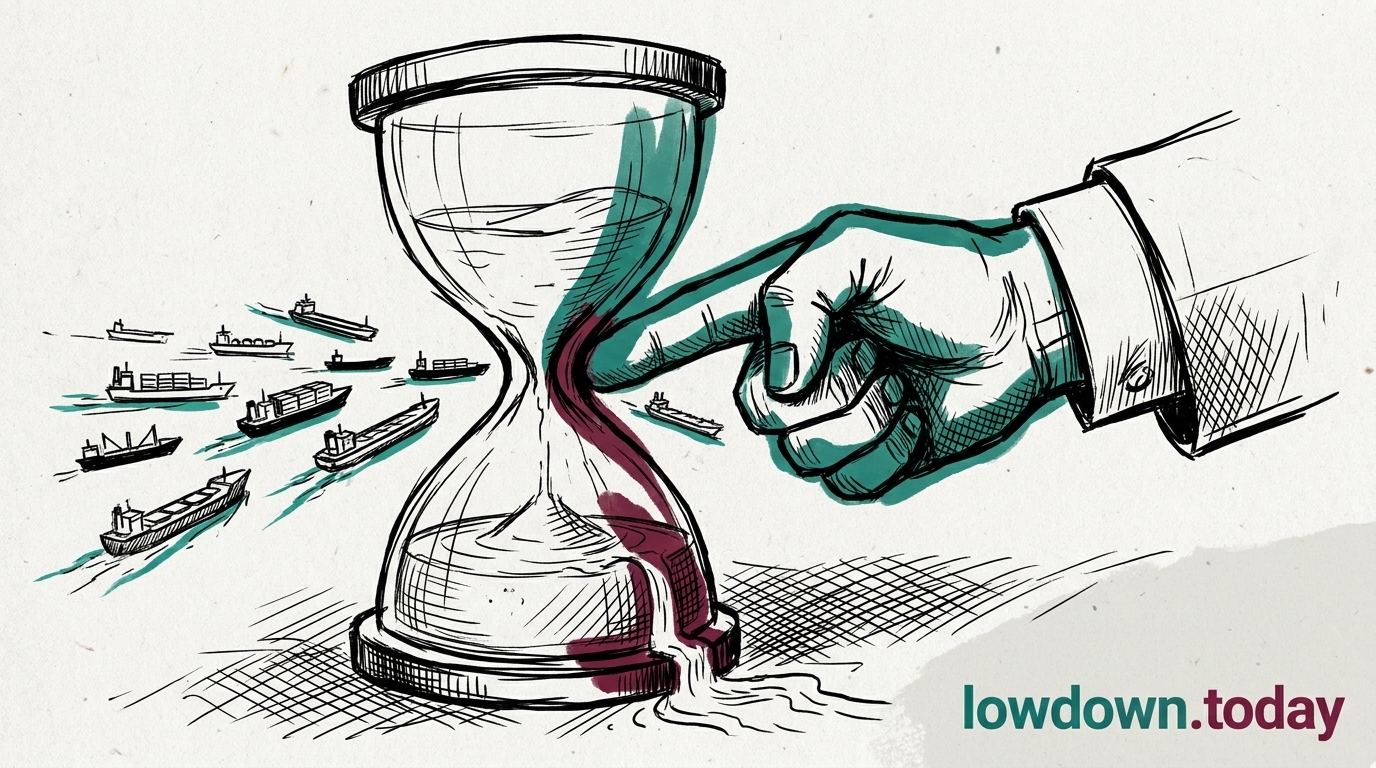
Adm Brad Cooper told reporters on 30 April 2026 that CENTCOM has redirected 44 commercial vessels, 41 of them tankers, carrying 69 million barrels of crude under the US blockade since 28 February.

ConflictDeveloping
Key takeaway

CENTCOM has redirected 44 vessels and 69 million barrels of crude, six more than Day 60.

Admiral Brad Cooper, commander of US CENTCOM (Central Command), stated on 30 April 2026 that 44 commercial vessels, 41 of them tankers, carrying 69 million barrels of crude have been turned around at sea under the US blockade since the start of the conflict 1. CENTCOM is the US joint command responsible for Middle East operations and the operational owner of the Hormuz blockade; Cooper's tally is the first public economic accounting of the redirections.

Cooper had logged 38 vessels on Day 60 , and six further redirections have entered the count since. The pace is unchanged from the prior week despite the simultaneous WPR political theatre on Capitol Hill. Six of the additional vessels carried cargo Cooper described as bound for Iran; the rest carried Iranian crude outbound. The 69 million barrels translates to roughly one week of global Brent demand removed from the spot market by US naval action alone.

Cooper's figure landed on the same afternoon the State Department launched the Maritime Freedom Construct to coordinate the rerouting that CENTCOM has been performing for 64 days without it. Cooper's tally is the instrument that the diplomatic hub announcement is layered over rather than the basis for a new arrangement.

Deep Analysis

In plain English

The US Navy has been physically stopping oil tankers at the entrance to the Strait of Hormuz and forcing them to turn back since the Iran conflict began on 28 February 2026. On 30 April, the US military's top commander for the Middle East, Admiral Brad Cooper, gave the first public count of how many ships have been stopped: 44 vessels, of which 41 were tankers carrying oil. Those 41 tankers were collectively carrying 69 million barrels of crude oil. At current prices, that is roughly $8.5 billion worth of oil that never reached its buyers. For context: the world uses about 100 million barrels of oil per day in normal times. The 69 million barrels stopped over 64 days is less than one day's global supply. The bigger economic effect comes from ships choosing to go the long way around Africa rather than risk being stopped, a detour that adds weeks to the journey and millions in fuel costs per voyage.

What could happen next?
  • Consequence

    The 69-million-barrel figure establishes a public baseline against which future blockade economics will be measured; any acceleration or deceleration will now be visible in Cooper's cumulative count updates.

  • Risk

    The 44-vessel tally, if maintained at 0.7 redirections per day, would reach approximately 100 vessels by Day 120, a milestone at which aggregate supply disruption could force Asian buyers to seek alternative long-term supply arrangements outside the Persian Gulf.

First Reported In

Update #85 · "Not at war": three claims, no treaty

ROGTEC Magazine· 1 May 2026
Read original
Different Perspectives
Oil markets / Lloyd's underwriters
Futures markets priced CENTCOM's strikes-complete statement as a de-escalation signal and pushed Brent down 1.7 per cent to $94.71, even as the IRGC declared Hormuz closed. Lloyd's war-risk premiums held elevated because institutional de-listing requires a UN Security Council resolution that Russia and China have just shown they will block.
Pakistan (mediator)
Pakistan (mediator)
Interior minister Mohsin Naqvi carried dual civilian and military letters to Mojtaba Khamenei in Tehran on 6-7 June with no public response. The IRGC's Hormuz closure on 11 June shows the corps is acting independently of the channel Pakistan is using, making the mediation structurally unable to produce a binding commitment without direct IRGC access.
Russia and China
Russia and China
Russia and China voted against GOV/2026/40 at the IAEA Board, following through on the blocking position coordinated with Grossi in Geneva on 5 June; both states continue to oppose Western institutional pressure on Iran at every multilateral venue.
E3 and IAEA (UK, France, Germany)
The E3 co-sponsored IAEA resolution GOV/2026/40, adopted 21-3-10 on 10 June, demanding Iran disclose 440.9 kg of unaccounted HEU and admit inspectors to four denied facilities. The 10 abstentions and Russia-China noes leave any Security Council referral without a viable enforcement path.
IRGC / Iran military command
The corps declared Hormuz closed to all traffic on 11 June and claimed two vessels struck, overriding the MoU its own civilian negotiators were pursuing through Pakistan. The closure order used the Persian Gulf Strait Authority apparatus to convert a toll mechanism into a military prohibition.
Trump administration / CENTCOM
CENTCOM completed a second day of strikes on Tehran, Sirik and Minab, rejected the IRGC Hormuz closure as inconsistent with observed transit, and said strikes were complete. Hegseth framed the bombing explicitly as the negotiation: the method is coercive deal-making with no stated pause threshold.