Skip to content
Briefings are running a touch slower this week while we rebuild the foundations.See roadmap
Iran Conflict 2026
9JUN

Israel hits Iran after Trump said no

3 min read
10:36UTC

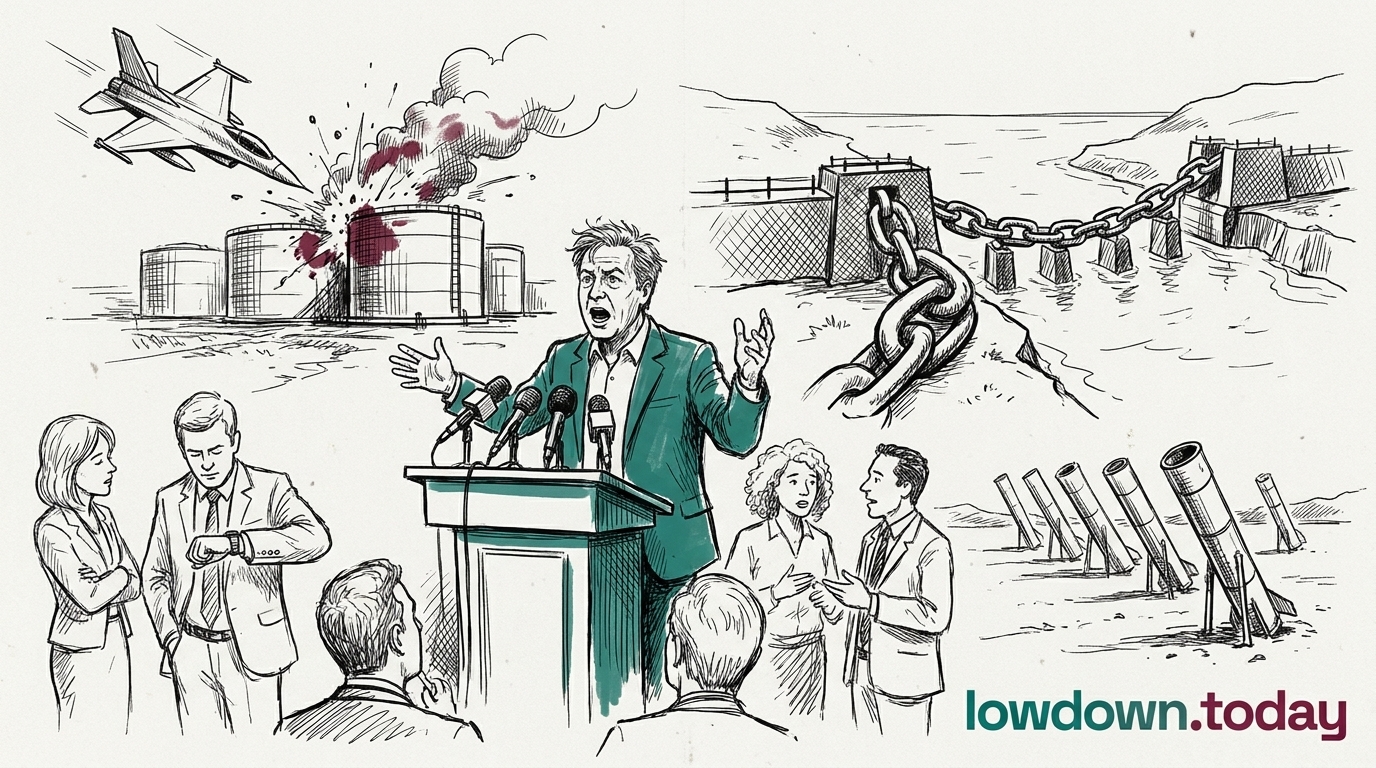
Trump publicly urged Netanyahu not to retaliate; on Monday 8 June the IDF struck the Mahshahr petrochemical complex and missile sites inside Iran regardless.

ConflictDeveloping
Key takeaway

Trump asked Israel not to strike Iran; Israel struck the next day, exposing his leverage as rhetorical.

President Donald Trump publicly urged Benjamin Netanyahu not to hit back at Iran, saying he would call him and "tell him not to strike back" 1. On Monday 8 June the IDF (Israel Defense Forces) struck military targets inside Iran regardless: the Mahshahr Petrochemical Complex in Khuzestan province and surface-to-surface missile launch sites, with blasts reported in Tehran, Tabriz and Isfahan 2. Iranian officials and Israel's Magen David Adom reported minimal-to-no casualties on either side, preliminary 3.

Netanyahu reportedly agreed to the request, then struck anyway. For 100 days the war's central gap was passive, with no US-Iran instrument on paper while the fighting ran on ; on Monday it turned active. Trump asked his closest ally, in public, to hold fire, and the answer on the ground was the Mahshahr strike.

Two readings hold at once. One is plain defiance: Israel will not let Tehran fix the terms of the exchange, and Trump cannot make it. The other is choreography, a good-cop, bad-cop split that lets Israel apply the kinetic pressure Trump keeps off his own diplomatic ledger. No signed US instrument exists to prove Washington controls the kinetic track, so the burden of demonstrating coordination sits with the White House.

Either way, the strike adds a fresh complication to the negotiating file. Rezaei's $24bn precondition was already unresolved; a unilateral Israeli strike against Trump's stated wish now sits beside it as a US-Israel alignment gap.

Deep Analysis

In plain English

Israel's military struck inside Iran on 8 June, hitting a large petrochemical factory in Khuzestan province (south-western Iran) and sites used to launch surface-to-surface missiles. Explosions were also heard in Tehran, Tabriz and Isfahan. US President Trump had publicly asked Israel's Prime Minister Netanyahu not to strike back after Iran's missile attack. Israel struck anyway. Mahshahr is one of Iran's biggest chemical production hubs. Israel hit the same complex in April 2026. Netanyahu reportedly told Trump he had agreed not to strike, then authorised the attack. No verified casualties were reported in the early hours, though that may change.

Deep Analysis
Root Causes

Israel's coalition politics under Netanyahu require maintaining offensive operational tempo: Ben Gvir and Smotrich's continued participation in government is conditioned on rejecting any ceasefire that does not meet maximalist terms.

Netanyahu's government falls if he accepts US-brokered de-escalation without a full agreement. Compliance with Trump's restraint requests is blocked by Israeli coalition arithmetic, not by strategic disagreement about Iran's threat level.

What could happen next?
  • Consequence

    Trump's public restraint request failing within 24 hours removes his ability to use 'I can control Israel' as a credible bargaining chip with Tehran in ongoing nuclear negotiations.

  • Risk

    A second Mahshahr strike compounds the April damage to Iran's domestic fuel supply, increasing civilian pressure that could either force concessions or harden hardliner resistance to any deal.

First Reported In

Update #121 · Trump said don't strike; Israel struck Iran

Jerusalem Post· 8 Jun 2026
Read original
Different Perspectives
Gulf shipping and insurance markets
With Hormuz and Bab el-Mandeb both hostile at once, war-risk underwriters face their first dual-chokepoint pricing problem; the rerouting hedge that absorbed one closure is gone for Israeli-linked hulls. Any deal that reopens Hormuz without a Houthi stand-down clause delivers only partial shipping relief.
Russia and China
Russia and China
Russia and China met IAEA chief Grossi jointly in Geneva on 5 June to coordinate an advance blocking position against Washington's censure resolution, the first documented instance of proactive pre-session obstruction rather than reactive post-vote dissent. Beijing's move came four days after OFAC designated Shanghai Qianye Energy under Iran energy sanctions.
Saudi Arabia
Saudi Arabia
Saudi Arabia was left out of the emergency $4.01 billion Patriot waiver Qatar received on 2 May as its own PAC-3 stocks ran near-empty from intercepting Iranian salvoes over Aramco facilities. Riyadh is on a standard 18-month FMS queue behind a production line booked through 2030, with no equivalent priority to Qatar's Al Udeid basing role.
Houthis (Ansar Allah)
The Houthis declared a complete ban on Israeli Red Sea navigation on 8 June and struck Jaffa, their first attack on Israeli territory since April, seven days after the Tasnim authorisation to activate other fronts including Bab el-Mandeb. The declaration put both chokepoints under hostile authority simultaneously.
Iran
Iran
Iran agreed the 9 June mutual halt after the Mahshahr exchange and coordinated with Russia and China to block Washington's IAEA censure resolution, using the Board as a second front while the bilateral pause held on the military one. Tehran's acceptance of the Lebanon carve-out contradicts the linkage position it stated on 1 June.
Benjamin Netanyahu and the IDF
Israel struck the Karun Petrochemical plant at Mahshahr on 8 June over Trump's explicit objection, then agreed a halt with Iran the following day scoped on Israeli terms with Lebanon carved out. Netanyahu's posture is that the IDF will not accept Iranian missile factories as off-limits regardless of US diplomatic timelines.