Skip to content
Briefings are running a touch slower this week while we rebuild the foundations.See roadmap
Iran Conflict 2026
8JUN

Lebanon talks open as the line moves

3 min read
09:58UTC

The fourth round of Israel-Lebanon ceasefire talks opened in Washington on 2 June while Israeli forces advanced north of the Litani and struck two districts.

ConflictDeveloping
Key takeaway

Israel-Lebanon talks opened in Washington as Israeli forces advanced on the ground they cover.

The fourth round of Israel-Lebanon ceasefire talks opened at the State Department on 2 June and ran into 3 June 1. Lebanon went in asking for a full ceasefire, an Israeli withdrawal from the south, and the return of 1.2 million displaced people; Israel went in demanding guarantees that Hezbollah will be disarmed 2. The two opening positions barely touch.

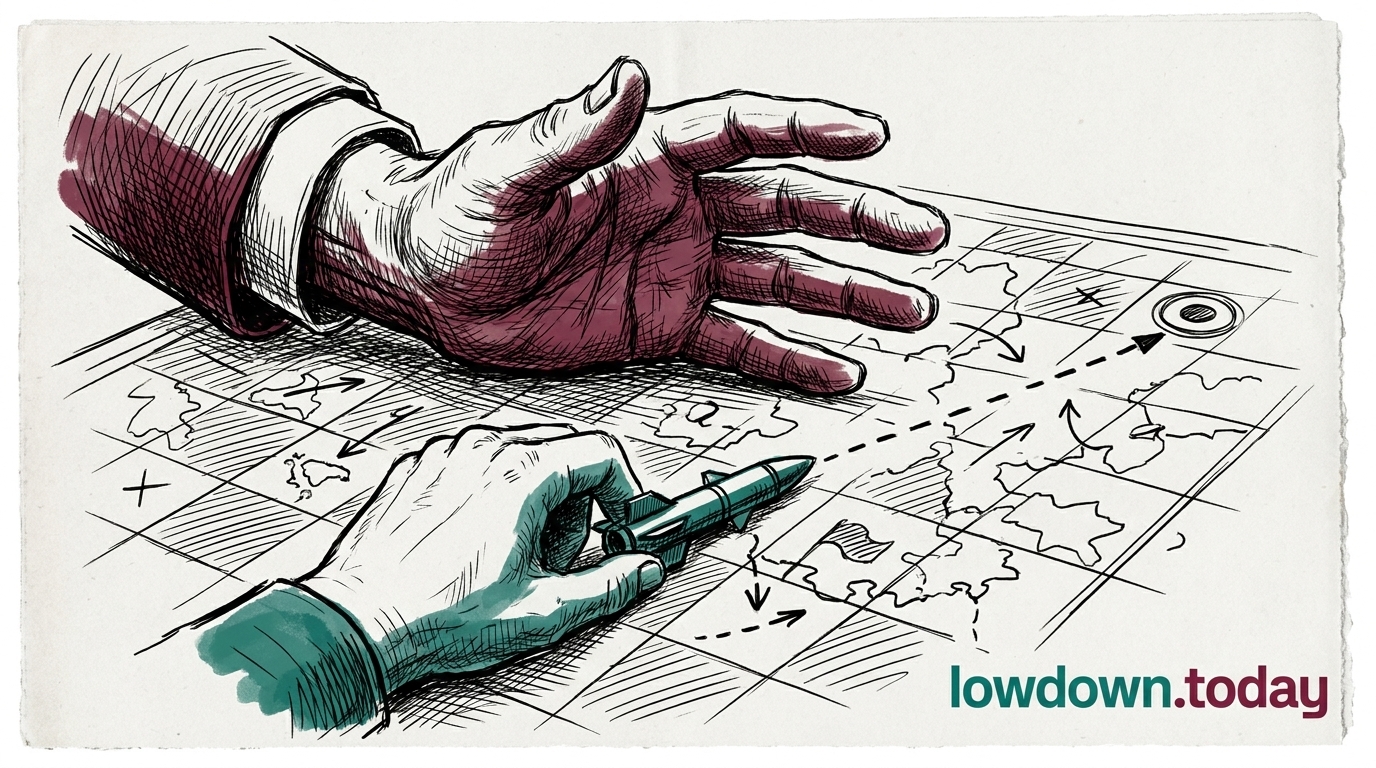
While the delegations sat in Washington, the line moved. Israeli forces pushed north of the Litani and strikes hit the Nabatieh and Tyre districts 3. The Washington table and the southern field ran on different clocks: diplomats negotiated the south's future while soldiers redrew its map by the hour.

The talks aim to stretch the Beirut-only truce Trump brokered on 1 June across all of Lebanon, which is precisely the ground Israel is taking on the Zaharani approach. Each kilometre the advance covers shrinks what Lebanon's delegation can still bargain for, because territory held by force is rarely surrendered at a table. The negotiation is chasing a front line that will not wait for it.

Deep Analysis

In plain English

The fourth round of ceasefire talks between Israel and Lebanon opened at the US State Department on 2 June. Lebanon went in asking for a complete Israeli withdrawal from southern Lebanon and the return of 1.2 million displaced people. Israel went in demanding that Hezbollah be disarmed. Lebanon's government has no legal mechanism to disarm Hezbollah; the 1989 Taif Agreement required disarmament of all non-state militias but Hezbollah was exempted under Iranian pressure. While the delegations sat in Washington, Israeli forces captured territory north of the Litani and struck Nabatieh and Tyre. Netanyahu confirmed ground operations would continue regardless of the talks.

Deep Analysis
Root Causes

The disarmament-guarantee deadlock rests on a structural asymmetry: Israel's minimum requirement (a verifiable Hezbollah disarmament) is beyond the capacity of Lebanon's government to deliver, while Lebanon's minimum requirement (Israeli withdrawal to the 1967 line) is beyond Israel's current military willingness. Neither side can meet the other's floor without internal political collapse.

The kinetic continuation during the talks reflects Clausewitz's principle that a party that is winning militarily has no rational incentive to settle on yesterday's terms. Every kilometre the IDF advances north of the Litani raises the price of any settlement Lebanon can offer Israel, because the withdrawal Israel eventually accepts will need to be counted from wherever the IDF stops.

What could happen next?
  • Risk

    Each day the IDF advances while talks continue changes the territorial baseline against which any withdrawal will be measured, ratcheting up Lebanon's demand and Israel's concession cost simultaneously.

  • Consequence

    Without an external guarantor capable of enforcing Hezbollah disarmament, any text agreed at the State Department faces the same implementation failure as Resolution 1701, which Hezbollah never complied with after August 2006.

First Reported In

Update #116 · Washington signs a sanction, not a strike

CNBC· 3 Jun 2026
Read original
Different Perspectives
Bahrain / Gulf partners
Bahrain's PAC-3 interceptor magazine sits at 87% depletion after absorbing IRGC salvos aimed at US bases; no resupply is scheduled before 2027, concentrating the intercept burden on US assets and Israeli Iron Dome and Arrow-3.
IAEA / Vienna process
IAEA officials cited proliferation concerns over 440.9 kg of HEU unaccounted for after 97 days without inspector access; the Board session that opened 8 June cannot retroactively close the evidentiary gap its own resolution documents.
China
China
China absorbed the Shanghai Qianye designation by OFAC and opposes censure at the IAEA Board, arguing the verification gap was created by strikes rather than Iranian non-compliance, a framing it shares with Russia to protect the non-Western bloc's Board votes.
Russia
Russia
Putin reaffirmed at SPIEF on 6 June his offer to hold Iran's uranium stockpile as custodian, a proposal the IAEA's 97-day verification gap now renders undeliverable: no one can transfer or confirm a stockpile that has not been inspected.
United States / Trump administration
Trump publicly asked Netanyahu not to retaliate and described a deal as 95% done; Rubio then acknowledged enrichment terms could take months. The 24-hour gap between the request and the Mahshahr strike removes the credible-restraint argument from US diplomatic leverage with Tehran.
Israel / Netanyahu government
Netanyahu struck the Mahshahr complex and missile sites inside Iran within 24 hours of Trump's public no-retaliation request, a second kinetic override of US counsel that confirms Israel will not allow Tehran to dictate the terms of the exchange.