Skip to content
Briefings are running a touch slower this week while we rebuild the foundations.See roadmap
Iran Conflict 2026
8JUN

Iran publishes mine charts converting Hormuz reopening into IRGC corridor

2 min read
09:58UTC
ConflictDeveloping
Key takeaway

Hormuz reopening produced 4 ships and mine charts, not free passage

Donald Trump promised a 'COMPLETE, IMMEDIATE, and SAFE OPENING' of the Strait of Hormuz. On ceasefire Day 1, Kpler counted four bulk carriers transiting the strait. Zero crude tankers. Zero LNG carriers. More than 800 vessels remain stuck in the Persian Gulf 1.

The pre-war baseline was 135 transits per day. Iran's toll system, legislated in late March , had lifted traffic to 20 per day across 11 flag states by 5 April . The ceasefire cut that to four. Fewer ships crossed on Day 1 than on any day of the blockade.

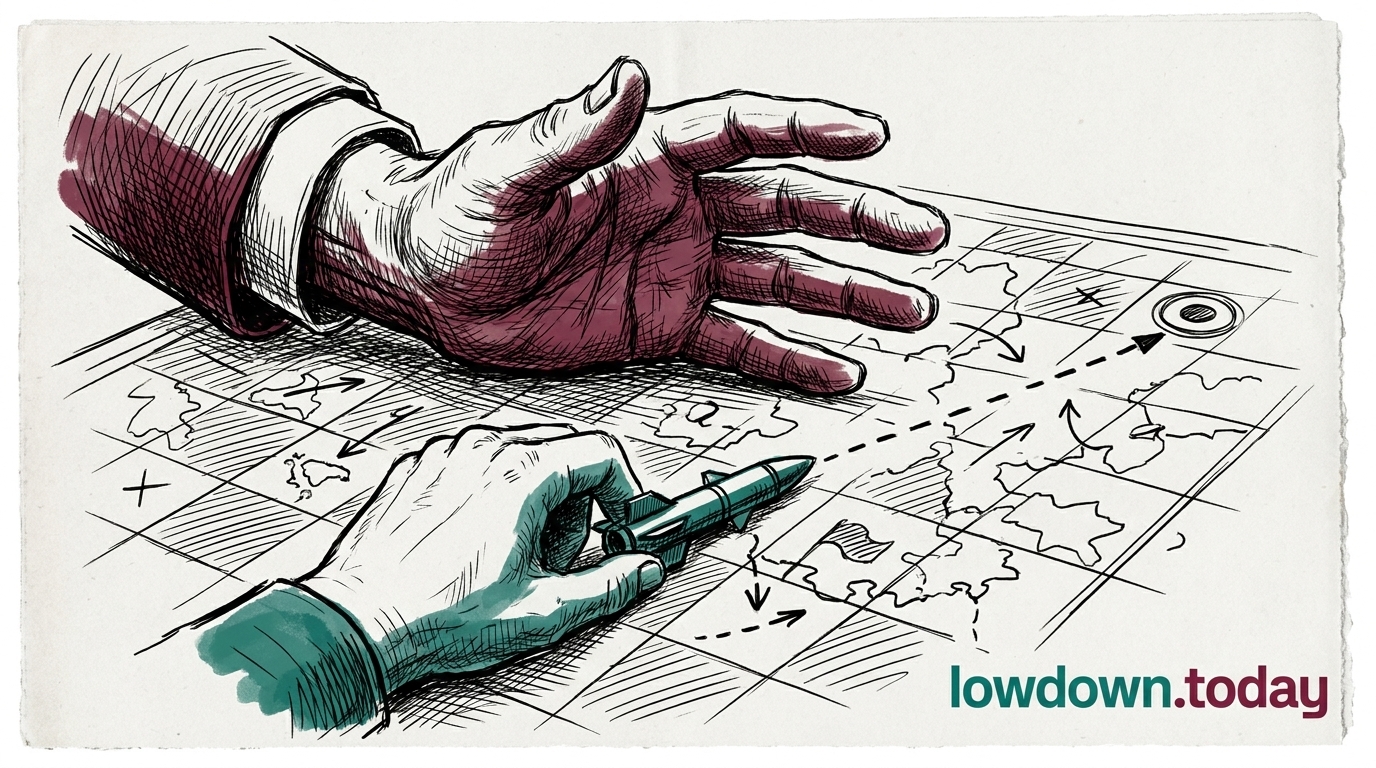
ISNA and Tasnim, both linked to the IRGC, published maritime charts on 9 April showing a 'danger zone' over the main Traffic Separation Scheme lanes, dated from 28 February to 9 April 2. The charts direct all vessels to corridors near Larak Island under IRGC naval control 3. The implication: the main shipping lanes are mined. The mines, real or implied, force all traffic through Iran-controlled corridors.

Trump's two-week pause promised SAFE passage. The IRGC's charts promise the opposite: passage is SAFE only where Iran says it is.

Deep Analysis

In plain English

Trump said the strait was reopening. On Day 1, four cargo ships got through, zero oil tankers. Iran published charts showing the main shipping lanes are too dangerous and ships must use routes Iran controls. Eight hundred ships are stuck waiting. The reopening gives Iran more control, not less.

Deep Analysis
Root Causes

Iran's toll legislation in late March codified the blockade before any ceasefire. The mine charts are the physical enforcement layer of a legal framework already in place.

First Reported In

Update #63 · Ceasefire redistributes the war, not ends it

ISNA / Tasnim· 9 Apr 2026
Read original
Different Perspectives
Bahrain / Gulf partners
Bahrain's PAC-3 interceptor magazine sits at 87% depletion after absorbing IRGC salvos aimed at US bases; no resupply is scheduled before 2027, concentrating the intercept burden on US assets and Israeli Iron Dome and Arrow-3.
IAEA / Vienna process
IAEA officials cited proliferation concerns over 440.9 kg of HEU unaccounted for after 97 days without inspector access; the Board session that opened 8 June cannot retroactively close the evidentiary gap its own resolution documents.
China
China
China absorbed the Shanghai Qianye designation by OFAC and opposes censure at the IAEA Board, arguing the verification gap was created by strikes rather than Iranian non-compliance, a framing it shares with Russia to protect the non-Western bloc's Board votes.
Russia
Russia
Putin reaffirmed at SPIEF on 6 June his offer to hold Iran's uranium stockpile as custodian, a proposal the IAEA's 97-day verification gap now renders undeliverable: no one can transfer or confirm a stockpile that has not been inspected.
United States / Trump administration
Trump publicly asked Netanyahu not to retaliate and described a deal as 95% done; Rubio then acknowledged enrichment terms could take months. The 24-hour gap between the request and the Mahshahr strike removes the credible-restraint argument from US diplomatic leverage with Tehran.
Israel / Netanyahu government
Netanyahu struck the Mahshahr complex and missile sites inside Iran within 24 hours of Trump's public no-retaliation request, a second kinetic override of US counsel that confirms Israel will not allow Tehran to dictate the terms of the exchange.