Skip to content
Briefings are running a touch slower this week while we rebuild the foundations.See roadmap
Iran Conflict 2026
4JUN

Iran strikes Saudi Ras Tanura refinery

4 min read
11:25UTC

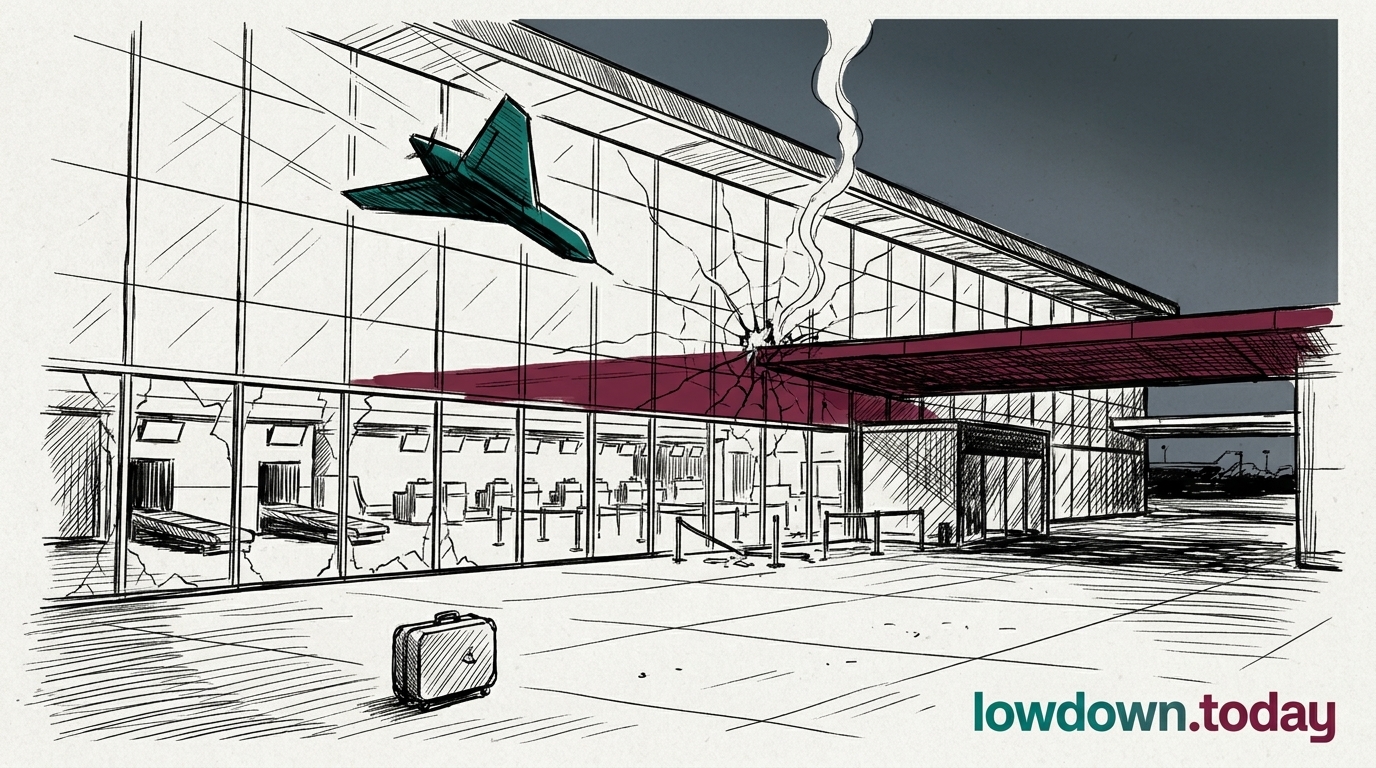
An Iranian strike shut Saudi Aramco's 550,000-barrel-per-day Ras Tanura refinery. Iran has now degraded Gulf oil production, refining, and transit — all three pillars of the region's energy export architecture.

ConflictDeveloping
Key takeaway

Iran has executed a coordinated value-chain attack across all three Gulf energy export nodes in a single operational period — a level of simultaneous multi-target precision that exceeds all previous Iranian strike packages and implies pre-positioned targeting intelligence gathered well before the current conflict began.

Iranian strikes shut Saudi Aramco's Ras Tanura refinery on Monday — 550,000 barrels per day of refining capacity taken offline. Ras Tanura, on Saudi Arabia's Persian Gulf coast, is both a major refinery and one of The Kingdom's principal oil export terminals. The strike extends Iran's targeting beyond the strait of Hormuz and Qatar's gas infrastructure to Saudi petroleum processing, completing the degradation of all three pillars of Gulf energy exports within a single week.

The sequence has a clear operational logic. Iran broadcast the closure of the strait of Hormuz on 27 February; vessel traffic has since fallen 70% . Monday's strikes on Qatar's Ras Laffan eliminated 77 million tonnes of annual LNG liquefaction capacity. Ras Tanura removes the refining link. The Gulf's energy export architecture — production, processing, and transit — is now compromised simultaneously. The closest historical comparison is the September 2019 drone and cruise missile strike on Saudi Aramco's Abqaiq processing facility and Khurais oil field, which temporarily removed 5.7 million barrels per day from global markets. That attack was repaired within weeks because it occurred in peacetime, with no follow-on threat. Ras Tanura faces sustained hostilities, a closed strait, and no ceasefire in prospect.

OPEC+'s emergency production increase of 220,000 barrels per day replaces less than half of Ras Tanura's lost refining capacity alone, before accounting for the Qatari LNG shutdown or the 150-plus tankers anchored in open Gulf waters waiting to transit Hormuz. Saudi Arabia acknowledged that the conflict began with US-Israeli strikes on Iran . It is now absorbing direct damage to its core economic infrastructure from a war it did not initiate and has not joined offensively. Whether Riyadh's tolerance for this position holds — or whether the strikes push The Kingdom toward formal belligerent status — depends on what comes next. Iran's foreign minister has acknowledged that military units are acting outside central government direction . The Ras Tanura strike may have been a calculated act of strategic coercion — targeting the economic foundations of states hosting US forces — or an autonomous escalation by IRGC-aligned units that the Interim Leadership Council did not order. Either interpretation is destabilising: the first means Iran has chosen to wage economic war on non-belligerents; the second means no Iranian interlocutor can guarantee that strikes will stop even if a ceasefire is reached.


Deep Analysis

In plain English

Think of the Gulf's energy system as a three-stage pipeline: natural gas and oil are produced at the wellhead, crude oil is processed into usable fuels (petrol, diesel, jet fuel) at refineries like Ras Tanura, and finished products are exported through the Strait of Hormuz. Iran has now damaged or blocked all three stages simultaneously. This is not three separate attacks of opportunity — it is a single coordinated strategy designed to make the Gulf energy system non-functional as a whole, since each node that would normally serve as a workaround for another has itself been degraded.

Deep Analysis
Synthesis

The three-node disruption is strategically self-reinforcing in a way the body does not make explicit: clearing Hormuz transit does not restore Qatari LNG production; repairing Ras Laffan does not restore Ras Tanura refining; fixing any single node leaves the others degraded. A negotiated settlement must address all three simultaneously, multiplying the complexity and therefore the cost of any diplomatic resolution — which may be precisely the design.

Root Causes

The three-node targeting reflects a strategic doctrine of escalation dominance through economic denial — the belief, associated with IRGC strategic planning and developed over at least a decade, that inflicting sufficient economic pain on third-party states creates political pressure on the US and Israel to accept Iranian terms. This doctrine has been theorised and war-gamed extensively but never executed at this scale or with this degree of simultaneous coordination.

Escalation

Ras Tanura represents the first confirmed Iranian military strike on Saudi oil infrastructure since 2019 and moves Saudi Arabia from background stakeholder to direct military target. Riyadh's response posture — whether it invokes US defence guarantees, retaliates independently, or absorbs the attack — will determine whether the conflict acquires a fourth state-level combatant. Saudi silence in the immediate aftermath may indicate damage assessment in progress or deliberate strategic ambiguity.

What could happen next?
  • Meaning

    Iran has demonstrated a coordinated value-chain denial strategy more operationally sophisticated than any previous Iranian strike package, implying pre-positioned intelligence and a targeting doctrine that was developed and held in reserve well before the current conflict.

    Immediate · Assessed
  • Consequence

    Saudi Arabia is now a direct target of Iranian military action, creating immediate pressure on Riyadh to either invoke US defence guarantees or develop an independent military response, either of which expands the conflict's state-level participation.

    Short term · Assessed
  • Risk

    The combination of lost gas production (Ras Laffan), lost refining (Ras Tanura), and lost transit (Hormuz) creates an energy supply shock with no single-node resolution path, structurally raising the minimum cost of any negotiated settlement.

    Short term · Assessed
  • Precedent

    Successful multi-node energy infrastructure attacks will permanently recalibrate global energy security risk assessment and accelerate demand for infrastructure hardening, air defence investment, and supply chain diversification away from Gulf concentration.

    Long term · Suggested
First Reported In

Update #11 · Qatar's LNG dark; Trump eyes ground troops

CBS News· 2 Mar 2026
Read original
Causes and effects
This Event
Iran strikes Saudi Ras Tanura refinery
Iran's strike on Ras Tanura completes the systematic degradation of all three pillars of Gulf energy exports — production at Qatar's Ras Laffan, refining at Ras Tanura, and transit through the Strait of Hormuz — within one week, transforming a bilateral military conflict into a structural global energy supply crisis that OPEC+'s emergency response cannot offset.
Different Perspectives
Israel
Israel
IDF Chief Eyal Zamir declared on 3 June there was no ceasefire for his forces, and strikes killed at least 10 civilians and one Israeli soldier on 4 June. The IDF killed Hezbollah's chief engineer and warned three south Lebanon villages to evacuate on 5 June, advancing into ground the unsigned Washington framework has not caught.
Hezbollah / Lebanon
Hezbollah / Lebanon
Naim Qassem rejected the Washington Lebanon framework on 4 June as "absurd, humiliating and insulting", blocking a ceasefire instrument that required Hezbollah to withdraw north of the Litani before any Israeli withdrawal. Over one million Lebanese remain displaced; the framework's collapse prolongs that toll.
Iran
Iran
Foreign Minister Araghchi publicly coupled the Lebanon ceasefire to the Iran-US nuclear track on 4 June, carrying IRGC authority rather than his own civilian mandate. The IRGC delegation has sent no HEU counter-proposal since Araghchi confirmed no progress that same day; Mojtaba Khamenei's 21 May order to keep the 440.9 kg stockpile inside Iran remains operative.
United States
United States
Rubio placed the Iran-US deal at 95 per cent complete on 4 June while the administration signed no Iran instrument and OFAC designated only Cuban targets. Trump separately disclosed and rejected an airlift plan to collect Iran's HEU stockpile, claiming the material is "entombed", a claim the IAEA cannot verify.
China
China
Beijing's MOFCOM Blocking Rules constrain OFAC enforcement on the mainland; China has not corroborated Trump's verbal account of any bilateral summit, and the rial's failure to hold its Rubio bounce, combined with the IRGC's stablecoin rail closure, increases Chinese yuan-denominated oil-payment exposure through Hormuz.
Bahrain
Bahrain
The IRGC struck Bahrain on 3 June as its sirens sounded and its PAC-3 magazine neared exhaustion; excluded from Rubio's 2 May emergency resupply, Bahrain received a 50-round Federal Register notice on 1 June on an 18-month delivery timeline, meaning it is defending the US Fifth Fleet headquarters on the last rounds it has.



