Skip to content
You can now search across every topic, entity and event.What's new
Iran Conflict 2026
3JUN

Serbia intercepted 4kg TurkStream bomb plot

3 min read
09:04UTC

Serbian authorities found plastic explosives metres from the Balkan Stream pipeline on 5 April; Hungary has since deployed the army.

ConflictDeveloping
Key takeaway

The last Russian pipeline leg survived a bomb attempt ten days before the LNG leg ends.

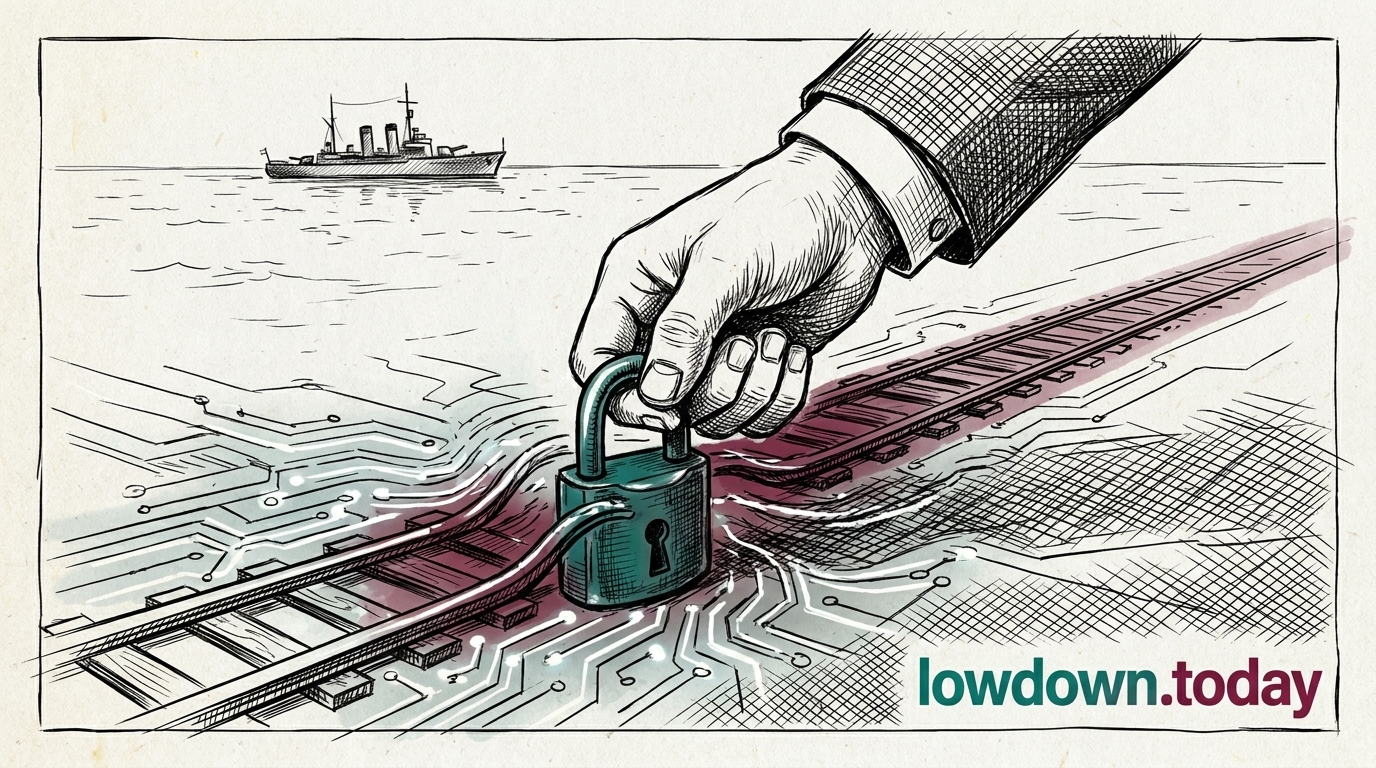
On 5 April 2026, Serbian authorities found two backpacks containing roughly 4 kg of plastic explosives, detonator caps and cord metres from the Balkan Stream pipeline near the village of Velebit in northern Serbia, a TurkStream offshoot carrying Russian gas through the Western Balkans 1. Hungary has since deployed its army to protect the Serbia-to-Slovakia segment, and Russia, Turkey, Serbia and Hungary have agreed a joint protection framework. Ukraine denied involvement; Serbian intelligence briefed that US-made explosives were recovered and pointed to a migrant with military training.

TurkStream carries roughly 15 bcm per year to Hungary, Slovakia, Czech Republic and Austria and is the sole remaining Russian pipeline route to central Europe since Ukraine transit ended. Against a shallow aggregate storage fill and the 25 April LNG ban closing the other Russian leg, a successful attack on the 5th would have removed both Russian supply routes in the same week. The intercept is the reason the system did not run that test.

The analytical read is not that Balkan Stream is safer today than it was on 4 April. Pipeline protection on a line that runs through four jurisdictions with varied standards cannot be hardened uniformly by one national deployment. The intercepted plot shows capability and intent against one segment; the route length means the vector count is larger than the vector just addressed.

TTF pricing is not carrying that tail. Implied vol on late-April TTF options is cheap relative to the physical state of the system: a Hormuz ceasefire expiry, a Russian LNG cutoff and an intercepted pipeline sabotage plot sitting inside the same ten-day window. The counter-view is that the plot was caught and protection has been hardened; that is correct for the specific vector, not for the category.


Deep Analysis

In plain English

TurkStream is a gas pipeline that runs from Russia through Turkey and then north through Serbia and Hungary, carrying gas to central European countries that no longer receive it through Ukraine. It is the last active Russian gas pipeline into Europe after the Ukraine transit route shut down in early 2025. On 5 April, Serbian police found 4 kilograms of plastic explosives hidden near the pipeline close to a village called Velebit. That is enough to damage the pipeline significantly. Nobody has admitted placing them. In response, Hungary sent its army to protect its section of the pipeline, and Russia, Turkey, Serbia, and Hungary agreed a joint protection arrangement. The four countries involved in protecting the pipeline are a mix of NATO members and non-NATO states, which makes the arrangement politically unusual.

Deep Analysis
Root Causes

TurkStream's vulnerability is structural. The pipeline was designed and built after 2017 as a specifically NATO-circumventing route: it enters European territory through Turkey (a NATO member but one with independent energy policy) and transits Serbia, which has EU candidate status but is not a member. The Serbian and Hungarian segments have no EU-level protection framework, relying entirely on bilateral host-country arrangements.

The absence of attribution for the explosives is itself a structural indicator. Ukraine denied involvement; no other actor claimed responsibility. The 4 kg of plastic explosive is below the threshold that would guarantee pipeline destruction but above what would be needed to trigger a protection-framework demand. The incident has the operational signature of a pressure tactic rather than a genuine interdiction attempt.

What could happen next?
  • Precedent

    Hungary's army deployment to protect Russian pipeline infrastructure creates the first instance of a NATO member providing ground-force security for Russian-origin energy assets in Europe since 2022.

  • Risk

    If the explosives originated from a state actor seeking to force Hungary and Slovakia into dependency on LNG alternatives (thus removing their political leverage within the EU), further interception attempts may follow to test the protection framework's deterrence.

First Reported In

Update #2 · TTF EUR 42 as Russian LNG ban enters range

Euronews· 15 Apr 2026
Read original
Different Perspectives
China's foreign ministry
Spokesman Lin Jian rejected Treasury Secretary Scott Bessent's 25 August warning that Iranian oil buyers face an "economic D-Day", saying sanctions do not help and that Beijing would safeguard its own rights and interests. China's Iranian crude imports had already halved for unrelated reasons.
Iraq's government and Erbil authorities
Erbil authorities said 10 explosive-laden drones were shot down over the city on 1-2 September with no casualties. Iraq's government condemned the attacks without naming Iran as their source, and neither Washington nor Baghdad confirmed the IRGC's claim to have hit US bases there.
Bahrain Defence Force
The General Command said air defences intercepted several Iranian missiles and drones on 1-2 September and called the use of such weapons against civilians and private property a flagrant violation of international humanitarian law.
Kuwait's Fire Force and foreign ministry
KUNA reported a hostile Iranian drone struck a residential complex in Kuwait City on 2 September; Fire Force spokesman Brigadier General Mohammad Al-Gharib said losses were confined to property. Kuwait's foreign ministry called the attack a clear breach of its sovereignty.
Jordan's Armed Forces
Petra carried a statement that air defences intercepted eight missiles violating Jordanian airspace early on 31 August and 10 of 13 fired on 1 September. The statement named no target and did not address the IRGC's claim to have struck Camp Titin and killed US personnel.
CENTCOM
CENTCOM
CENTCOM's 1 September target list named IRGC air defence, radar, maritime and mine-laying sites in Iran but no tanker, after Axios reported anonymous officials describing a Trump-approved "tanker for tanker" drone policy. A CENTCOM spokesman declined to confirm the policy and referred questions to policymakers.



